

Stablecoins are increasingly viewed as a long-term beneficiary of agent-driven artificial intelligence payments, even though current machine-payment activity remains limited. Recent industry analysis suggests that programmable stablecoins could enable machine-to-machine transactions, allowing software agents to complete conditional payments without human involvement. This capability is seen as essential for supporting microtransactions across automated digital services.
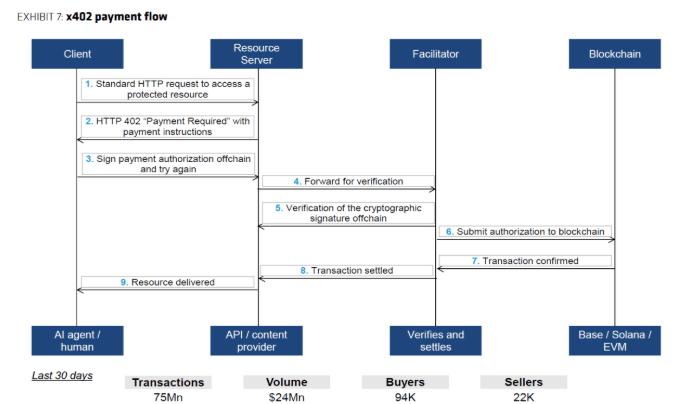
Early data shows adoption is still in its infancy. One machine-payment protocol developed by Stripe and Tempo processed roughly $5,000 in stablecoin volume during its first week. Another payment standard designed to allow automated agent transactions recorded no more than $25 million in volume over a 30-day period, with estimates placing activity closer to $24 million.
Broader Payment Use Cases Continue Driving Stablecoin Expansion
Despite the interest in artificial intelligence payments, analysts emphasize that stablecoin growth is currently fueled by established financial use cases. Cross-border transfers, remittances, card-linked products and neobanking services remain the primary sources of demand. Total stablecoin payment volume increased significantly, rising to about $375 billion in 2025 from $213 billion in 2024, led largely by consumer-to-consumer transactions.
Transaction Data and Wash Trading Concerns Shape Outlook
Some early machine-payment figures have faced scrutiny due to possible wash trading activity. After applying filtering methods designed to remove inflated transactions, one estimate suggested actual automated payment volume may be closer to $1.6 million rather than previously reported totals.
Even with modest current volumes, infrastructure supporting automated payments continues to expand. Major technology integrations with payment systems suggest that stablecoins may capture greater demand over time, particularly as automated digital services become more widely adopted.
Disclaimer
This content is for informational purposes only and does not constitute financial, investment, or legal advice. Cryptocurrency trading involves risk and may result in financial loss.