

Ukraine’s recent attacks on Russian oil infrastructure have disrupted key supply routes, undermining efforts to stabilize energy markets amid the ongoing Iran war. With roughly 40% of Russia’s oil export capacity offline, elevated oil prices are intensifying concerns about persistent inflation and tighter monetary policy.
President Donald Trump’s temporary lifting of sanctions on Russian crude aimed to offset supply disruptions caused by the Iran conflict, but Ukraine’s strikes on ports and refineries in Leningrad have complicated the plan. Analysts note that the challenge is as much a logistics problem as a supply issue, with movement of oil now as difficult as production itself.
Impact on Bitcoin and Risk Assets
Bitcoin continues to trade within the $65,000–$75,000 range, but macroeconomic pressures are emerging as a critical factor. Rising energy costs could drive sticky inflation, prompting central banks to tighten borrowing conditions and reduce liquidity, which historically pressures risk assets including cryptocurrencies.
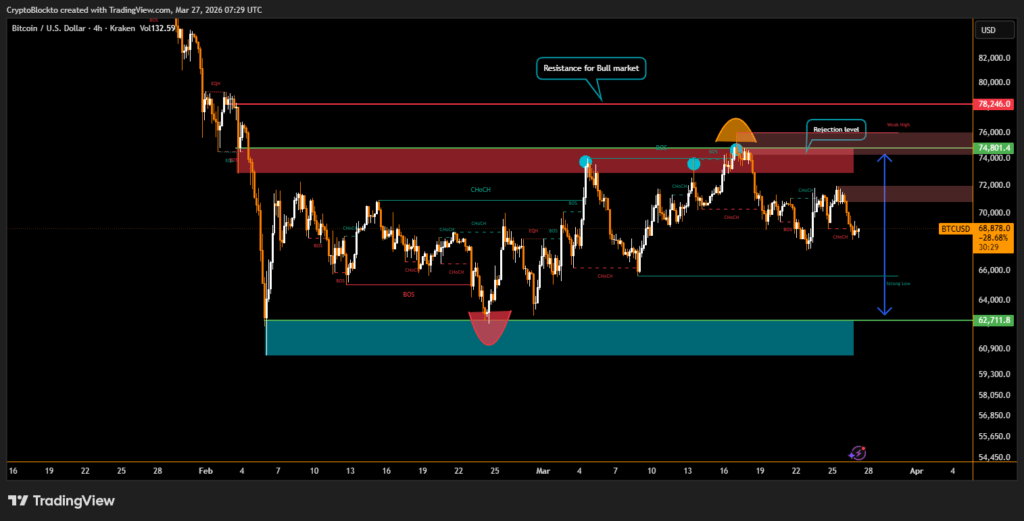
Options market data indicates traders are pricing in a potential Fed rate hike within two weeks, highlighting market sensitivity to macro shocks. Combined with ongoing geopolitical tensions, bitcoin’s support levels face tests, leaving the current trading range vulnerable to downside moves.
Sustained high oil prices and geopolitical uncertainty suggest bitcoin and broader markets may remain volatile. Market participants are closely watching early April developments in the Iran conflict, as well as further disruptions in Russian energy flows, for directional cues.
Disclaimer
This content is for informational purposes only and does not constitute financial, investment, or legal advice. Cryptocurrency trading involves risk and may result in financial loss.