

Global public debt has climbed to levels nearly equal to the size of the world economy, reaching heights not seen since World War II, according to recent data from the International Monetary Fund (IMF). The surge reflects years of increased government spending, pandemic-era stimulus programs, and rising borrowing costs across major economies.
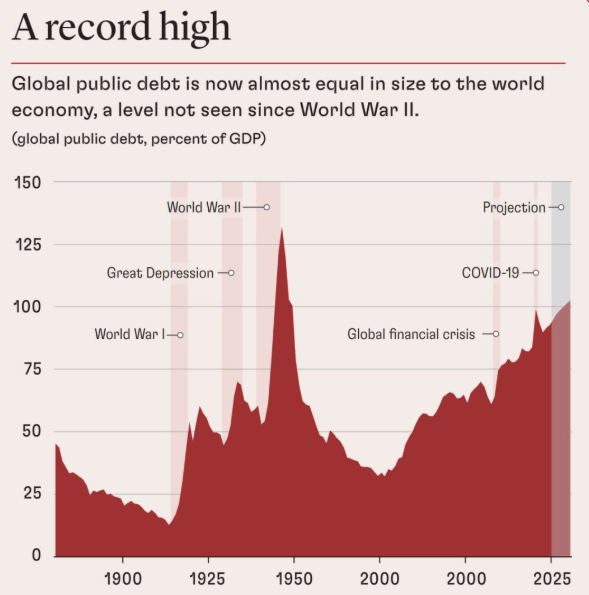
Public debt growth accelerated as governments expanded fiscal support during global crises, including health emergencies, geopolitical tensions, and economic slowdowns. These pressures forced many countries to rely heavily on borrowing to stabilize growth and protect domestic industries.
Economic Risks Linked to High Sovereign Debt
The IMF noted that elevated debt levels create long-term risks for financial stability. As borrowing costs remain high, governments face rising interest payments that limit their ability to invest in infrastructure, social programs, and economic development.
High debt levels can also reduce flexibility during future crises, making economies more vulnerable to shocks such as inflation spikes or geopolitical conflicts. Analysts warn that sustained borrowing without fiscal reforms may increase refinancing risks, especially in emerging markets with weaker currencies.
The IMF emphasized the need for stronger fiscal discipline and improved debt management strategies to prevent further escalation. Policymakers are being urged to balance economic growth with responsible spending, as global debt levels continue to test the resilience of the world economy.
Disclaimer
This content is for informational purposes only and does not constitute financial, investment, or legal advice. Cryptocurrency trading involves risk and may result in financial loss.