
Alabama has become the second US state, after Wyoming, to grant decentralized autonomous organizations (DAOs) legal recognition under the Decentralized Unincorporated Nonprofit Association (DUNA) Act. Senate Bill 277, introduced by Republican Senator Lance Bell in February, passed the House 82-7 with 16 abstentions on March 17 and was signed into law by Governor Kay Ivey.
Legal Protections and Governance for DAOs
The DUNA Act provides DAOs with legal status and limited liability protections, allowing decentralized communities to build, govern, contract, and scale in the real world. DAOs qualifying under the law must have at least 100 members united for a common nonprofit purpose, such as managing a blockchain network or smart contract system. Governance can operate entirely through blockchain technology, including on-chain voting, proposals, and consensus mechanisms.
DAOs recognized under the law gain full legal entity status, enabling them to own property, enter contracts, and sue or be sued. Individual members and administrators are shielded from personal liability, providing certainty and protection for participants in decentralized communities.
Expanding DAO Legislation Across the US
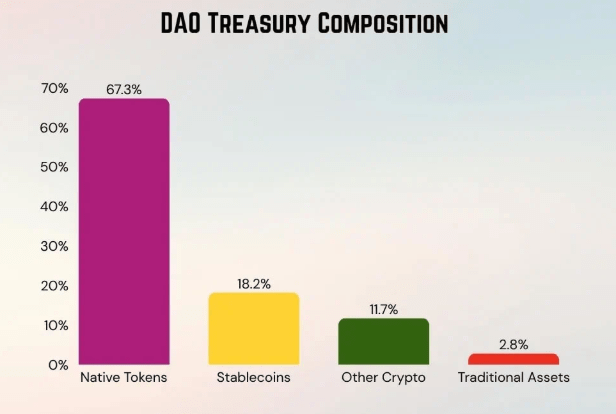
Wyoming was the first state to pass DUNA legislation, with its governor signing the law in March 2024. West Virginia has a similar bill awaiting approval. Globally, over 13,000 DAOs exist with collective treasuries exceeding $24.5 billion, with Ethereum and its layer-2 networks hosting over 85% of these organizations.
Disclaimer
This content is for informational purposes only and does not constitute financial, investment, or legal advice. Cryptocurrency trading involves risk and may result in financial loss.