
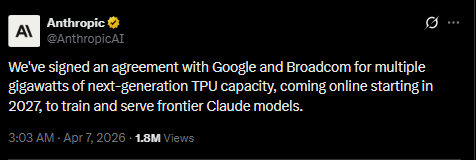
Anthropic announced a partnership with Google and Broadcom to secure multiple gigawatts of next-generation TPU compute capacity, scheduled to begin coming online in 2027. The agreement marks the company’s most significant infrastructure commitment to date and follows rapid revenue expansion to a $30 billion annual run rate, up sharply from $9 billion at the end of 2025.
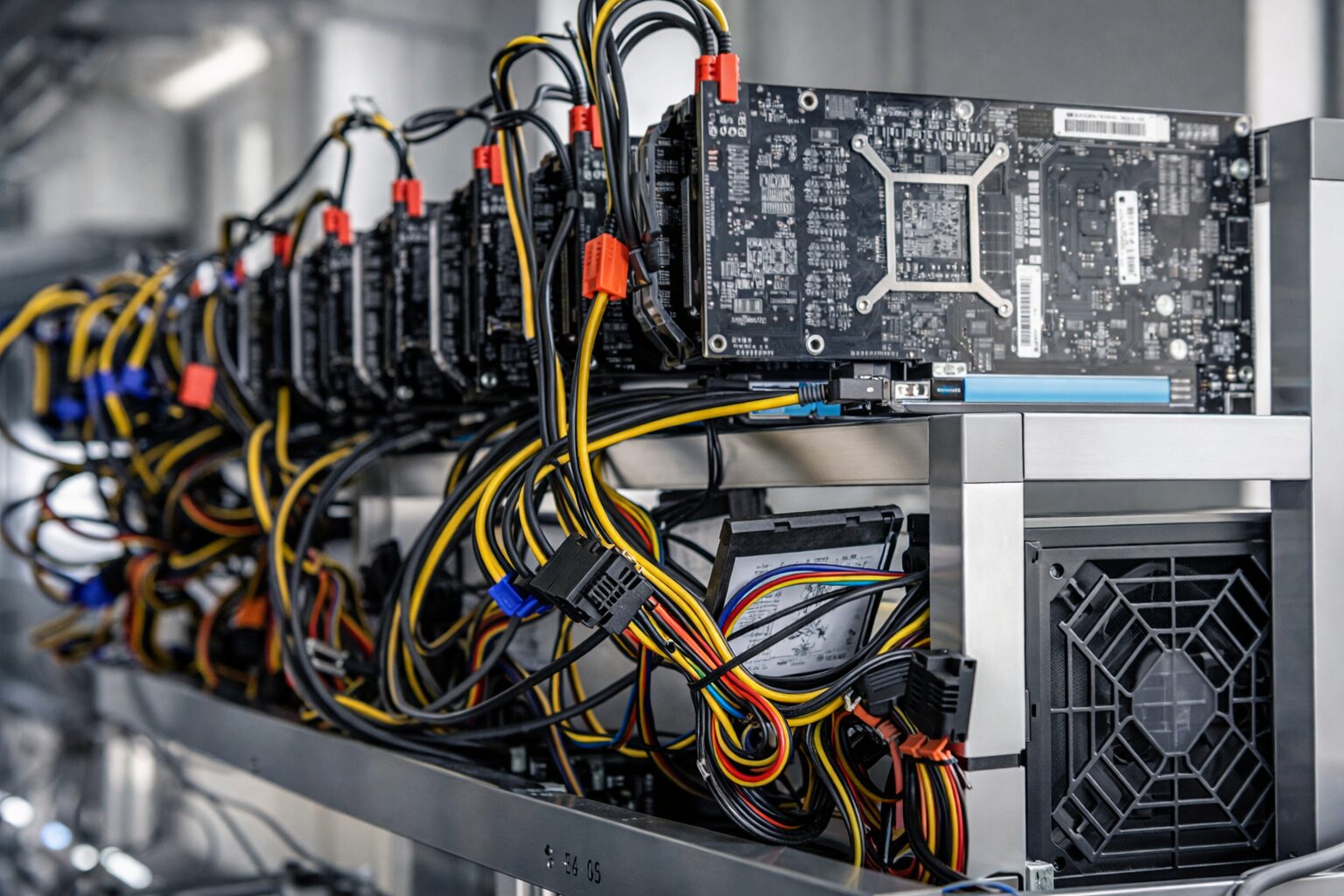
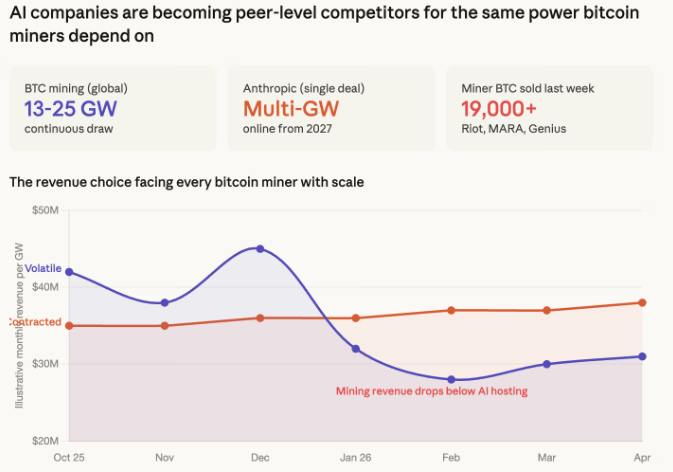
This scale of compute demand highlights growing competition between artificial intelligence developers and bitcoin miners for scarce resources such as grid connections, land permits, cooling systems, and low-cost electricity. According to a Cambridge tracking estimate, bitcoin mining globally consumes between 13 and 25 gigawatts of continuous power, depending on hardware efficiency assumptions.
Bitcoin Miners Weigh AI Hosting as Revenue Stability Shifts
Anthropic’s expansion adds to existing capacity across AWS Trainium, Google TPUs, and Nvidia GPUs, showing how quickly AI demand is reaching levels comparable to large industrial users. At the same time, OpenAI recently raised $122 billion and described compute infrastructure as a strategic moat, expanding across five cloud providers and four chip platforms.
A gigawatt dedicated to bitcoin mining produces revenue that fluctuates with bitcoin price and network difficulty, while leasing that same capacity to AI firms generates contracted and predictable income. With bitcoin near $69,000, difficulty at all-time highs, and electricity costs rising, leasing often provides stronger returns.
Mining Firms Shift Strategy as Economics Tighten
Core Scientific converted a significant portion of its mining capacity to AI hosting through a deal with CoreWeave. Iris Energy and Hut 8 expanded high-performance computing services, while Riot Platforms, MARA Holdings, and Genius Group disclosed selling more than 19,000 BTC from treasuries last week.
Anthropic also reported that the number of customers spending over $1 million annually on Claude doubled from 500 to more than 1,000 in under two months. Despite these shifts, bitcoin’s network hashrate continues to set records above 1 zetahash per second, suggesting miners may increasingly operate as infrastructure providers renting power capacity alongside mining operations.
Disclaimer
This content is for informational purposes only and does not constitute financial, investment, or legal advice. Cryptocurrency trading involves risk and may result in financial loss.