

Stablecoin transaction volumes could surge to as much as $1.5 quadrillion by 2035, signaling a major shift in how global payments are processed. A new industry report estimates that even under baseline growth, stablecoin activity could reach $719 trillion, highlighting rapid adoption across financial systems.
Stablecoins Move Toward Mainstream Payment Infrastructure
Stablecoins processed roughly $28 trillion in real economic activity in 2025, focusing on payments, remittances, and settlements rather than trading activity. Analysts expect continued growth as stablecoins become embedded in merchant payment systems, making digital asset transactions feel similar to traditional card payments.
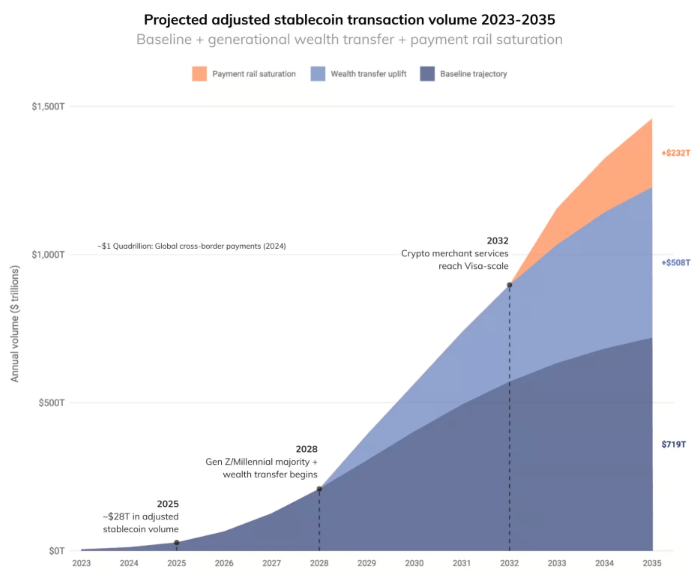
Two major drivers are expected to fuel this expansion. First, a $100 trillion generational wealth transfer between 2028 and 2048 will shift financial control toward younger users who are more comfortable using digital assets. Second, wider merchant adoption and backend payment integration will make stablecoin usage nearly invisible to consumers.
Competition With Visa and Mastercard Expected
Payment volumes using stablecoins could reach parity with major card networks such as Visa and Mastercard between 2031 and 2039, depending on adoption speed. Financial institutions are already positioning themselves for this shift, with payment firms acquiring crypto-focused infrastructure providers.
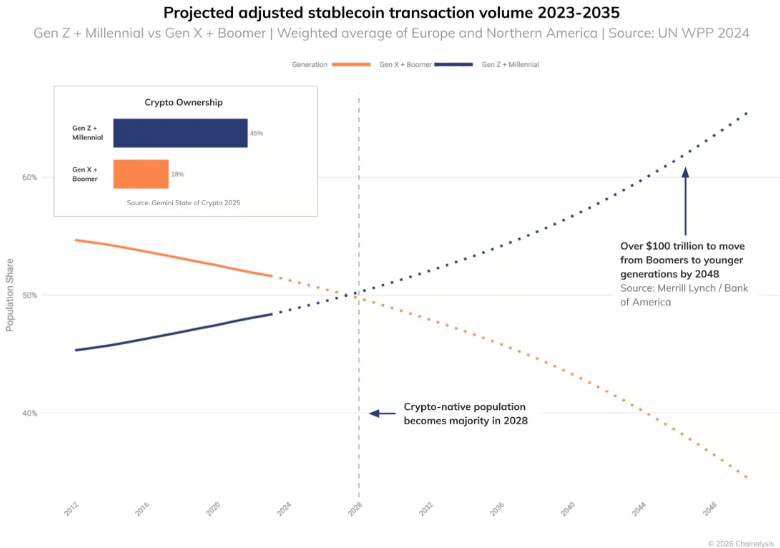
Financial institutions also expect stablecoin expansion to influence capital markets. Some projections suggest rising adoption could generate up to $1 trillion in demand for U.S. Treasuries, linking digital payments to global liquidity flows. Meanwhile, policymakers continue to debate regulatory frameworks as stablecoins transition from niche tools to core components of the global payments ecosystem.
Disclaimer
This content is for informational purposes only and does not constitute financial, investment, or legal advice. Cryptocurrency trading involves risk and may result in financial loss.