

Advances in quantum computing could eventually challenge Bitcoin’s cryptographic security, but analysts believe the threat remains manageable rather than catastrophic. A recent research report by Bernstein, led by Gautam Chhugani, Mahika Sapra, Sanskar Chindalia, and Harsh Misra, described the quantum threat as a “manageable upgrade cycle” rather than an existential risk to the network.
Quantum Computing Advances Shorten Security Timelines
Recent breakthroughs, including research showing reduced resource requirements to break modern encryption, have accelerated projections for quantum related risks. However, building cryptographically relevant quantum computers (CRQCs) capable of breaking Bitcoin encryption still faces major technical and financial hurdles.
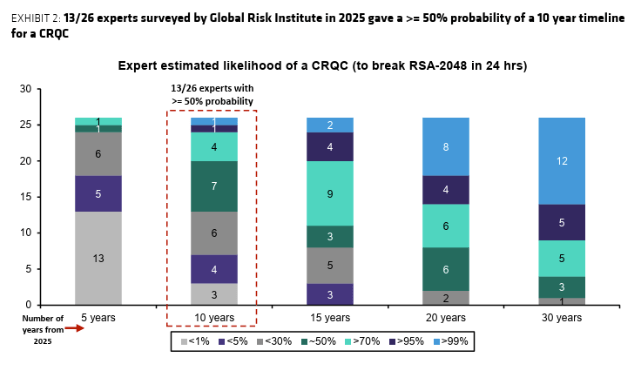
Bernstein estimates the cryptocurrency industry has roughly three to five years to prepare for post-quantum cryptography, giving developers time to implement upgrades through Bitcoin’s open-source consensus process.
Legacy Wallets Face the Highest Quantum Risk
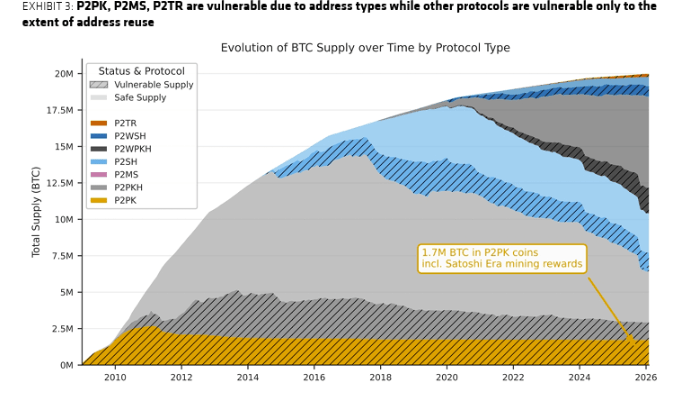
The report highlights that vulnerabilities are concentrated in older wallets, particularly those using pay-to-public-key (P2PK), pay-to-multisig (P2MS), and pay-to-Taproot (P2TR) address formats. Approximately 1.7 million BTC, including an estimated 1.1 million BTC linked to Satoshi Nakamoto, remain stored in early P2PK addresses, where public keys are permanently exposed.
Bitcoin Mining Remains Secure
Despite concerns around wallet encryption, Bitcoin’s mining process, which relies on SHA-256 hashing, is not considered significantly vulnerable to quantum attacks. Analysts believe improved wallet standards and reduced address reuse will play a key role in strengthening long-term network security.
Disclaimer
This content is for informational purposes only and does not constitute financial, investment, or legal advice. Cryptocurrency trading involves risk and may result in financial loss.