
President Signals Continued Presence in Persian Gulf Amid Ceasefire Disputes
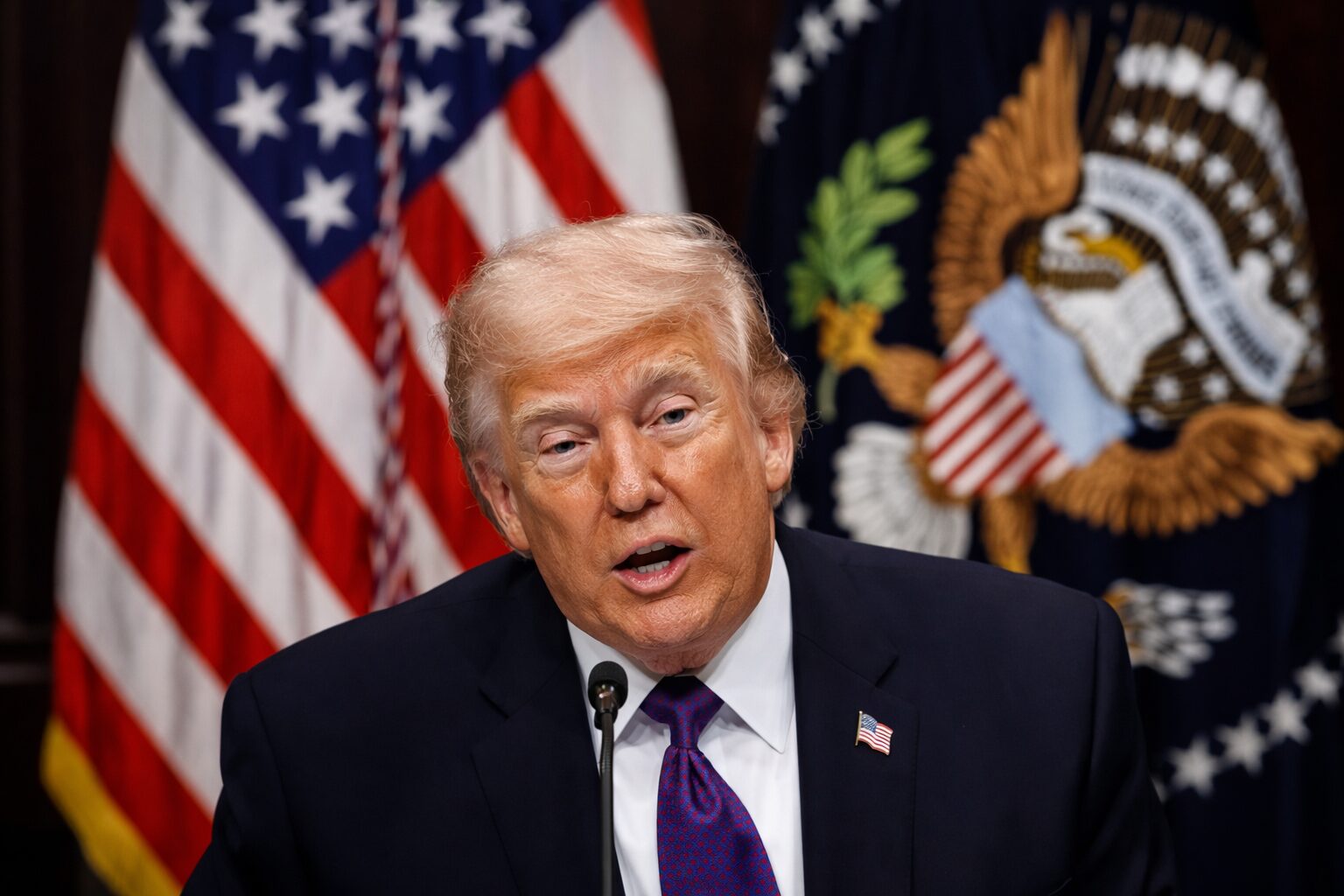
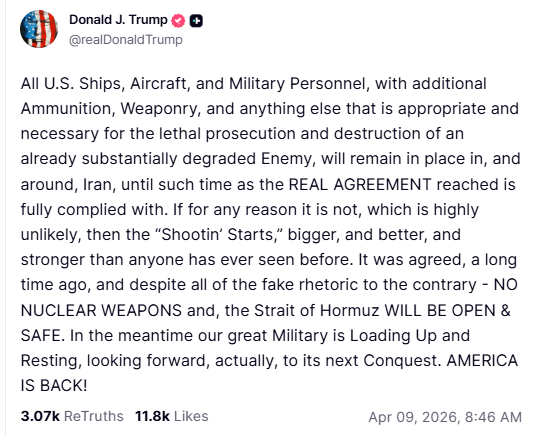
U.S. President Donald Trump stated on April 8 that American military ships, aircraft, and personnel will remain stationed in and around Iran to enforce compliance with a previously agreed ceasefire. Speaking on Truth Social, Trump warned that if Iran fails to fully comply with the deal, the U.S. will escalate military action. “If for any reason it is not, which is highly unlikely, then the ‘Shootin’ Starts,’ bigger, and better, and stronger than anyone has ever seen before,” he said.
Disagreements Over Nuclear Program and Strait of Hormuz
The announcement came after Iranian officials indicated that proceeding with permanent peace talks would be “unreasonable,” citing ongoing Israeli airstrikes in Lebanon that killed hundreds. The two sides also remain at odds over Iran’s nuclear activities. Trump stated that Iran had agreed to stop enriching uranium, while Iran’s parliament speaker Mohammed Bagher Ghalibaf maintained that uranium enrichment is permitted under the ceasefire terms.
Trump reaffirmed prior commitments, emphasizing that “NO NUCLEAR WEAPONS and, the Strait of Hormuz WILL BE OPEN & SAFE.” The Strait, a critical shipping lane, has been a focal point of international concern amid heightened tensions.
On the other side Iran ambassador to Pakistan: Iranian delegation to arrive Thursday night in Islamabad for “serious talks” based on 10 points proposed by Iran.
Strategic and Geopolitical Implications
The U.S. military presence signals continued American vigilance in the region, reflecting both deterrence against violations and reassurance to allies. Analysts note that the standoff could affect global energy markets, particularly oil prices, and heighten geopolitical uncertainty in the Middle East.
Disclaimer
This content is for informational purposes only and does not constitute financial, investment, or legal advice. Cryptocurrency trading involves risk and may result in financial loss.