

Canary Capital has submitted a Form S-1 application to the U.S. Securities and Exchange Commission seeking approval to launch a spot exchange-traded fund tied to the PEPE memecoin. The proposed product, named the CANARY PEPE ETF, is designed to track the price performance of the Pepe token by holding the asset directly through a designated custodian.
According to the filing, the ETF trust may allocate up to 5% of its assets to Ether in order to cover transaction fees associated with activity on the Ethereum blockchain. The move highlights the operational requirements of maintaining blockchain-based assets within a regulated investment structure.
Canary Capital already offers several cryptocurrency-related ETF products linked to assets such as XRP, Solana, Hedera, and Sei. In November 2025, the firm also submitted an application for an ETF tracking Mog Coin, a smaller memecoin ranked significantly below PEPE by market capitalization.
Market Risks and Concentration Raise Investor Concerns
The proposed ETF arrives at a time when PEPE remains significantly below its previous peak. The token is currently down nearly 85% from its December 2024 all-time high of $0.00002368. Despite the decline, the token continues to maintain a large user base, with approximately 513,392 holders recorded on blockchain data platforms.
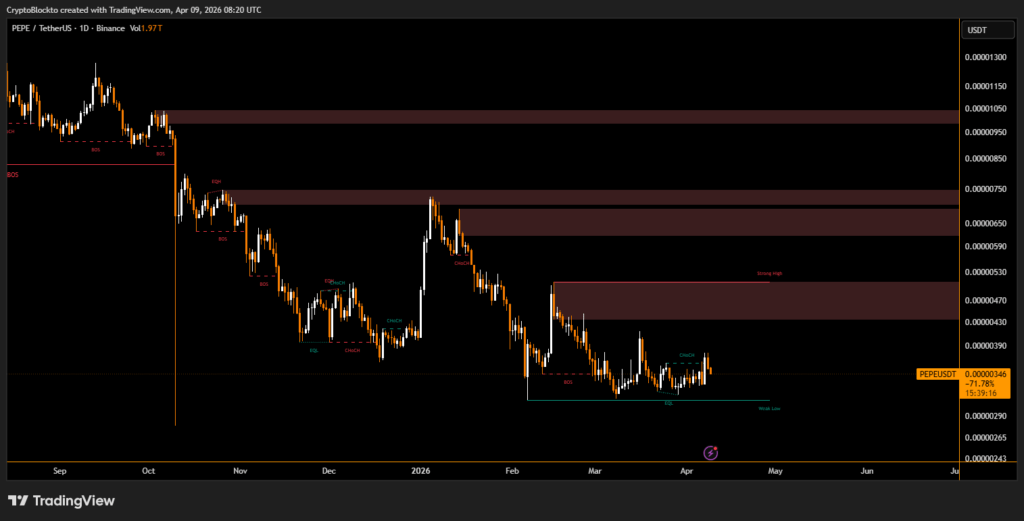
The filing also highlighted ownership concentration risks, noting that as of January 2026, the ten largest PEPE wallet addresses controlled about 41% of the circulating supply. Such concentration could increase price volatility and impact investor confidence.
Regulatory developments remain a key factor in determining the pace of new ETF launches. Canary Capital noted in its filing that rules governing the use of the Pepe token and Ethereum network in the United States continue to evolve, which could influence both adoption and long-term demand for the asset.
Disclaimer
This content is for informational purposes only and does not constitute financial, investment, or legal advice. Cryptocurrency trading involves risk and may result in financial loss.