

A new proposal by Avihu Levy, chief product officer at StarkWare, outlines a method designed to make Bitcoin transactions resistant to quantum computing threats without requiring a soft fork or protocol upgrade. The concept, called Quantum Safe Bitcoin (QSB), aims to protect funds even against powerful quantum machines capable of running Shor’s algorithm, which is widely considered a major risk to traditional cryptographic systems.
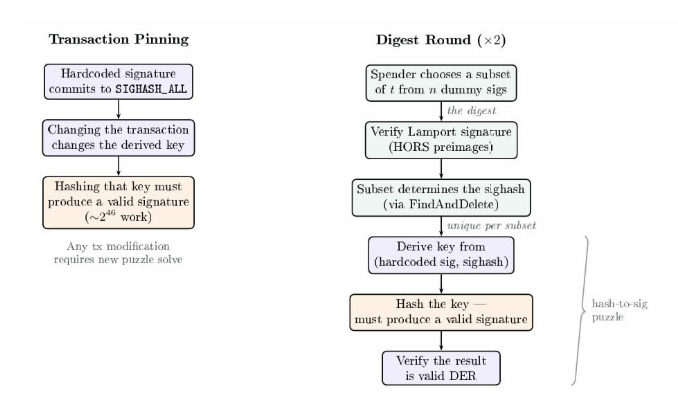
Instead of relying solely on elliptic curve signatures, the system introduces a hash-based puzzle that requires senders to find inputs producing outputs that resemble valid signatures. This brute-force process is designed to remain secure even if quantum computers become capable of breaking current encryption methods.
Costs, Limitations, and Industry Reactions
The method comes with significant trade-offs. Each QSB transaction may cost between $75 and $150 in GPU computing power, making it suitable mainly for large-value transfers rather than everyday payments. Eli Ben-Sasson, StarkWare’s CEO, described the concept as a major step toward immediate protection. However, Daniel Batten, a Bitcoin ESG specialist, argued that it does not address vulnerable early wallets, including an estimated 1.7 million BTC stored in older P2PK addresses.

Long-Term Quantum Security Debate Continues
Researchers acknowledged that protocol-level upgrades remain the preferred long-term solution, especially because the approach does not cover systems such as the Lightning Network. Meanwhile, Olaoluwa Osuntokun, chief technology officer at Lightning Labs, introduced a quantum “escape hatch” prototype allowing users to verify wallet ownership using seed phrases without exposing them. A recent quantum research paper from Google has also intensified urgency around preparing Bitcoin for future cryptographic threats.
Disclaimer
This content is for informational purposes only and does not constitute financial, investment, or legal advice. Cryptocurrency trading involves risk and may result in financial loss.