

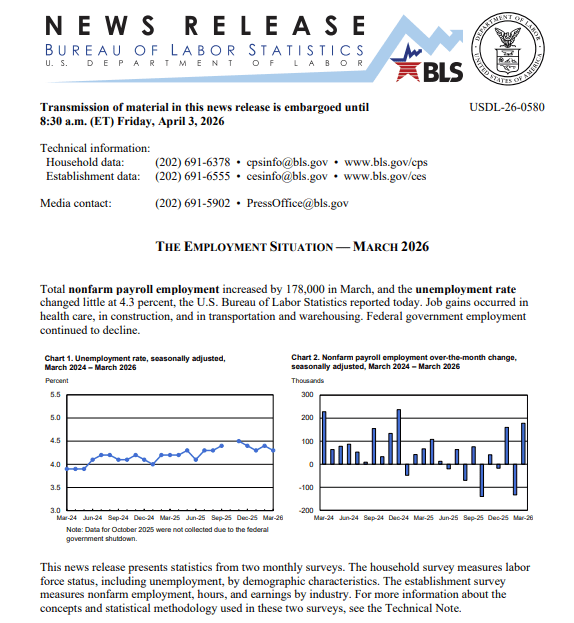
Artificial intelligence is increasingly shaping hiring patterns, yet recent labor data shows mixed outcomes compared with earlier expectations of economic expansion. The US added 178,000 jobs in March, according to the Bureau of Labor Statistics, with most gains coming from healthcare (76,000 jobs), construction (26,000), transportation and warehousing (21,000), and social assistance (14,000). Technology-related roles showed weaker performance, with computer systems design losing around 13,000 positions.
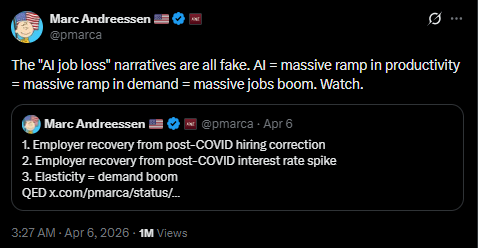
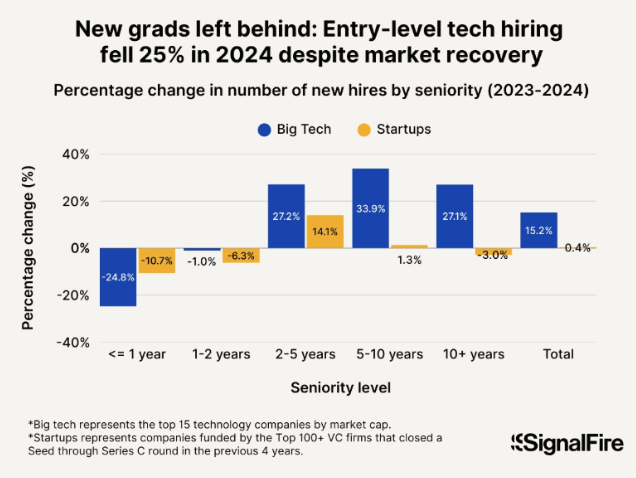
Venture capitalist Marc Andreessen argued that fears of AI-driven job losses are exaggerated, noting that tech job listings have risen to about 67,000 since 2023. However, listings have not translated into consistent hiring. Reports cited by Goldman Sachs estimate that AI-related restructuring has eliminated roughly 16,000 jobs per month over the past year. Research from SignalFire also found that hiring of new graduates has dropped by nearly 50% compared with pre-pandemic levels.
Productivity Benefits Remain Uneven Across Workplaces
Executive enthusiasm for AI remains strong. Studies highlighted by Harvard Business Review show that 80% of leaders use AI weekly, with 74% reporting early positive returns. Yet worker experiences differ significantly. A survey by Mercer found 43% of employees feel their work has become more frustrating due to AI errors and workflow disruptions.
Research from Workday suggests that for every 10 hours of efficiency gained, nearly four hours are lost correcting inaccurate outputs. Analysts such as Brian Solis have described this burden as an “AI tax,” emphasizing the additional rework, stress, and reduced trust associated with imperfect automation systems.
Disclaimer
This content is for informational purposes only and does not constitute financial, investment, or legal advice. Cryptocurrency trading involves risk and may result in financial loss