
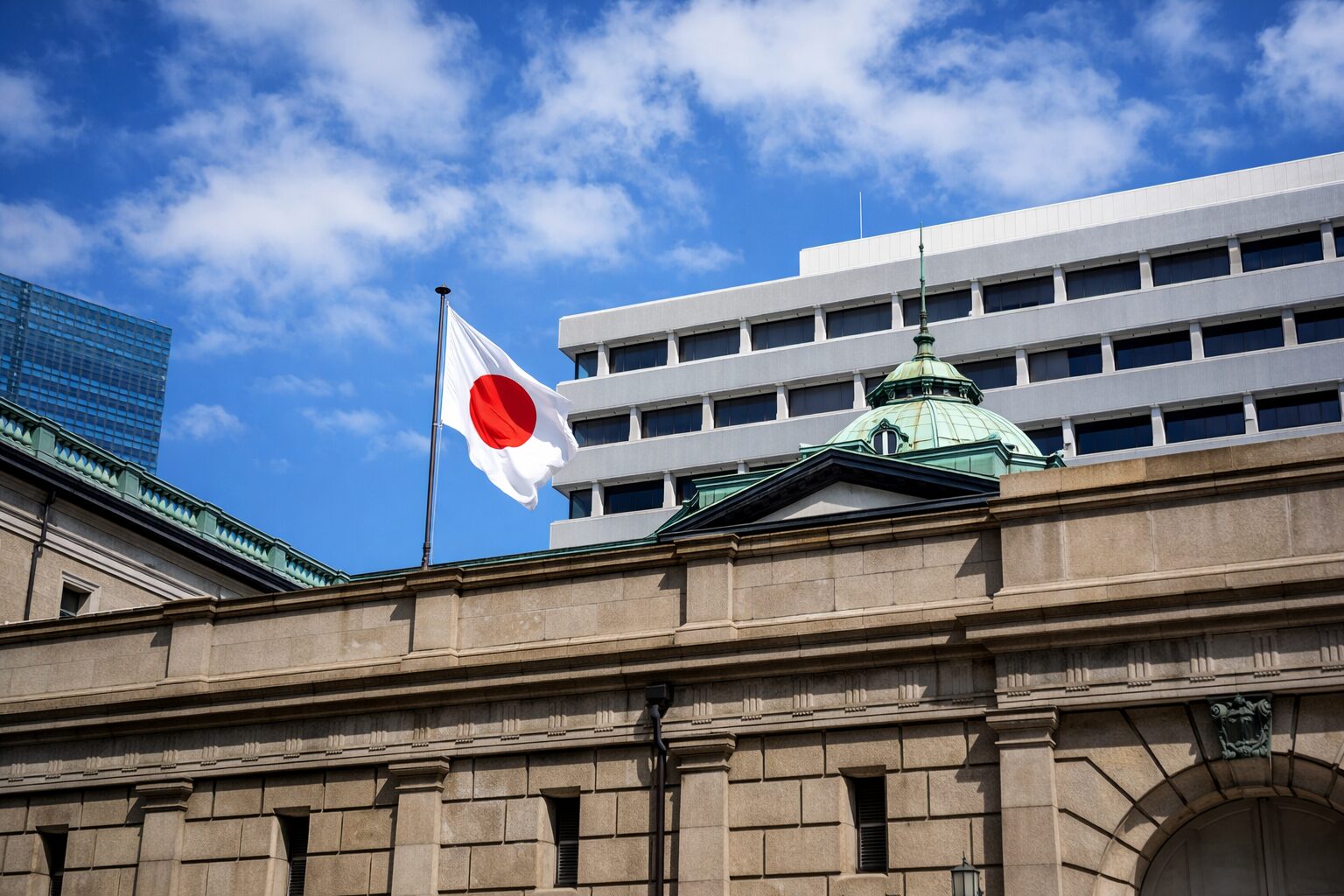
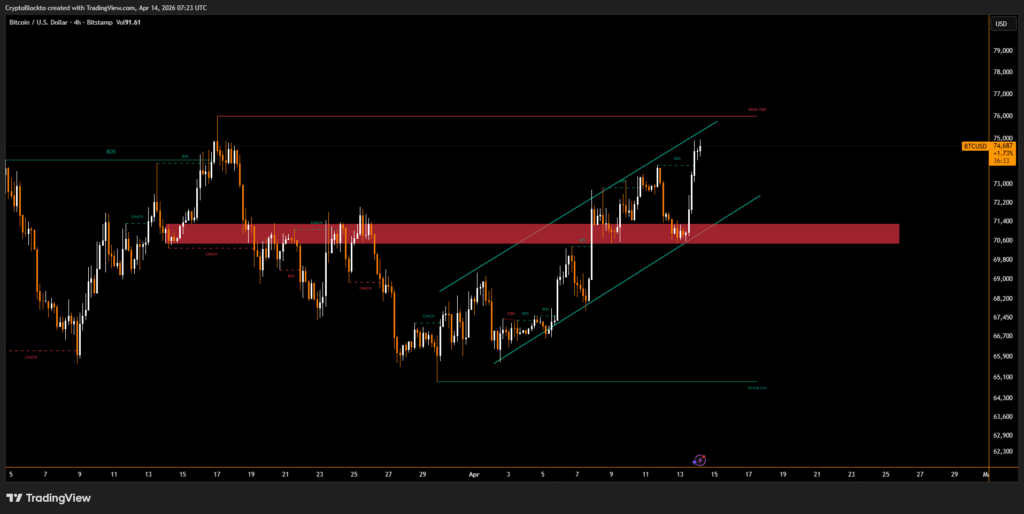
Bitcoin’s breakout above $74,000 has been strengthened by a softer tone from the Bank of Japan, which signaled it is unlikely to raise interest rates at its April 28 meeting. Governor Kazuo Ueda adopted a cautious stance amid uncertainty over the economic impact of the Iran conflict, easing pressure on global risk assets.
The policy shift matters for crypto because it keeps the yen weak and preserves cheap funding conditions for leveraged strategies. A similar setup reversed sharply in August 2024, when a surprise BOJ rate hike triggered a yen carry trade unwind that caused Bitcoin to fall from $64,000 to $49,000 in just 48 hours.
Yen Carry Trade Liquidity Fuels Bitcoin Futures Positioning
The yen carry trade where investors borrow in low interest yen to invest in higher-yielding assets remains active and continues to support risk markets, including crypto derivatives. The yen is currently near 160 per U.S. dollar, keeping funding costs low and encouraging leverage.
Japan’s 20-year bond auction also reinforced the outlook, recording its strongest demand since 2019 with a bid-to-cover ratio of 4.82 versus a 12-month average of 3.27. Yields briefly eased afterward, signaling confidence that tightening is on hold.
Geopolitics and Inflation Outlook Add Further Support
Japan’s exposure to Middle East energy routes, especially the Strait of Hormuz, means any easing in oil prices from potential U.S.-Iran negotiations could further reduce inflation pressure. That would give the BOJ even less reason to tighten policy.
Recent data also showed billions in new Bitcoin and Ether futures open interest, suggesting renewed leveraged positioning, likely supported by continued yen liquidity. With macro risks easing, the BOJ’s stance has become a key tailwind behind Bitcoin’s sustained breakout above resistance levels.
Disclaimer
This content is for informational purposes only and does not constitute financial, investment, or legal advice. Cryptocurrency trading involves risk and may result in financial loss.