
The United States and Iran have reportedly agreed “in principle” to extend a truce, according to sources, even as military tensions intensify across the region. Despite discussions on renewing the ceasefire, former US President Donald Trump signaled he does not plan to extend the agreement, adding uncertainty to already fragile diplomacy.
Military Escalation and Naval Blockade
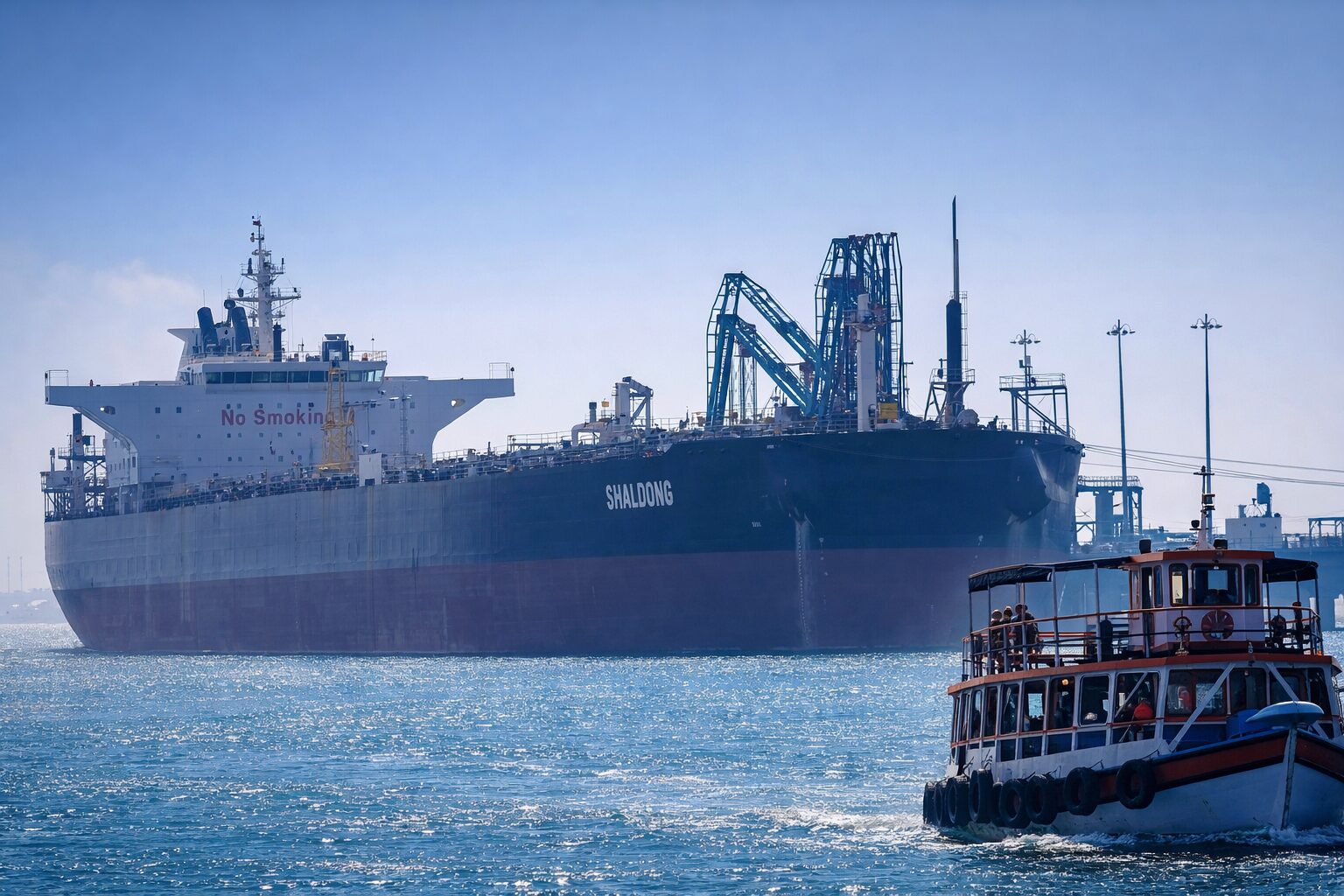
The Pentagon has reportedly deployed an additional 10,000 troops as US Central Command (CENTCOM) claims a full naval blockade has been implemented, preventing trade to and from Iran through sea routes. CENTCOM stated that Iranian ports are now “fully blocked,” aiming to restrict maritime movement in the Persian Gulf and surrounding waters.
Iranian officials, however, strongly rejected the blockade. Major General Ali Abdollahi warned that Iran could retaliate by expanding maritime restrictions across the Red Sea, Persian Gulf, and Sea of Oman, stating that no exports or imports would be allowed if pressure continues.
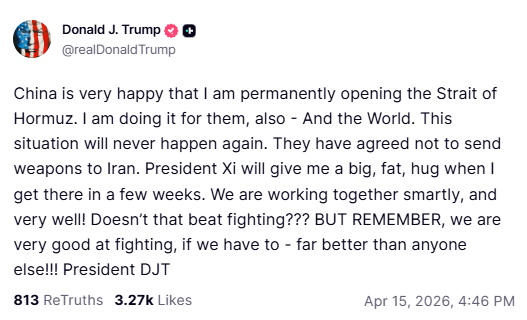
Amid the escalating rhetoric, US President Donald Trump issued a statement on truth social emphasizing his role in keeping the Strait of Hormuz open. He said:
“China is very happy that I am permanently opening the Strait of Hormuz. I am doing it for them, also – And the World. This situation will never happen again. They have agreed not to send weapons to Iran…” .
The remarks come as regional powers and global markets closely monitor the evolving crisis, with shipping security and energy prices remaining highly sensitive to any further escalation.
Disclaimer
This content is for informational purposes only and does not constitute financial, investment, or legal advice. Cryptocurrency trading involves risk and may result in financial loss.