

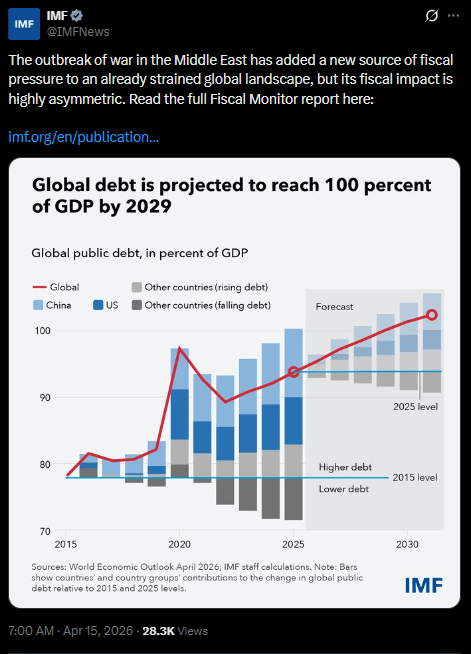
The International Monetary Fund has warned that global public debt could approach 100% of world gross domestic product (GDP) by 2029, raising concerns about fiscal solvency and long-term bond market stability. Under current projections, major economies including the United States and China are expected to remain key contributors to rising debt levels, alongside increased global defense spending.
If debt issuance continues to outpace economic growth, investors may begin demanding higher bond yields, reflecting concerns about governments’ ability to repay obligations.
Bitcoin Seen as Potential Hedge Against Debt and Financial Stress
In a scenario where bond yields rise due to solvency fears rather than monetary tightening, investors could shift funds into alternative assets such as Bitcoin. Its fixed supply cap of 21 million coins, independence from sovereign balance sheets, and decentralized structure support its role as a potential hedge against inflation and financial repression.
Historical events reinforce this view. Bitcoin gained momentum following the 2013 Cyprus banking crisis and again during the 2023 U.S. regional banking turmoil, when stress across lenders coincided with a broader crypto market recovery.
Rising Yields Remain a Risk Factor for Crypto Markets
However, rising yields can also create pressure on risk assets. During 2021–2022, aggressive rate hikes by the Federal Reserve lifted Treasury yields and contributed to Bitcoin’s fall from nearly $70,000 to around $16,000.
Unlike previous cycles driven by central bank tightening, a debt-driven yield surge could lead investors to question government solvency, potentially increasing interest in decentralized assets over the long term.
Disclaimer
This content is for informational purposes only and does not constitute financial, investment, or legal advice. Cryptocurrency trading involves risk and may result in financial loss.