

BitMEX Research has introduced a proposed alternative to freezing dormant Bitcoin that may be vulnerable to future quantum computing attacks. Instead of immediately restricting access to older coins, the proposal recommends a soft fork that would only activate a full freeze if a quantum computer capable of stealing Bitcoin is proven to exist.

The concept relies on a “canary approach,” which creates a special Bitcoin address generated using a Nothing-Up-My-Sleeve Number (NUMS). This cryptographic method ensures the private key is unknown, meaning the address cannot be spent under normal circumstances but could be accessed if powerful quantum technology becomes available.
How the Canary Watch System Would Work
Under the model, users could voluntarily donate Bitcoin to the canary address as a bounty. If a quantum-capable actor successfully spends funds from the address, it would act as proof of a real threat and automatically trigger protective measures. Until then, older coins would remain spendable under a “canary watch state,” reducing disruption to the network.
The proposal also allows participants to secure funds using multisignature wallets and withdraw contributions at any time.
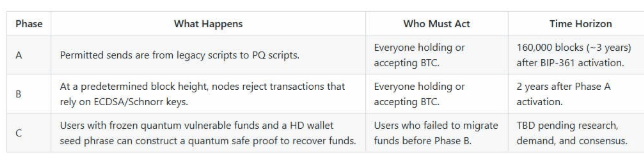
Debate Around BIP-361 and Quantum Security Plans
This proposal comes after the introduction of BIP-361, a plan that suggested freezing dormant Bitcoin considered vulnerable to quantum attacks. The idea drew criticism from parts of the community, with some describing it as overly restrictive. BIP-361 co-author Jameson Lopp later clarified that the proposal was intended as a preliminary contingency concept rather than a finalized upgrade plan, highlighting concerns about potential supply shocks if quantum computing capabilities advance rapidly.
Disclaimer
This content is for informational purposes only and does not constitute financial, investment, or legal advice. Cryptocurrency trading involves risk and may result in financial loss.