
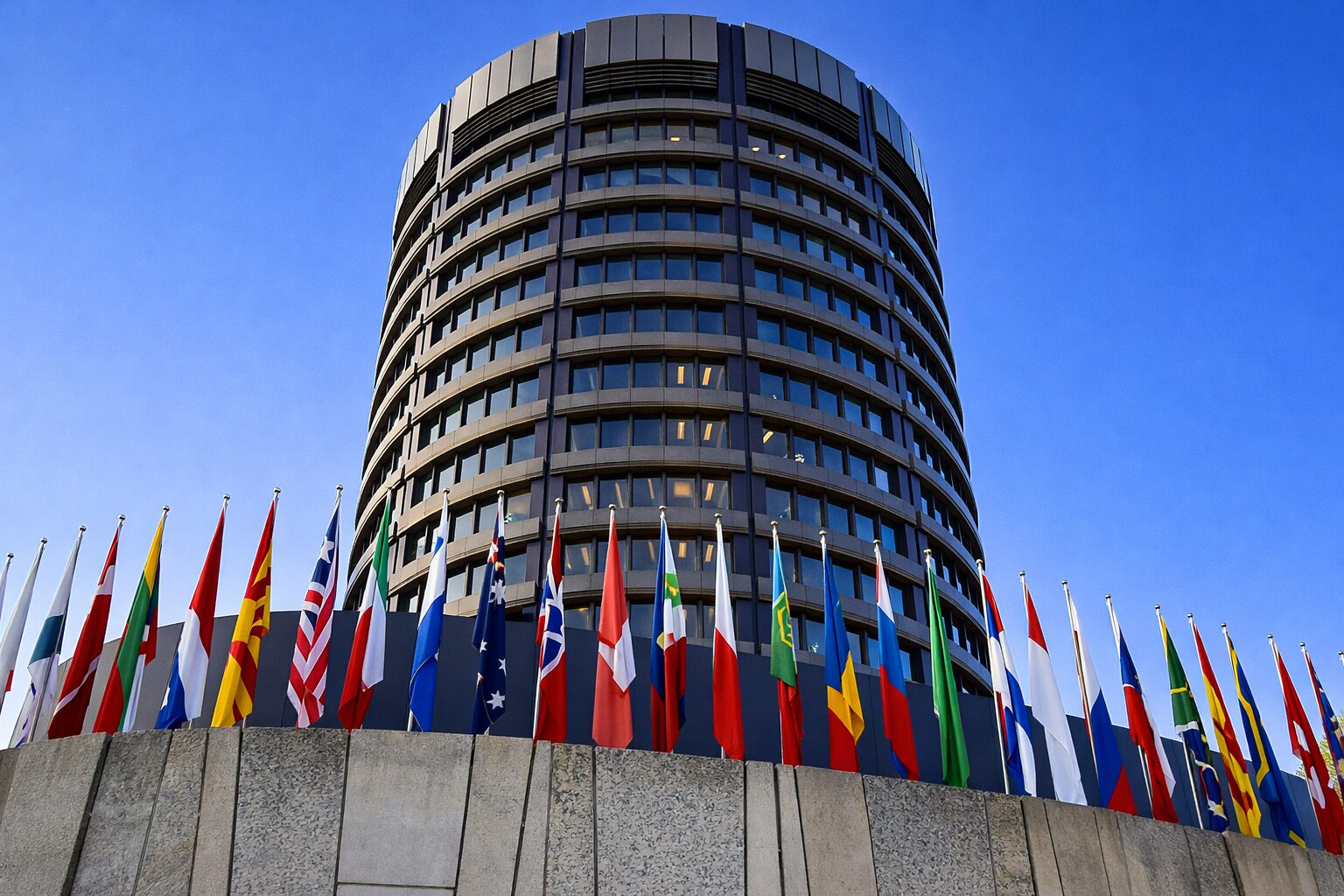
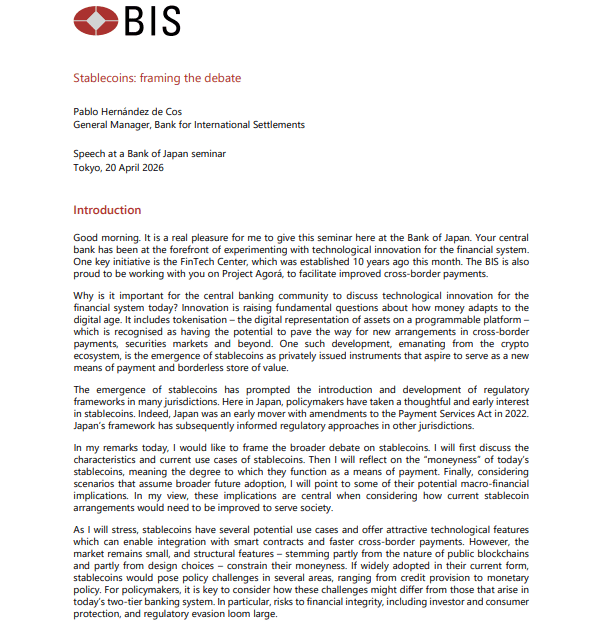
The Bank for International Settlements has issued a warning that US dollar backed stablecoins could create risks for financial stability and monetary policy if adoption expands significantly. Speaking in Tokyo at a Bank of Japan seminar, BIS general manager Pablo Hernández de Cos said that tokens such as USDt and USDC behave more like investment products than cash equivalents due to redemption limits, fees, and price deviations in secondary markets.
He warned that stablecoins may resemble exchange-traded funds while still carrying run risks because reserves are held in short-term government debt and bank deposits. In stressed conditions, sudden withdrawals could force asset liquidation and transmit liquidity pressure into traditional banking systems.
Cross-Border Payments Growth Raises Regulatory Concerns
De Cos noted that while stablecoins enable faster cross border payments and programmable financial applications, their structure remains unsuitable as a fully stable payment instrument. He also highlighted risks linked to permissionless blockchain usage and unhosted wallets, which may reduce oversight and increase exposure to illicit activity unless stricter on- and off-ramp controls are implemented.
Global Policy Tightening Around Stablecoins
The warning aligns with growing regulatory scrutiny in Europe, where policymakers including Bank of France officials are considering limits on non-euro stablecoins. The European Central Bank has also compared stablecoins to tokenized money market funds, emphasizing similar liquidity and run risks. Meanwhile, regulators in the United Kingdom and Switzerland are exploring stricter frameworks and pilot programs as stablecoin usage expands globally.
Disclaimer
This content is for informational purposes only and does not constitute financial, investment, or legal advice. Cryptocurrency trading involves risk and may result in financial loss.