

The European Union has announced its most extensive sanctions package against Russia in two years, tightening restrictions on financial channels and expanding measures aimed at limiting sanctions evasion through digital assets. The bloc stated that Russia has increasingly relied on crypto for cross border transactions, prompting stronger enforcement actions.
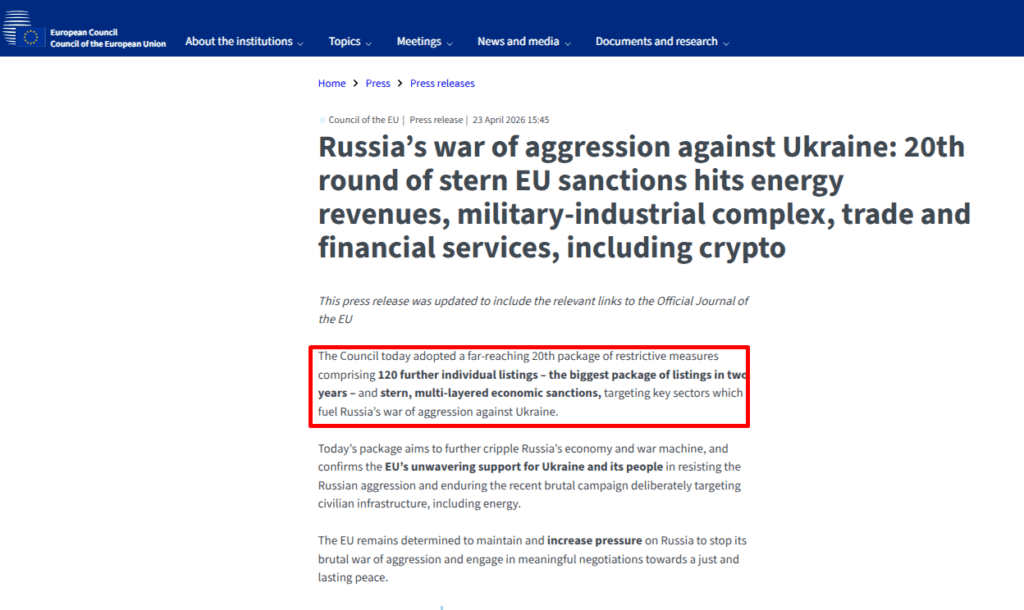
Crypto Platforms and Digital Ruble Blocked Under New EU Measures
The new framework introduces a full ban on crypto service providers and platforms operating in Russia, alongside restrictions on decentralized finance activity linked to Russian and Belarusian entities. The European Union also moved to block support for Russia’s central bank digital currency initiatives, including the ruble-backed stablecoin and related digital infrastructure.
In addition, sanctions extend to 20 Russian banks and several foreign financial institutions connected to Russia’s SPFS messaging network. A Kyrgyz crypto exchange was also included due to its role in processing large volumes of stablecoin transactions tied to sanctioned ecosystems.
Broader Financial Restrictions Target Global Intermediaries
EU residents are now prohibited from engaging with Russian and Belarusian crypto platforms or providing regulated crypto services under MiCA rules. Authorities also expanded restrictions to prevent indirect settlement channels through third countries, further tightening global financial pressure on Russia’s digital and traditional payment systems.
Disclaimer
This content is for informational purposes only and does not constitute financial, investment, or legal advice. Cryptocurrency trading involves risk and may result in financial loss.