
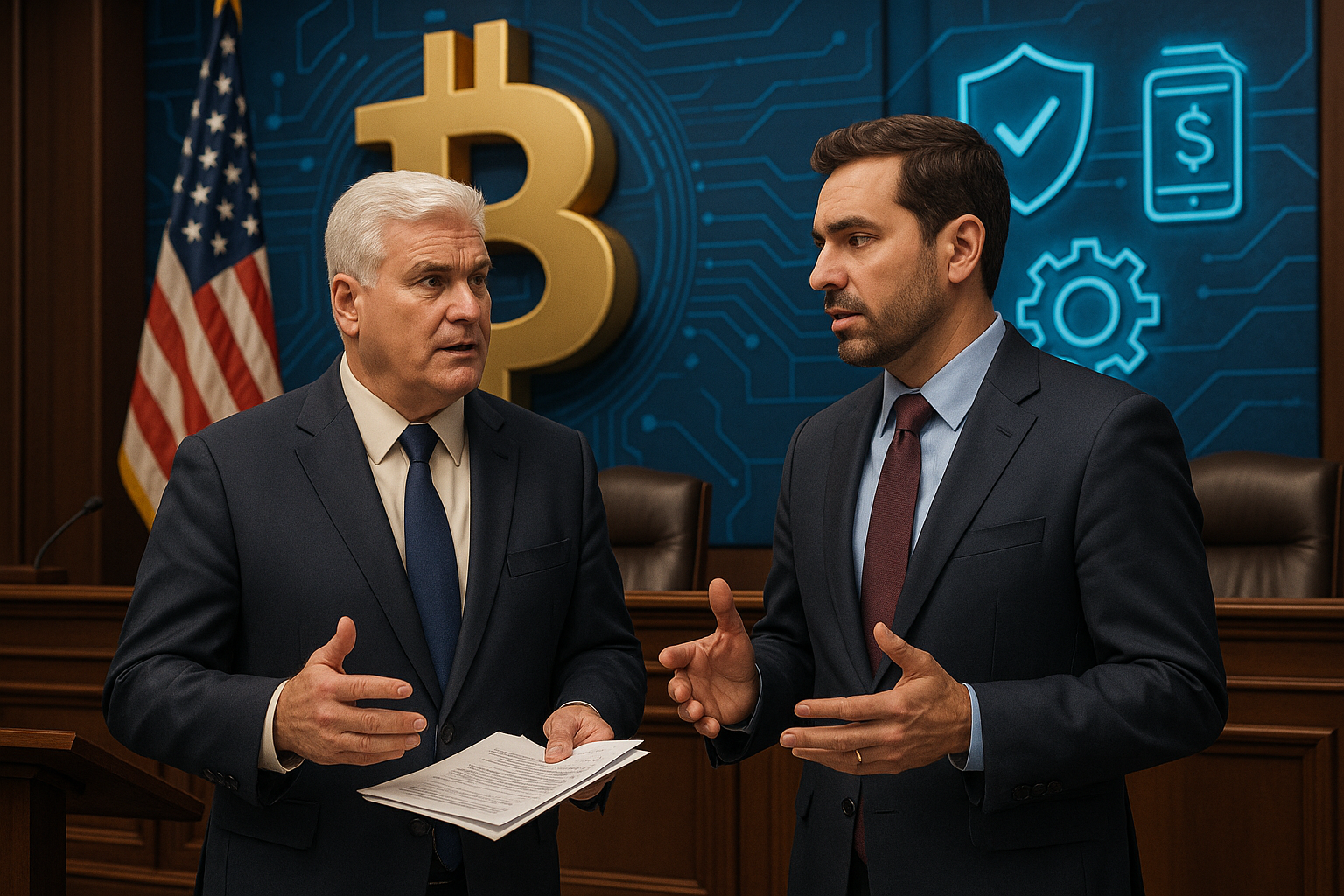
U.S. Representatives Tom Emmer (R-MN) and Ritchie Torres (D-NY) have reintroduced legislation aimed at providing regulatory clarity for non-custodial crypto service providers, a key sector of the digital asset economy. The bill, titled the Blockchain Regulatory Certainty Act, seeks to ensure that developers, miners, and wallet providers are not unfairly targeted by current or future regulations.
“Non-custodial providers should not be subjected to the same compliance burdens as custodians,” said Rep. Emmer. “This bill is about protecting innovation and American leadership in Web3.”
What the Bill Covers: Definitions and Protections
The reintroduced legislation specifically focuses on distinguishing between custodial and non-custodial entities within the blockchain ecosystem. Non-custodial providers do not hold or manage customer assets, yet they often face regulatory uncertainty due to vague language in current laws.
The bill aims to:
- Protect software developers, validators, miners, and protocol contributors from being classified as money transmitters.
- Clarify that entities merely enabling peer-to-peer transactions without custody are not financial intermediaries.
- Promote clear, fair regulations that allow decentralized innovation to flourish in the U.S.
“We need guardrails that support, not stifle, blockchain innovation,” emphasized Rep. Torres. “This bipartisan bill ensures we don’t regulate developers like banks.”
Support from Industry and Advocacy Groups
The bill has garnered widespread support from crypto advocacy organizations, including Coin Center, the Blockchain Association, and leading open-source developers. These groups argue that regulatory clarity is essential for protecting U.S.-based projects from moving overseas.
Developers and decentralized protocol teams often fear enforcement due to regulatory gray areas, even when they do not control user assets. The Blockchain Regulatory Certainty Act addresses this issue head-on.
Why This Matters for U.S. Crypto Policy
With increasing scrutiny from agencies like the SEC and CFTC, establishing clear legal boundaries is more important than ever. Without proper definitions, innovation in DeFi and decentralized applications could be slowed or driven offshore.
The bill also comes at a time when global jurisdictions—such as the EU and UAE—are advancing progressive crypto frameworks, potentially giving them a competitive edge if U.S. policy remains ambiguous.
Conclusion: A Crucial Step Toward Crypto Clarity
The reintroduction of the Blockchain Regulatory Certainty Act signals a proactive, bipartisan approach to crypto regulation. By differentiating between custodial and non-custodial service providers, the bill aims to protect innovators while preserving regulatory integrity.
As the industry awaits further legislative movement, this effort represents a key moment in shaping the future of decentralized technology in the U.S.