
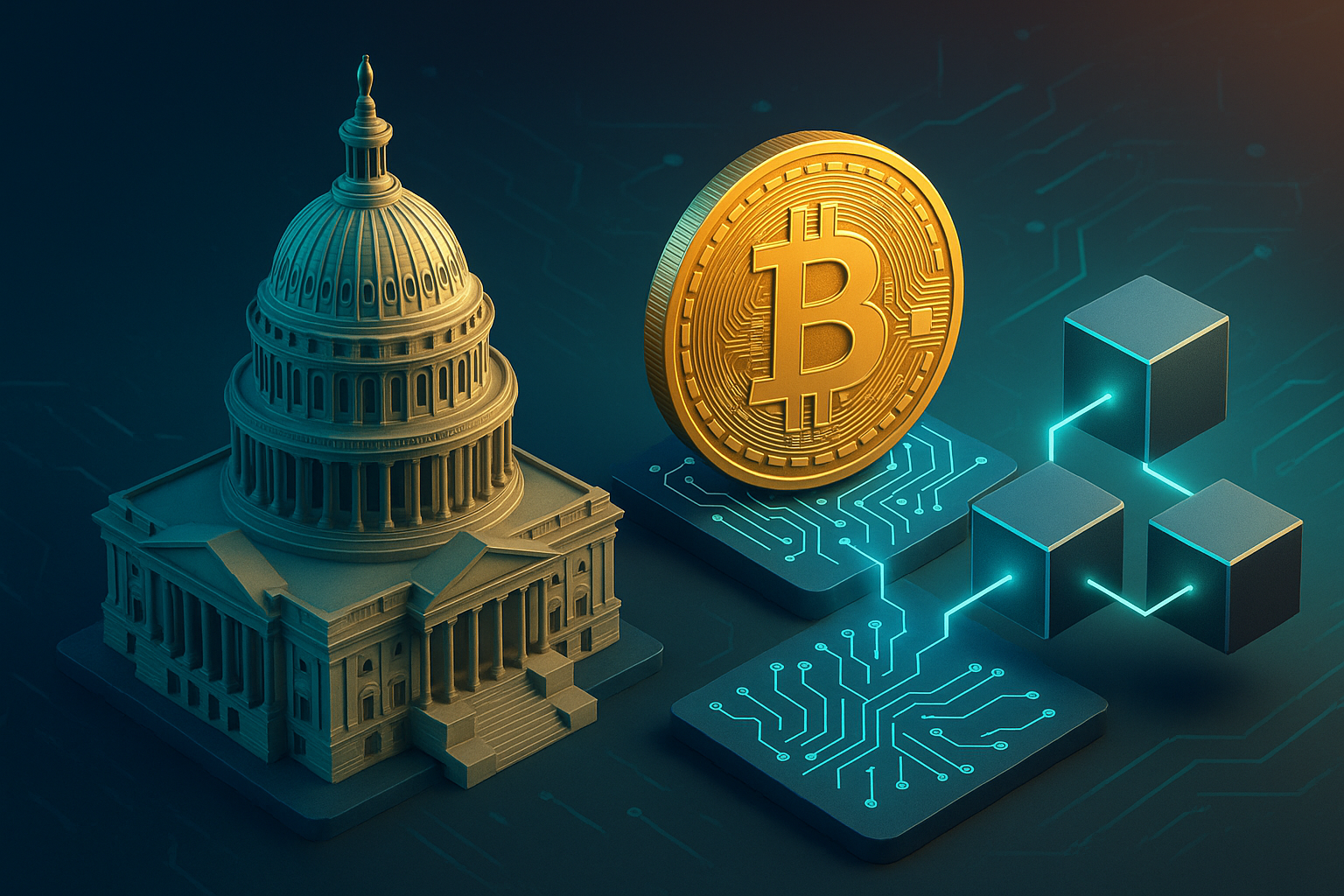
In a decisive shift toward crypto regulation, U.S. lawmakers have introduced two major bills aimed at establishing oversight for stablecoins and blockchain infrastructure. The coordinated legislative efforts suggest that Washington is finally moving to create a legal framework for digital assets.
Two Landmark Bills Introduced in Congress
On May 23, 2025, a bipartisan group of lawmakers introduced:
- The Stablecoin Transparency and Oversight Act, and
- The National Blockchain Infrastructure Act.
These bills represent the most comprehensive attempt yet by Congress to regulate the crypto sector, especially stablecoins which have been under increasing scrutiny.
“We must bring transparency and accountability to this rapidly evolving space,” said Senator Cynthia Lummis, one of the bill’s sponsors.
Focus on Stablecoin Regulation and Reserve Backing
The Stablecoin Transparency and Oversight Act would require all U.S. dollar-pegged stablecoins to be fully backed by audited reserves. The legislation also proposes that issuers register with a federal agency and undergo quarterly disclosures.
Stablecoin issuers like Tether (USDT) and Circle (USDC) may need to adjust operational models to meet compliance thresholds.
“Stablecoins are becoming systemic. We need safeguards before it’s too late,” warned Congressman Patrick McHenry.
The bill also addresses algorithmic stablecoins, effectively prohibiting their issuance without real-asset backing.
Blockchain Infrastructure to Be Recognized Nationally
Meanwhile, the National Blockchain Infrastructure Act aims to:
- Classify blockchain technology as critical infrastructure,
- Fund research and development in blockchain security and interoperability,
- Encourage public-private partnerships to boost innovation.
The bill recognizes blockchain’s potential in supply chain management, digital identity, and secure data sharing.
“Blockchain isn’t just about crypto—it’s about transforming how data is stored and trusted,” said Rep. Ro Khanna.
Industry Reaction: Cautious Optimism
The crypto community has welcomed the move with measured optimism, noting that clear regulation could legitimize the industry and attract institutional players.
Coinbase and Kraken issued statements praising the bills for “clarity and forward-thinking.” However, smaller projects raised concerns about the compliance burden and potential cost barriers.
“If done right, this could be a game-changer for U.S. crypto leadership,” said Coin Center director Jerry Brito.
Conclusion
Washington’s latest actions signal serious momentum in regulating digital assets. While implementation remains months away, these bills may shape how crypto grows in the United States—balancing innovation and consumer protection.