
Coinbase, the leading U.S.-based cryptocurrency exchange, is under legal fire once again. A proposed class-action lawsuit has been filed, accusing the company of failing to disclose a significant data breach, which allegedly led to a sharp drop in its stock price, causing investor losses.

The lawsuit claims Coinbase violated securities laws by not informing shareholders about the breach in a timely manner.

This legal battle follows multiple regulatory challenges faced by the exchange, including investigations by the SEC and ongoing privacy lawsuits tied to its user data handling practices.

What Triggered the Lawsuit?

According to court filings, the breach—first detected in late 2023—involved the unauthorized access of sensitive customer information, including names, email addresses, and trading activity. While Coinbase reported the breach publicly in early 2024, the plaintiffs argue that the delay in disclosure directly harmed investors.

“Had investors known the full extent of the breach earlier, they could have made informed decisions,” the complaint reads.

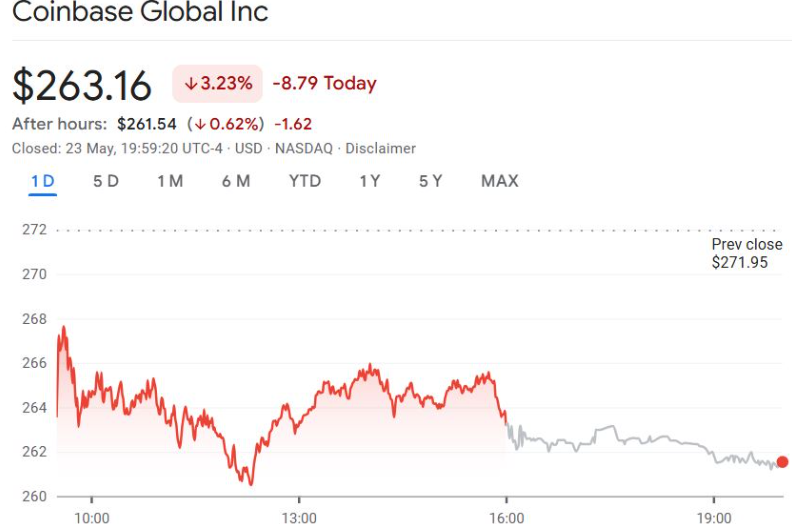
Following the public announcement, Coinbase’s stock (COIN) fell over 12% in a single trading session—erasing billions in market value.


Investors Allege Securities Fraud

The proposed class action, filed in a U.S. District Court, accuses Coinbase executives of violating Section 10(b) and 20(a) of the Securities Exchange Act, which prohibit misleading investors through omission or false representation.

Investors claim Coinbase misled the market by failing to disclose a material cybersecurity risk.

The legal team behind the suit is seeking compensation for all shareholders who purchased Coinbase stock between November 2023 and February 2024.


Coinbase Responds: “We Take Security Seriously”

In a brief statement, Coinbase reiterated its commitment to user safety and data protection, stating that the breach was “contained quickly” and that no user funds were stolen.

“We disclosed the incident as soon as it was appropriate under applicable laws and regulations,” a spokesperson said.

Coinbase also noted that the lawsuit is without merit and that it plans to vigorously defend itself in court.


What’s at Stake?

This lawsuit could set a precedent for how publicly traded crypto companies handle breach disclosures. It also brings into focus the growing intersection of cybersecurity, investor rights, and market volatility.

As scrutiny of crypto firms intensifies, transparency around security incidents is becoming critical for investor trust.

This case could influence future regulations—and reshape how digital asset firms report cyber threats.

logo

blockto.io

info@blockto.io

Blockto.io Copyright © 2025, All rights reserved

News
Rates
Buy
More
We use cookies to personalize content and ads, provide social media features, and analyze our traffic. In accordance with GDPR/AVG and EU cookie regulations, data is processed only with your consent. We may share information about your use of our website with our social media, advertising, and analytics partners, and you can manage or withdraw your consent at any time. View more
Cookies settings
Accept
Privacy & Cookie policy
Privacy & Cookies policy
Cookie name Active

Privacy Policy

At BitxJournal.com, we respect your privacy and are committed to protecting your personal data. This Privacy Policy explains how we collect, process, store, and protect personal information in accordance with the General Data Protection Regulation (GDPR) and AVG (EU privacy legislation).

1. Data Controller

BitxJournal.com acts as the data controller for all personal data processed through this website.

2. Personal Data We Collect

We may collect and process the following categories of data:

Personal Data

  • Name and email address (when you subscribe to newsletters or contact us)

Technical & Usage Data

  • IP address, browser type, operating system

  • Device information

  • Pages visited, referral sources, and interaction data

This data is collected via cookies, log files, and analytics technologies.

3. Legal Basis for Processing

We process personal data only when a lawful basis exists, including:

  • Consent – when you explicitly agree (e.g., cookies, newsletter sign-up)

  • Legitimate interest – to operate, secure, and improve our website

  • Legal obligation – when required by applicable laws

You may withdraw your consent at any time.

4. Purpose of Data Processing

Your data is processed for the following purposes:

  • Operating and maintaining the website

  • Improving content, usability, and performance

  • Sending newsletters or updates (only with consent)

  • Analyzing traffic and user behavior

  • Responding to inquiries or support requests

5. Cookies & Consent Management

We use cookies and similar technologies in compliance with EU Cookie Law.

  • Non-essential cookies are placed only after explicit user consent

  • Users may accept, reject, or manage cookie preferences at any time

  • Consent can be withdrawn without affecting prior lawful processing

Detailed cookie information is available in our Cookie Settings panel.

6. Third-Party Data Processing

We may share limited data with trusted third-party service providers, including:

  • Analytics providers (e.g., Google Analytics)

  • Advertising partners (for personalized or non-personalized ads)

These third parties act as data processors and process data only under contractual obligations compliant with GDPR/AVG.

7. International Data Transfers

Where data is transferred outside the European Economic Area (EEA), we ensure appropriate safeguards are in place, such as Standard Contractual Clauses (SCCs) or equivalent legal mechanisms.

8. Data Retention

We retain personal data only for as long as necessary to fulfill the purposes outlined in this policy or as required by law.

9. Data Security

We implement appropriate technical and organizational security measures to protect personal data against unauthorized access, alteration, disclosure, or destruction.

10. Your GDPR Rights

Under GDPR/AVG, you have the right to:

  • Access your personal data

  • Rectify inaccurate or incomplete data

  • Request data erasure (“right to be forgotten”)

  • Restrict or object to processing

  • Data portability

  • Withdraw consent at any time

  • Lodge a complaint with a supervisory authority

11. Changes to This Privacy Policy

We reserve the right to update this Privacy Policy at any time. Any changes will be posted on this page with a revised effective date.

12. Contact Information

For privacy-related inquiries or GDPR requests, contact:

📧 Email: support@blockto.io
🌐 Website: https://blockto.io

Save settings
Cookies settings