
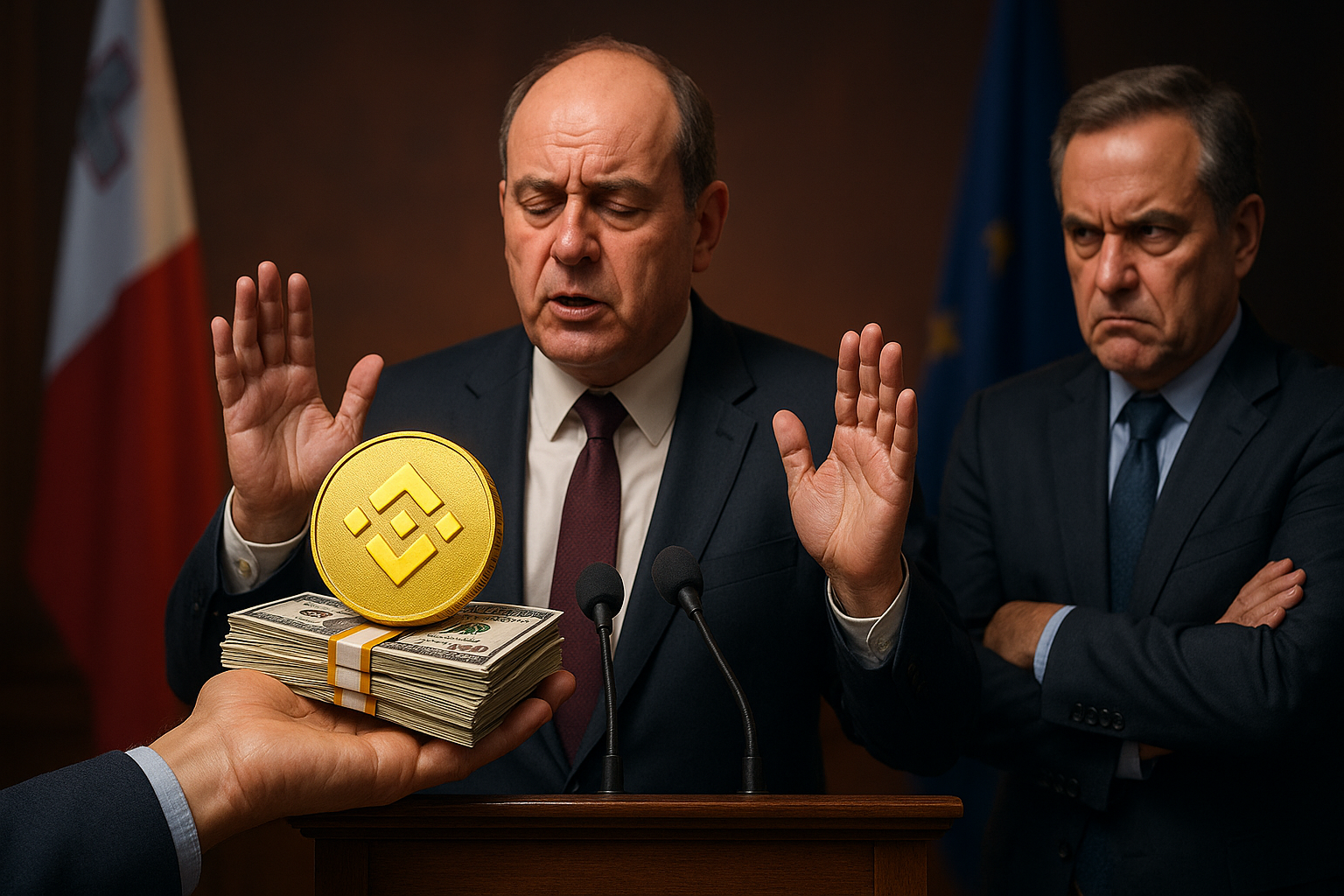
A 2018 Binance charity pledge meant for cancer patients has reignited controversy in Malta, with government leaders split over whether rejecting the crypto gift was an act of integrity or a costly mistake.
Malta Finance Minister Defends Charity’s Rejection of Binance Donation
Malta’s Finance Minister Clyde Caruana has backed the Malta Community Chest Fund’s decision to reject a 30,644 BNB donation from Binance Charity, citing reputational risks associated with the crypto exchange.
Caruana told the Times of Malta that the refusal, though financially painful, was the right decision:
“You either give to charity or you don’t — don’t dance around it,” he said.
The donation, initially worth around $200,000 in 2018, has since ballooned to roughly $33 million, making it one of the largest unclaimed charitable contributions in Malta’s history.
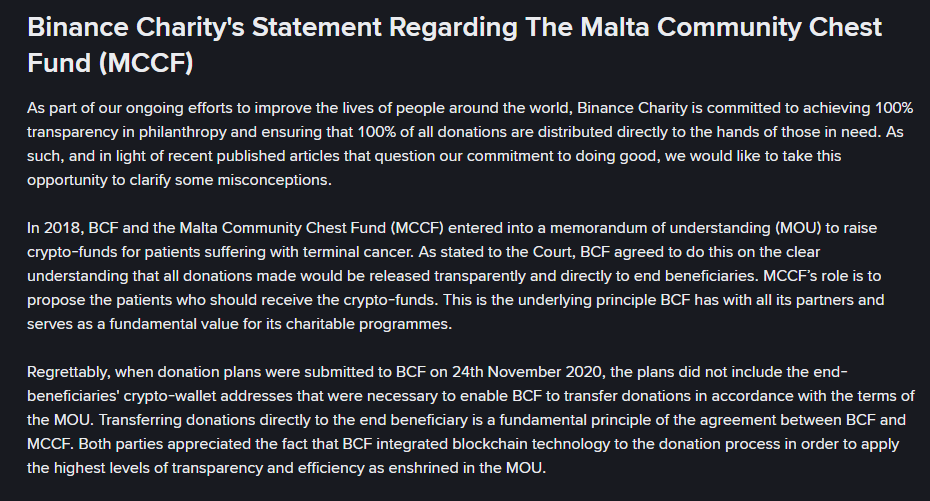
The dispute centers on Binance’s requirement that the charity share patient data and crypto wallet information to enable direct transfers to recipients — a demand the Maltese organization says breaches privacy and governance protocols.
President Calls Binance Donation ‘Bogus’
Malta’s President Myriam Spiteri Debono was blunt in her assessment, describing Binance’s contribution as a “bogus donation” and questioning the exchange’s intentions.
“It would be unfair on other donors who act in good faith and abide by the laws,” she said earlier this month.
Her remarks highlight longstanding skepticism about Binance’s compliance practices, particularly after global regulators have scrutinized its operations and governance standards.
A Dispute Years in the Making
The original donation dates back to 2018, when Binance and its users contributed BNB tokens to support cancer patients under the Malta Community Chest Fund.
However, since 2021, the exchange has reportedly withheld disbursement, insisting that funds be transferred directly to patients’ crypto wallets.
Binance previously stated that it had “no way to proceed” without patient verification, emphasizing its policy of ensuring transparency and traceability in all charitable distributions.
The donation has evolved into a political flashpoint, dividing Malta’s leadership. Prime Minister Robert Abela urged the charity to reconsider its stance, warning that millions of dollars could be wasted due to “bureaucratic rigidity.”
“It upsets me that a sum like that could possibly be lost,” Abela said. “If there is a chance to save the situation, I appeal for mutual agreement.”
Several lawmakers from both ruling and opposition parties — including Edward Zammit Lewis, Rosianne Cutajar, and Alex Borg — have echoed the Prime Minister’s view, arguing the funds could make a tangible difference for patients.
The standoff reflects Malta’s broader struggle to balance crypto innovation with governance transparency, as the country once promoted itself as the “Blockchain Island.”
While Binance’s donation was intended to bolster Malta’s reputation as a crypto-friendly nation, it has instead become a political minefield — raising questions about how far governments should go in accepting help from controversial players in the digital asset world.
Disclaimer
This content is for informational purposes only and does not constitute financial, investment, or legal advice. Cryptocurrency trading involves risk and may result in financial loss.