

The recent divergence between Bitcoin and Gold reflects differences in who is buying each asset, according to market analysts. Gold’s strong rally over the past three years has been largely supported by central bank accumulation, while Bitcoin ownership remains more concentrated among individual investors than large financial institutions.
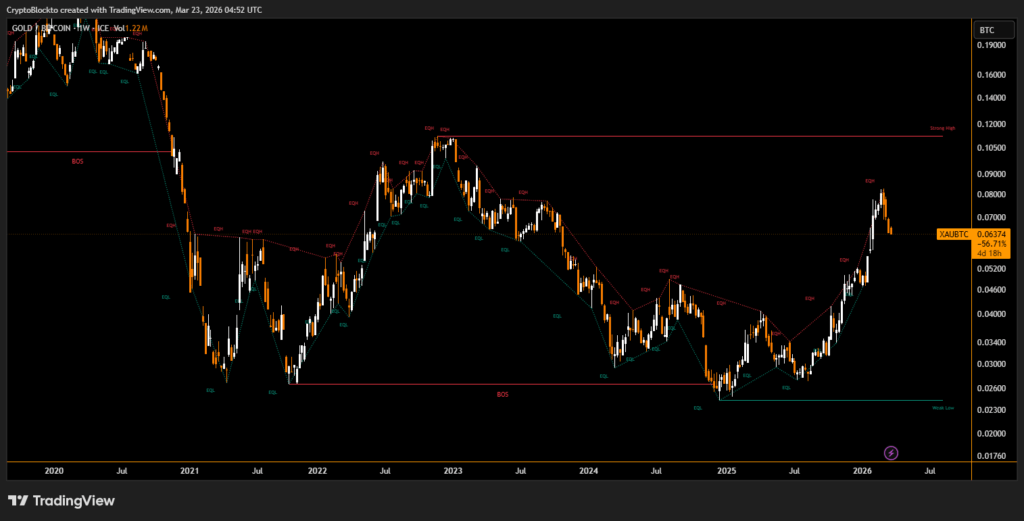
Analysts note that gold continues to play a strategic geopolitical role for governments seeking reserve assets that are resistant to external pressures. This has made gold more sensitive to global tensions and state-level financial planning. However, recent volatility has pushed gold below key technical support levels after reaching record highs earlier in 2026.
Bitcoin’s Role as a Crisis-Ready Asset for Individuals
Bitcoin’s steady performance during recent geopolitical disruptions has been linked to its accessibility and continuous operation. Unlike traditional financial markets, Bitcoin remains available for transactions around the clock, making it valuable during emergencies or infrastructure outages.
Temporary shutdowns of regional exchanges during conflict related disruptions highlighted the importance of uninterrupted market access. Analysts argue that this accessibility strengthens Bitcoin’s role as a practical financial tool for individuals facing instability in local banking systems.
Analysts Divided on Long-Term Store-of-Value Leadership
Financial experts remain split on whether Bitcoin can surpass gold as the dominant store of value. Some macro analysts expect Bitcoin to outperform gold over the next few years as adoption grows. Others maintain that gold’s long-standing role in global reserves ensures it will remain a core asset within the traditional financial system.
Disclaimer
This content is for informational purposes only and does not constitute financial, investment, or legal advice. Cryptocurrency trading involves risk and may result in financial loss.