
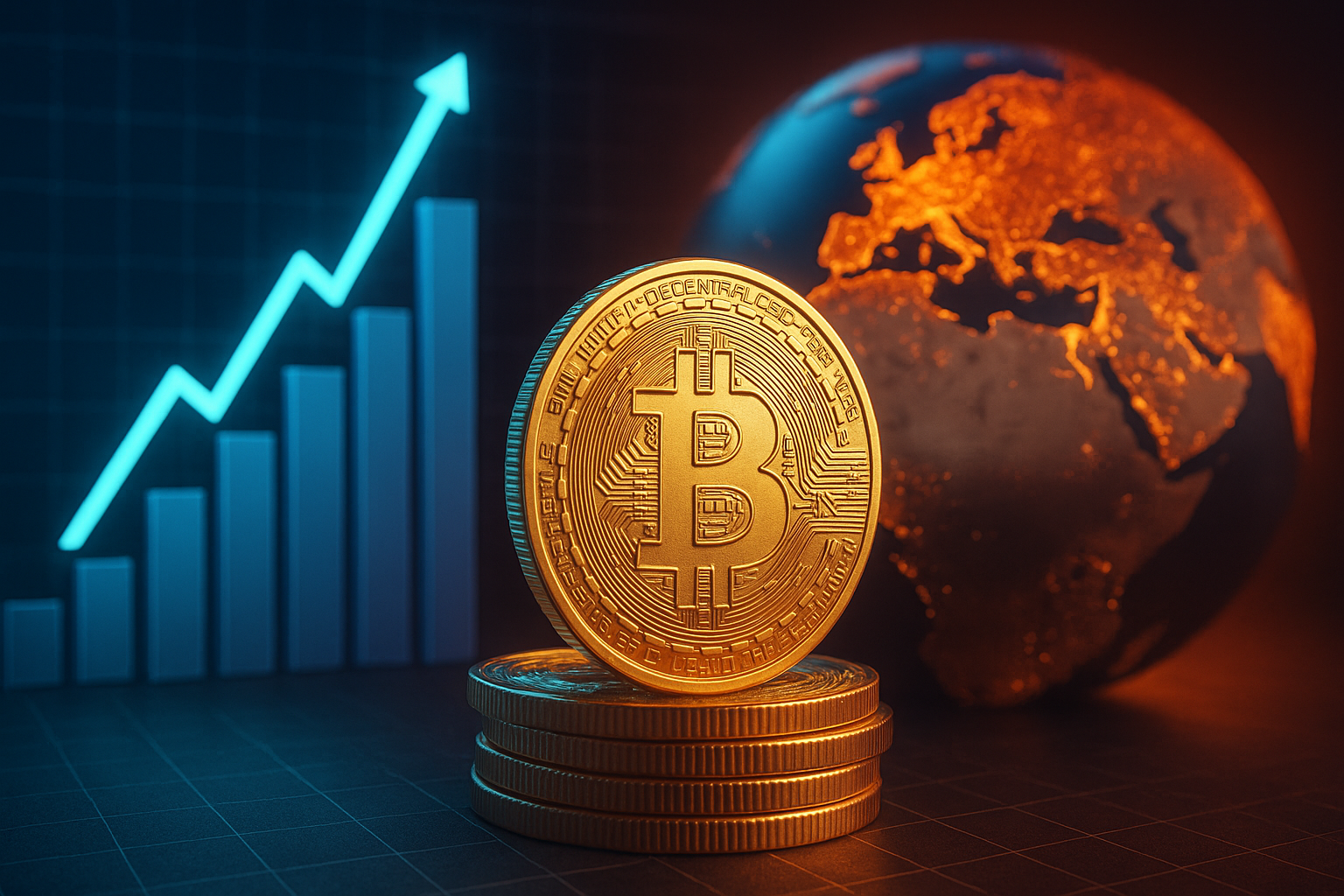
Investors continue to favor Bitcoin as a macro hedge
Despite recent geopolitical instability and economic concerns, Bitcoin exchange-traded funds (ETFs) have recorded a five-day streak of capital inflows, signaling growing investor confidence in the asset.
Between June 9 and June 13, Bitcoin ETFs attracted over $1.3 billion in inflows, according to industry data. This surge in institutional interest came even as the Israel-Iran conflict intensified, adding to global uncertainty.
“Bitcoin is holding firm around $105,000 even after sharp macro shocks,” note market observers. The price briefly dipped to $103,000 following $422 million in liquidated long positions, but quickly rebounded.
Bitcoin resists market turbulence, signals strength
The resilience shown by Bitcoin in recent weeks is significant. Despite military strikes and the risk of regional escalation, Bitcoin’s price has dropped just around 3%, demonstrating its relative stability.
Bitcoin is currently trading less than 6% away from its all-time high of $112,000, set in May 2025. This price action underlines the growing perception of Bitcoin as a store of value during turbulent times.
Oil concerns and DXY influence investor outlook
Some analysts warn that geopolitical risk remains high, particularly if Iran attempts to close the Strait of Hormuz, through which 20% of global oil supply flows. Such a move could spike energy prices and destabilize global financial markets, possibly affecting all risk assets, including crypto.
However, broader market indicators such as the U.S. Dollar Index (DXY) also play a role. The DXY has recently fallen below 100 — its lowest point in over three years. Historically, Bitcoin tends to rise when the dollar weakens, reinforcing the bullish sentiment among long-term investors.
Bitcoin’s fundamentals remain strong
Bitcoin’s continued adoption is driven by multiple long-term factors:
- Macroeconomic uncertainty
- High levels of government debt
- Erosion of traditional financial systems
- Geopolitical instability
All of these factors push investors toward non-sovereign, supply-limited assets like Bitcoin.