

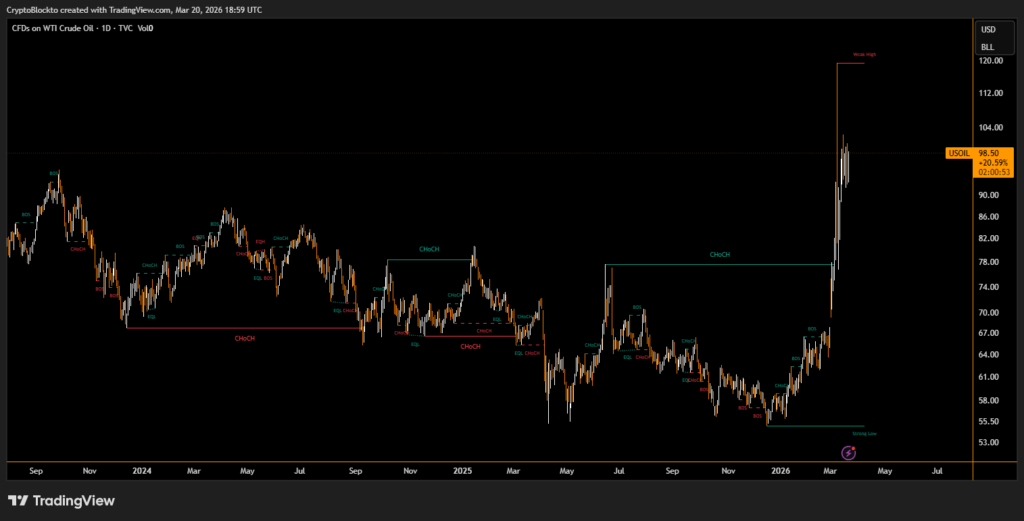
Bitcoin has remained resilient during recent geopolitical tensions, outperforming traditional assets despite volatility linked to the Middle East conflict. However, a potential surge in oil prices toward $180 per barrel could introduce significant macroeconomic pressure, threatening the cryptocurrency’s upward momentum.
Oil Price Shock Could Drive Inflation Higher
A sustained spike in crude prices may sharply increase US inflation. Estimates suggest that a 70% rise in oil could push headline inflation close to 5%, well above the Federal Reserve’s target. Higher inflation would likely delay interest rate cuts, tightening financial conditions and reducing liquidity across markets.
Historically, such environments weaken demand for risk-sensitive assets, including Bitcoin. Rising borrowing costs and cautious investor sentiment could limit upside potential in the near term.
Macro Pressure May Weigh on Bitcoin Price
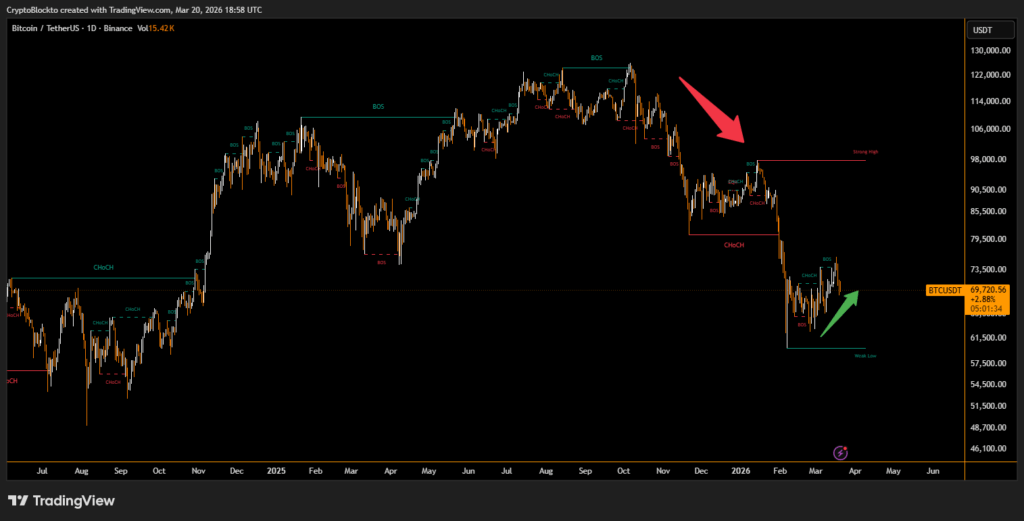
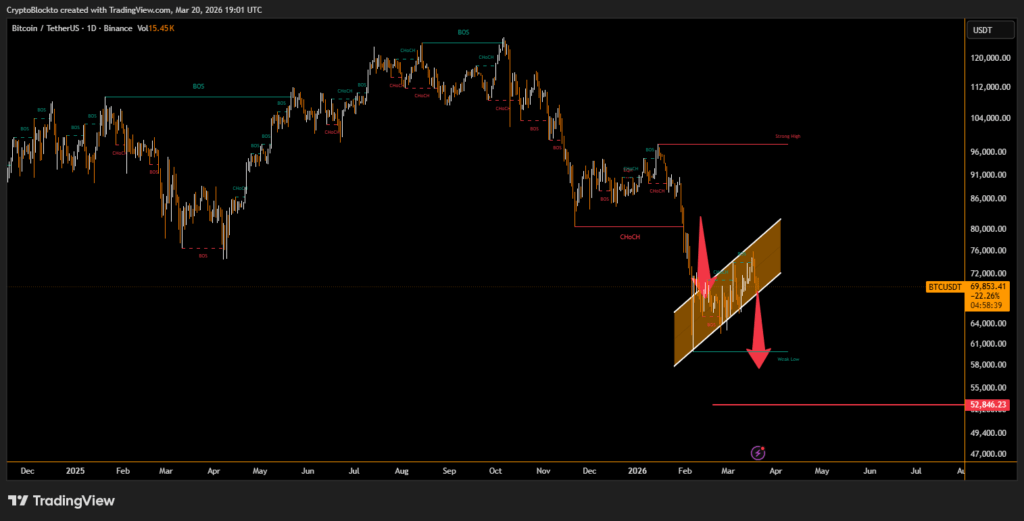
Bitcoin has already shown signs of cooling, falling nearly 10% from its recent peak near $76,000 to below $70,000. Analysts warn that continued macro pressure could push prices toward the $51,000–$52,000 range.
Reduced institutional demand has also added to concerns. A pause in large-scale Bitcoin accumulation by major buyers has removed a key source of market support, while weakening US demand signals suggest softer momentum.
Market Outlook Hinges on Oil and Geopolitics
If tensions ease and oil prices stabilize, Bitcoin could recover as market confidence improves. However, prolonged supply disruptions and elevated energy costs may deepen downside risks in the months ahead.
Disclaimer
This content is for informational purposes only and does not constitute financial, investment, or legal advice. Cryptocurrency trading involves risk and may result in financial loss.