
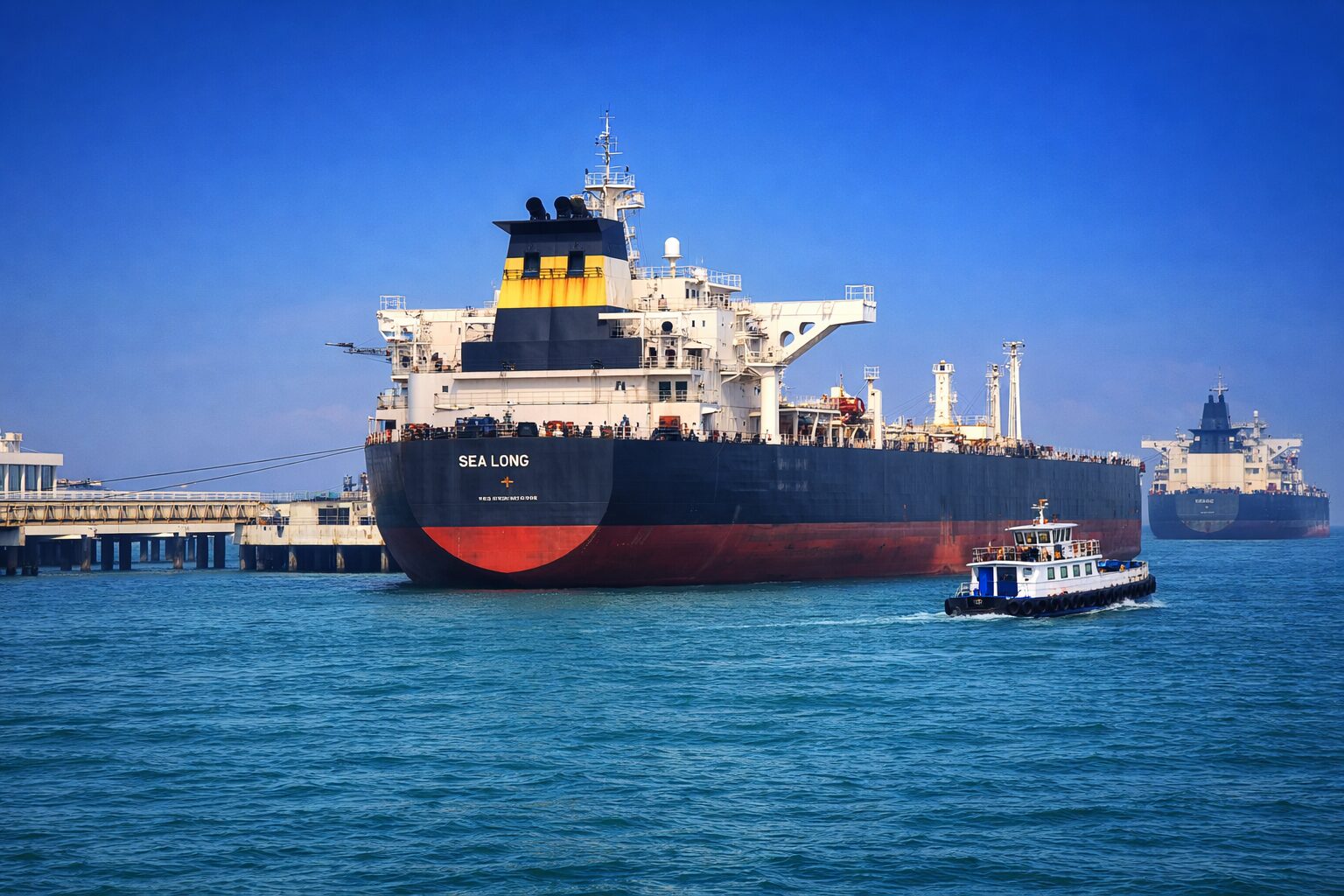
Geopolitical Tensions Trigger Crypto Dip and Oil Price Spike
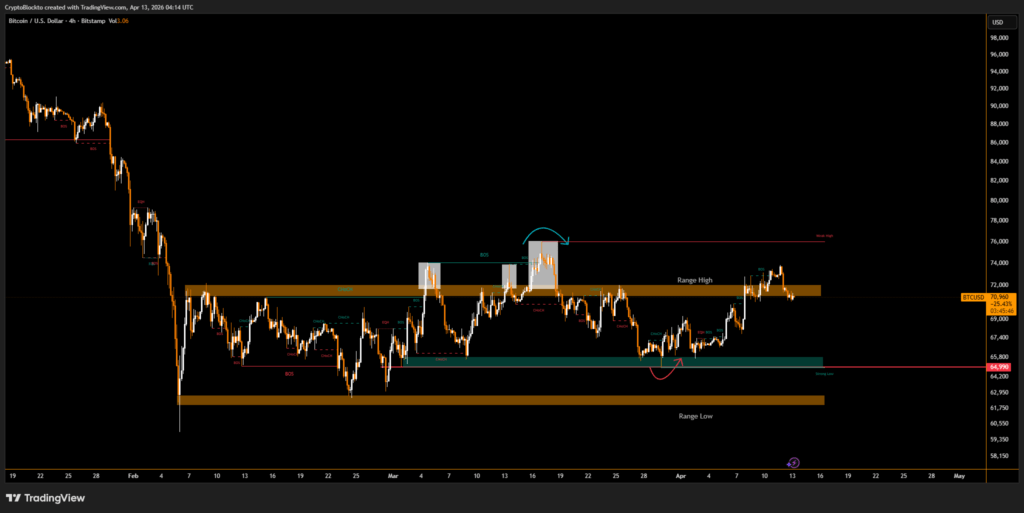
Bitcoin (BTC) fell to $70,623 on Sunday after the United States announced a naval blockade of the Strait of Hormuz following failed peace talks with Iran. The cryptocurrency initially dropped 1.9% to $71,686 after U.S. President Donald Trump confirmed the blockade in a Truth Social post, stating negotiations collapsed because Iran refused to end its nuclear weapons program, which he described as the only issue that “really mattered.”
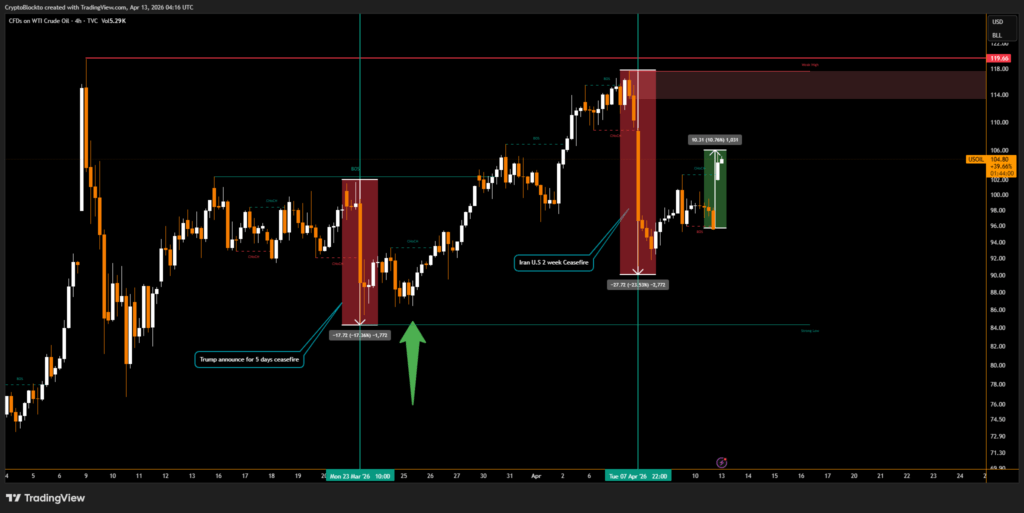
Crude oil jumped about 9.5% to $105 per barrel within 30 minutes of market opening, reflecting fears of supply disruptions tied to escalating regional tensions.
Strait of Hormuz Conflict Drives Market Volatility
The dispute over control of the Strait of Hormuz, a route responsible for nearly one-fifth of global oil trade, has created significant financial market instability over the past six weeks. Oil markets have recorded their highest volatility since early 2022, when global energy markets were disrupted by Russia’s invasion of Ukraine.
In earlier negotiations, Iran requested war reparations payments and the unfreezing of blocked financial assets, though these demands were not addressed in the U.S. response. Instead, the United States accused Iran of placing naval mines in the waterway and demanding toll payments, actions described as “world extortion.” U.S. naval forces were ordered to block vessels paying such tolls and remove the mines.
Bitcoin Maintains Gains Since Conflict Began
Despite recent declines, Bitcoin has risen about 7.4% to around $71,194 since the conflict escalated on Feb. 28, when a U.S. airstrike reportedly killed Iran Supreme Leader Ayatollah Ali Khamenei. The digital asset has continued to outperform the S&P 500 and gold during the same period.
Disclaimer
This content is for informational purposes only and does not constitute financial, investment, or legal advice. Cryptocurrency trading involves risk and may result in financial loss.