
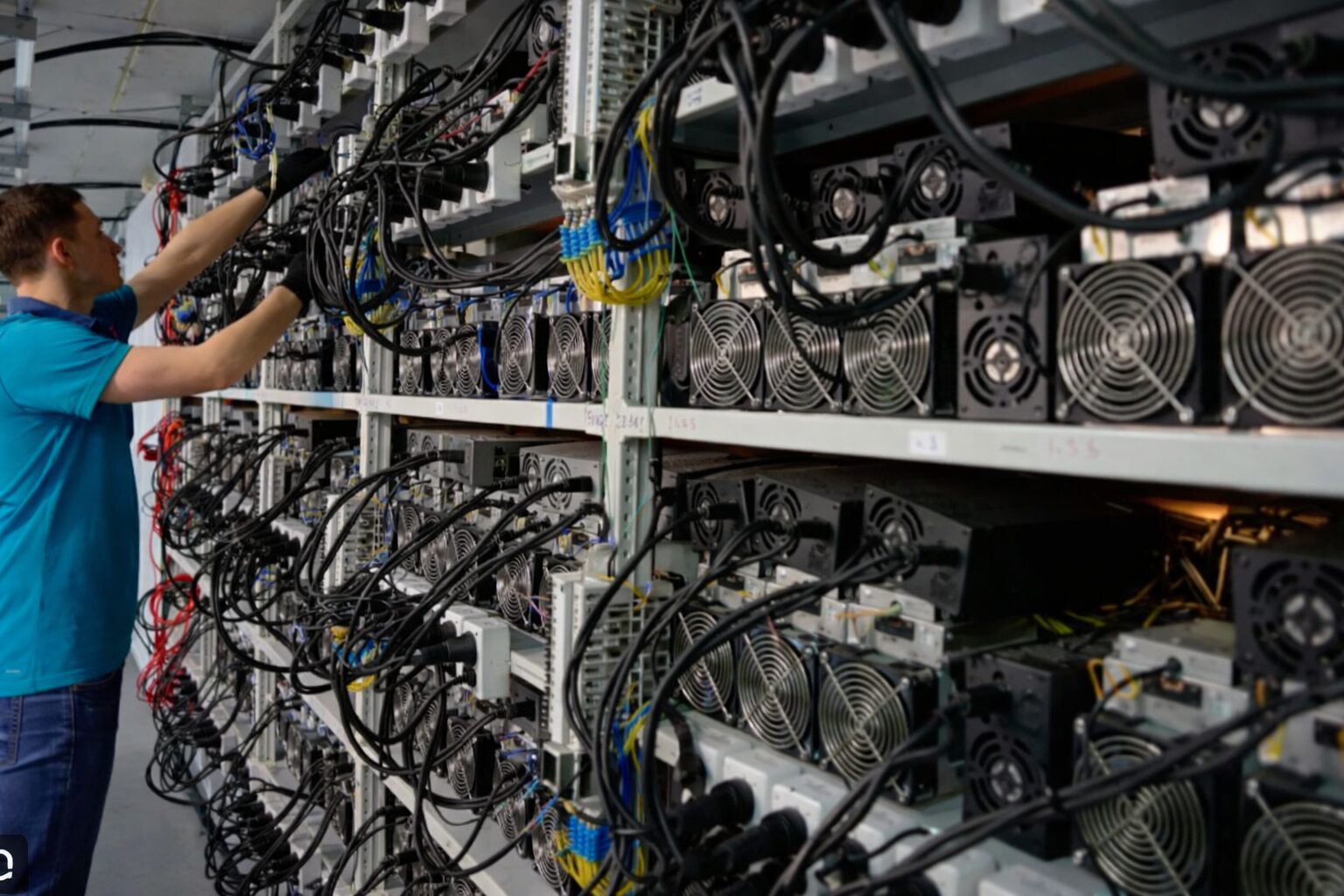
Publicly listed Bitcoin miners are facing unsustainable economics, with the average cost to mine one BTC at $79,995 last quarter well above the current trading range of $68,000–$70,000. The result: losses of roughly $19,000 per coin and a major industry pivot toward artificial intelligence (AI) and high performance computing (HPC) infrastructure.
AI Contracts Drive New Revenue Model
Over $70 billion in AI and HPC contracts have been signed across the public mining sector. Companies like CoreWeave, TeraWulf, Hut 8, and Cipher Digital are increasingly deriving revenue from AI, with some expecting up to 70% of total revenue from AI by the end of 2026. These miners are effectively becoming data center operators that mine Bitcoin on the side.
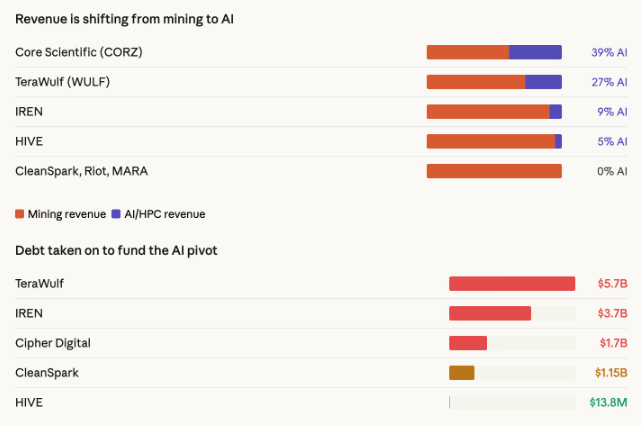
Funding the Transition Through Debt and BTC Sales
The shift is financed by heavy borrowing and Bitcoin treasury liquidation. Public miners have collectively sold over 15,000 BTC, including Core Scientific’s 1,900 BTC sale in January and Bitdeer reducing its holdings to zero in February. Debt levels are rising, with IREN holding $3.7 billion in convertible notes and TeraWulf carrying $5.7 billion.
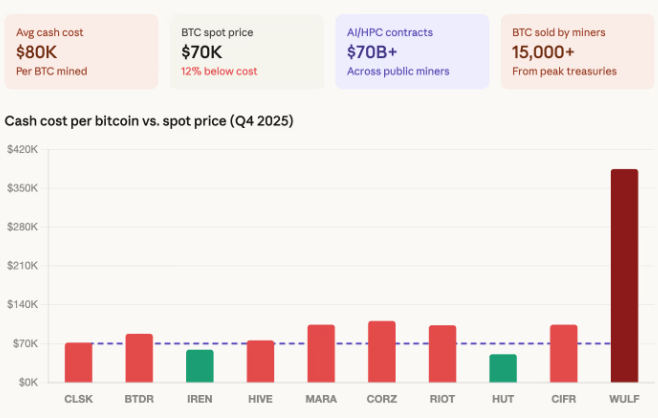
The pivot has pressured network security, with hashrate declining from 1,160 EH/s in October 2025 to 920 EH/s. Industry forecasts suggest a potential recovery if BTC reaches $100,000, otherwise the AI transition will accelerate, reshaping the Bitcoin mining sector’s role and economics.
Disclaimer
This content is for informational purposes only and does not constitute financial, investment, or legal advice. Cryptocurrency trading involves risk and may result in financial loss.