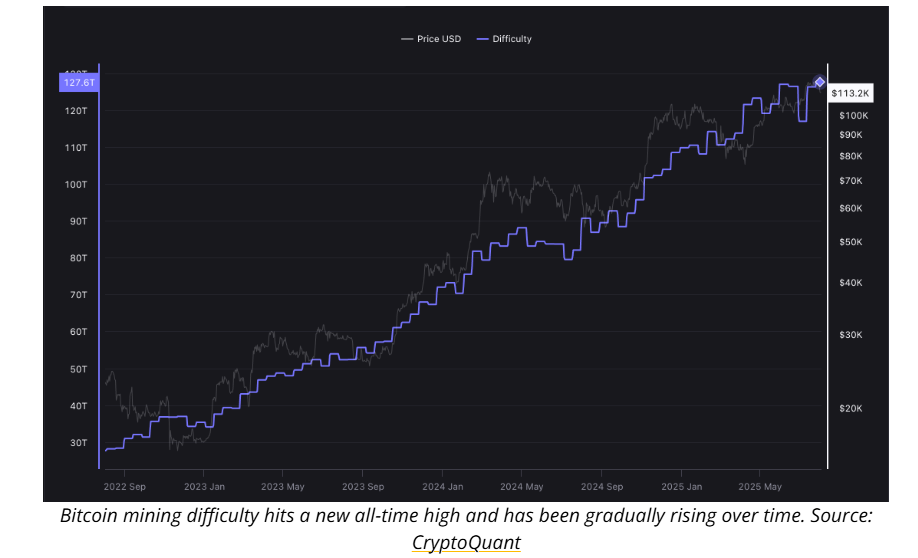
The Bitcoin mining difficulty — a key measure of how hard it is to find a new block — surged to an all-time high (ATH) of 127.6 trillion this week. However, this rise could be temporary, as projections indicate a 3% drop in mining difficulty to around 123.7 trillion in the next adjustment on August 9.
What Is Bitcoin Mining Difficulty?
Bitcoin mining difficulty automatically adjusts every 2,016 blocks (roughly every two weeks) to ensure BTC is mined at a consistent rate of one block every 10 minutes. The current average block time has stretched to around 10 minutes and 20 seconds, indicating an overheated network that needs rebalancing.
Hashrate Growth and Miner Impact
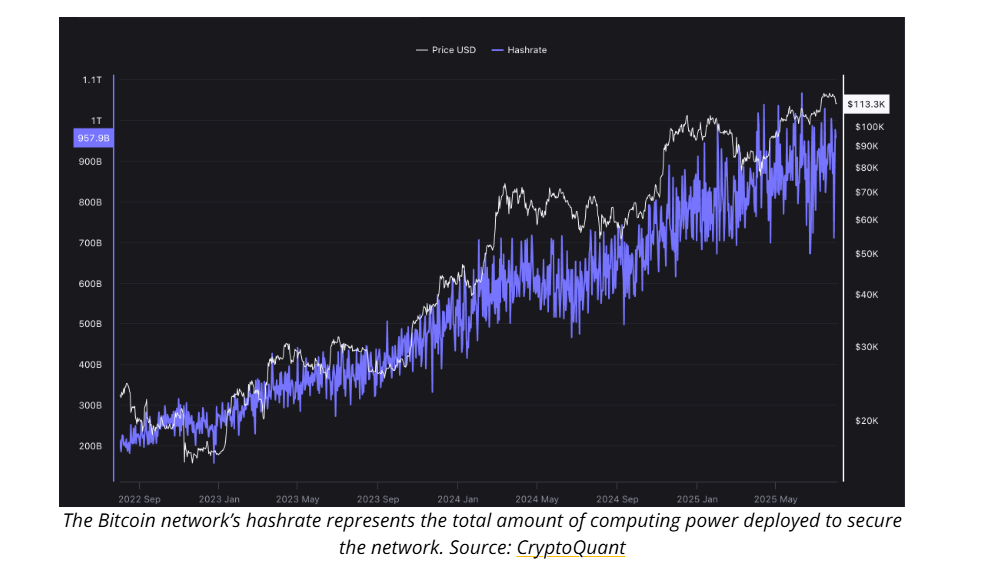
This ATH comes amid continued growth in Bitcoin’s hashrate, which reflects the total computational power securing the network. While a rising hashrate signals network strength and miner commitment, it also reduces miner profitability due to higher competition.
Miner revenues remain under pressure, especially with Bitcoin prices hovering near $112,000, down significantly from local highs. Lower profitability could drive weaker miners offline, contributing to the expected difficulty drop in August.
Why Difficulty Adjustments Matter
The difficulty adjustment mechanism is core to Bitcoin’s scarcity and stock-to-flow ratio. With over 94% of BTC’s 21 million supply already mined, Bitcoin maintains a higher stock-to-flow ratio than gold, reinforcing its scarcity-driven value proposition.
“Bitcoin is twice as scarce as gold,” noted PlanB, the analyst behind the stock-to-flow model.
This system ensures price stability by preventing overproduction, even during periods of intense mining activity. If difficulty didn’t adjust downward during network slowdowns, block intervals would lag, disrupting the entire ecosystem.
Conclusion: A Cooling-Off Period Ahead
While the mining difficulty has hit record levels, signs of an impending cooldown in August could help restore balance in the network. This adjustment not only benefits miners but also reaffirms Bitcoin’s resilient and self-regulating design.
Disclaimer
This content is for informational purposes only and does not constitute financial, investment, or legal advice. Cryptocurrency trading involves risk and may result in financial loss.