

New production data highlights the extent to which January’s severe US winter storm disrupted Bitcoin mining operations, as extreme weather conditions forced operators to scale back activity. The episode underscored the growing link between Bitcoin mining, power grid stability, and regional energy markets.
Mining Production Falls Amid Grid Stress
In the weeks before the storm, publicly listed Bitcoin miners were collectively producing an average of roughly 70 to 90 BTC per day. As snow, ice, and extreme cold spread across large parts of the United States, daily production dropped sharply to around 30 to 40 BTC at the peak of the disruption. The decline coincided with miners voluntarily curtailing power usage in response to grid stress and higher electricity demand from households and critical infrastructure.
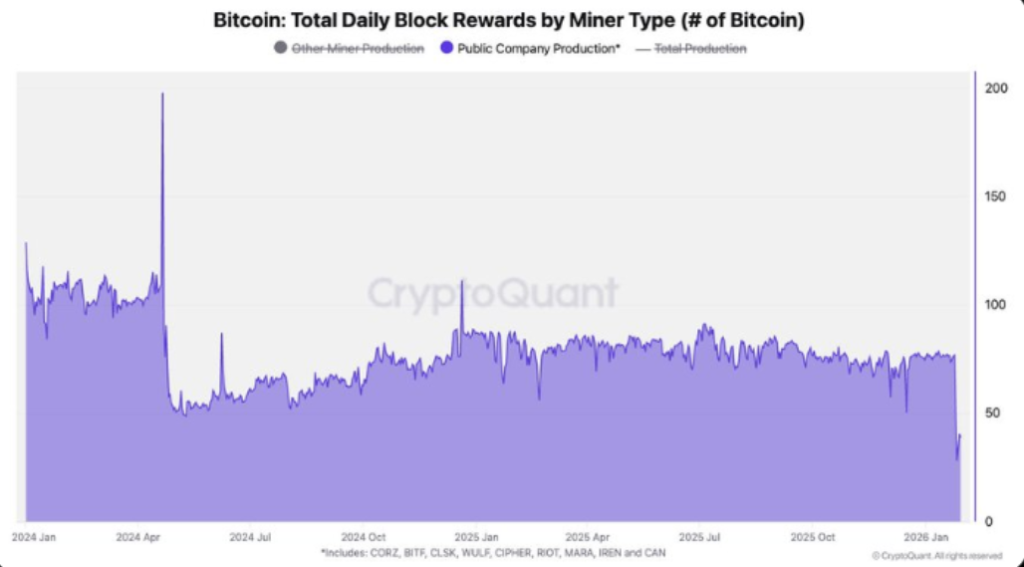
As weather conditions normalized, output began to recover, indicating that the production decline was temporary rather than structural. The data suggests miners prioritized grid support and cost management during the most volatile period.
US-Based Miners Most Affected
The production figures reflect activity from several major publicly traded mining firms with significant US operations. These companies are particularly exposed to domestic weather events due to their reliance on large-scale, energy-intensive facilities tied to local power markets.
The storm-related disruption occurred against an already challenging backdrop for miners. Lower Bitcoin prices, rising energy costs, and compressed post-halving revenues have tightened margins across the industry. External shocks such as extreme weather continue to amplify operational and financial pressures heading into 2026.
Disclaimer
This content is for informational purposes only and does not constitute financial, investment, or legal advice. Cryptocurrency trading involves risk and may result in financial loss.