

Bitcoin extended its recent losses, dropping nearly 5% as investors reduced exposure to risk assets while the US and Israel Iran conflict entered its fourth week. The decline came alongside weakness in major US stock indexes, including the S&P 500, Dow Jones, and Nasdaq. In contrast, crude oil prices moved sharply higher, rising 7.30% in recent sessions and climbing about 53% since the conflict began on Feb. 28, highlighting strong demand for energy amid geopolitical tension.
Capital Outflows Accelerate From ETFs and Crypto Markets
Large scale withdrawals from major exchange traded funds signaled a shift in investor sentiment. Over the past three months, roughly $64 billion flowed out of leading S&P 500 and Nasdaq 100 ETFs, marking the largest outflow on record. This reversed the $50 billion inflow recorded in November and pushed withdrawals to nearly 5% of total assets under management.
Spot Bitcoin ETFs also reflected the pressure, recording $253 million in outflows over two days. While monthly inflows still stand at $1.48 billion, cumulative withdrawals between November and February totaled $6.3 billion, pointing to unstable demand conditions.
Historical Conflict Patterns Suggest Slower Recovery Phase
Market observers compared the current trend to Bitcoin’s behavior during the February 2022 Russia Ukraine conflict. At that time, Bitcoin initially declined before posting a 24% rebound within four weeks, followed by a deeper decline later in the year.
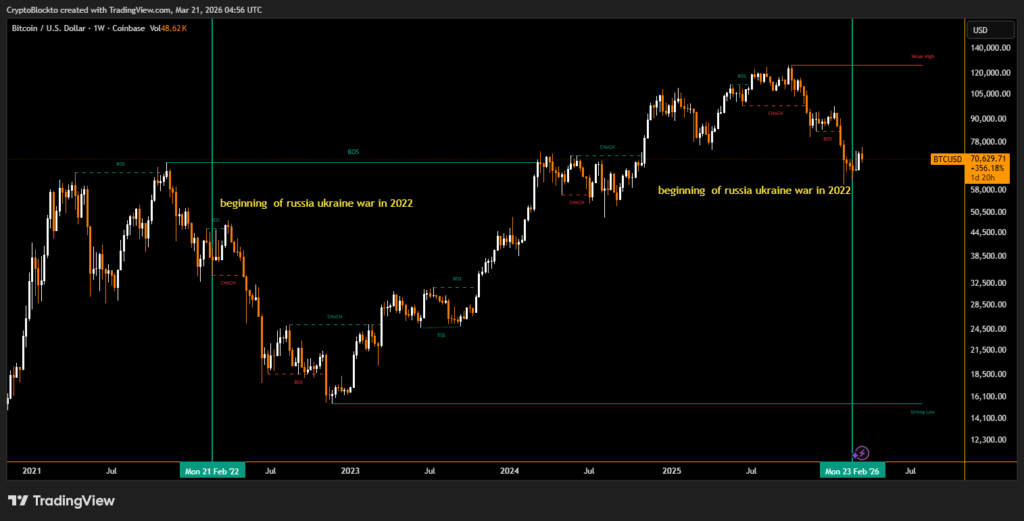
A similar structure appears to be developing now. Bitcoin previously gained close to 10% after the conflict began, but momentum has weakened as liquidity pressures, rising energy costs, and continued selling weigh on demand. Some analysts believe recovery may take longer, with projections suggesting a possible market bottom forming near $55,000 before sustained upward movement resumes.
Disclaimer
This content is for informational purposes only and does not constitute financial, investment, or legal advice. Cryptocurrency trading involves risk and may result in financial loss.