

Bitcoin has posted its steepest two-week decline since June 2022, dropping more than 50% from its October peak before stabilizing near key support levels. The move marks one of the most aggressive corrections of the current cycle and has rippled across spot markets, derivatives, and crypto-linked investment products.
Bitcoin Price Drop Driven by Cycles and Macro Pressure
Market analysis suggests the sell-off has been driven less by crypto-specific failures and more by a mix of cyclical behavior, leverage unwinding, and broader risk aversion. Long-term holders have been steadily reducing exposure, anticipating historical post-peak downturns seen in previous four-year bitcoin cycles. Estimates indicate that well over $100 billion worth of bitcoin was sold by long-term investors over the past year.
At the same time, speculative capital has shifted toward other asset classes, including artificial intelligence-related equities and precious metals, reducing short-term demand for digital assets.
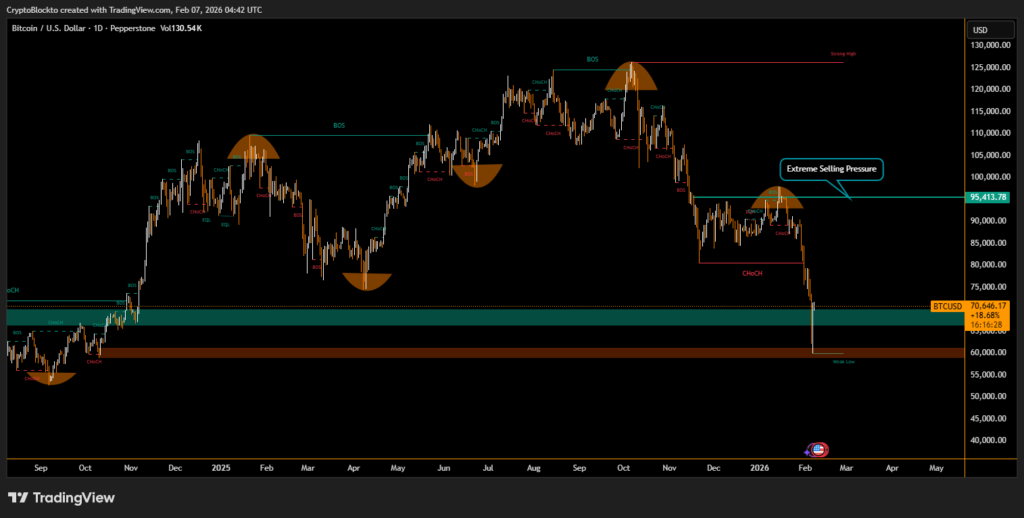
How This Bitcoin Correction Differs From 2022
Unlike the 2022 collapse, which was marked by insolvencies and infrastructure breakdowns, the current downturn has shown no widespread signs of forced selling or institutional distress. Broader financial markets have also weakened, with equities and commodities under pressure from interest rate uncertainty and slowing growth expectations.
Eric Balchunas, senior ETF analyst at Bloomberg shared on X;
Bitcoin sentiment has fallen to levels historically associated with cycle bottoms. While further downside remains possible, the absence of systemic stress and the gradual recovery from recent lows suggest that much of the negative outlook may already be reflected in prices.
Disclaimer
This content is for informational purposes only and does not constitute financial, investment, or legal advice. Cryptocurrency trading involves risk and may result in financial loss.