

Bitcoin markets turned bearish after a sharp price decline triggered by geopolitical uncertainty and economic concerns. Traders are increasingly doubtful that the $66,000 support level will hold, as risk sentiment weakens across global financial markets.
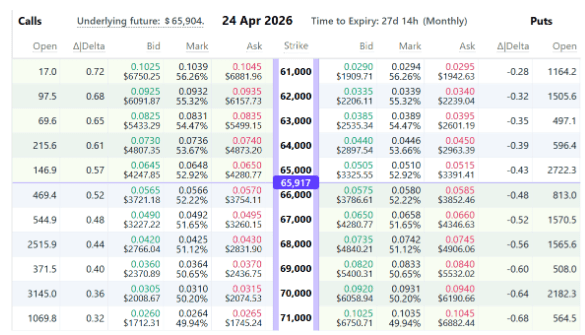
Bitcoin dropped to $65,530 on Friday, marking an 8% decline from $71,300 recorded a day earlier. The fall wiped out more than $210 million in leveraged bullish futures, while the $18.6 billion monthly options expiry left most call positions worthless. Options data now shows a 53% probability that Bitcoin will remain below $66,000 by April 24, reflecting growing bearish expectations.
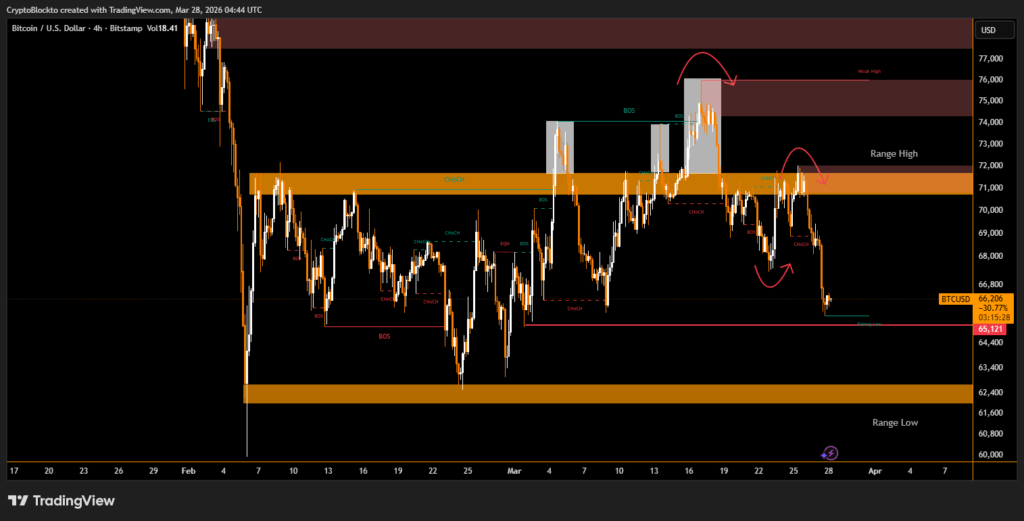
Rising Inflation Risks and Policy Uncertainty Pressure Bitcoin
Macroeconomic pressures have intensified market caution. Rising oil prices pushed West Texas Intermediate (WTI) crude to $100, while 5-year US Treasury yields climbed to 4.07%, up from 3.72% three weeks earlier. Increased military spending expectations and inflation fears dragged the S&P 500 to its lowest level since September 2025, adding pressure to crypto markets.
Investor sentiment was also affected by uncertainty surrounding plans for a US Strategic Bitcoin Reserve, which many expected to support long-term demand.
Options Market Signals Weak Confidence in $66K Support
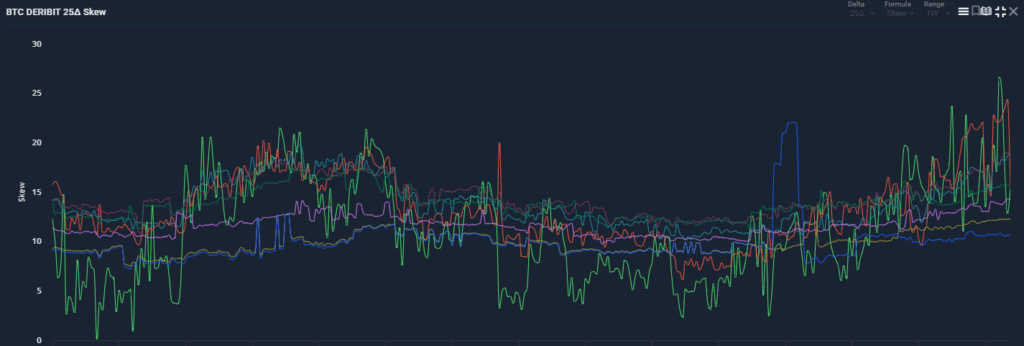
Market indicators confirm a shift toward defensive strategies. The 30-day options delta skew rose to 15%, far above the normal -6% to +6% range, showing strong demand for protective put options. Additionally, put options above $69,000 exceeded $2 billion in open interest, giving bearish traders an advantage.
Confidence was further shaken after David Sacks stepped down from his role as the administration’s crypto and AI czar. His earlier comments about acquiring Bitcoin through budget-neutral methods had fueled expectations that now remain unresolved.
Disclaimer
This content is for informational purposes only and does not constitute financial, investment, or legal advice. Cryptocurrency trading involves risk and may result in financial loss.