
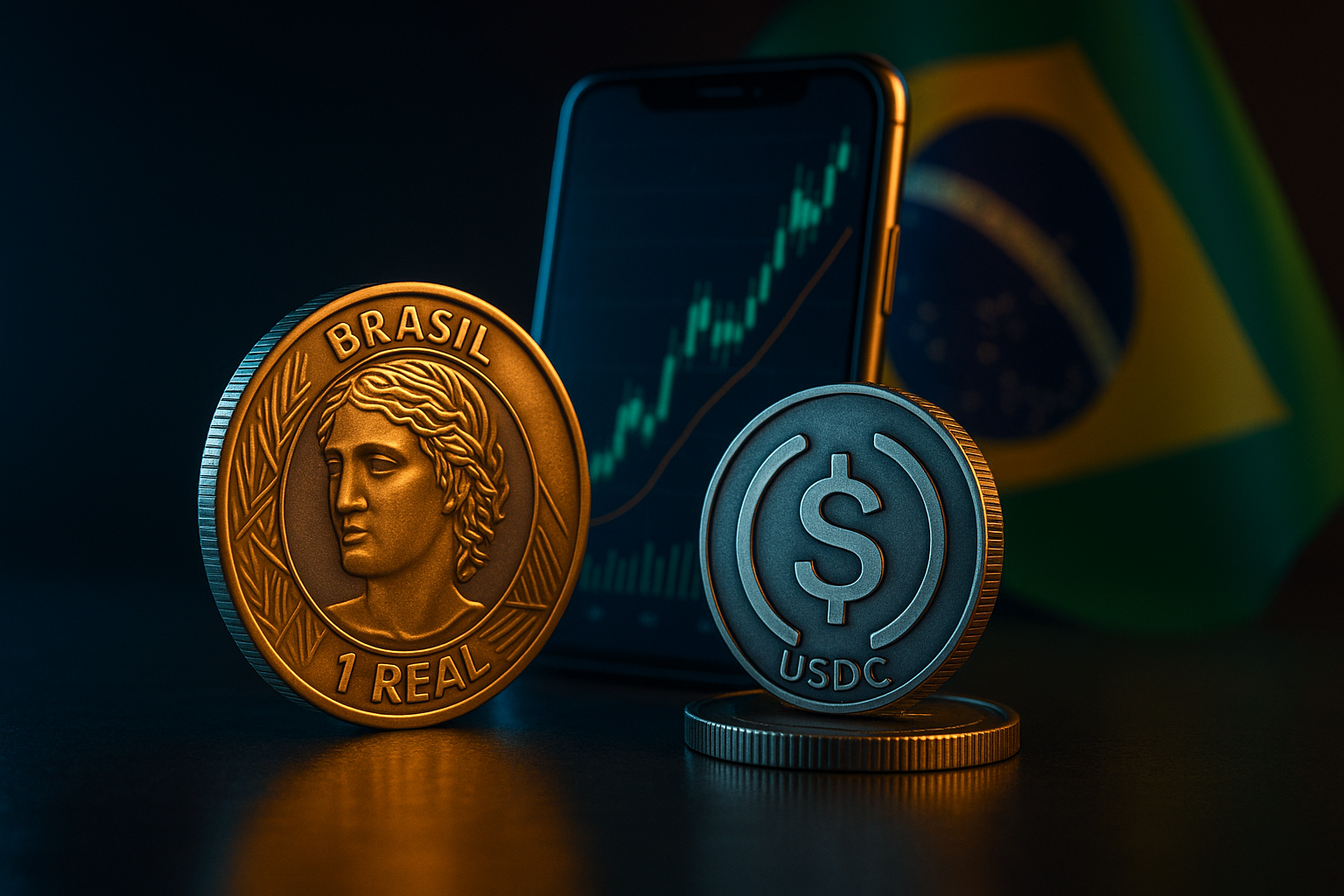
The new framework brings crypto under banking-style supervision, extending AML and FX standards to digital assets.
Brazil has officially moved to classify stablecoin transactions as foreign exchange operations, marking one of the most comprehensive regulatory steps yet in Latin America’s crypto landscape. The Banco Central do Brasil (BCB) announced the new framework this week, expanding its oversight to include crypto brokers, custodians, and intermediaries under a banking-style model.
Under the newly published Resolutions 519, 520, and 521, the central bank introduced a legal category known as Sociedades Prestadoras de Serviços de Ativos Virtuais (SPSAVs) — licensed virtual asset service providers that will now be required to comply with the same Anti-Money Laundering (AML) and consumer protection rules as traditional financial institutions.
The framework will take effect on February 2, 2026, with mandatory cross-border reporting beginning in May 2026.
Stablecoins Now Treated as FX Operations
According to Resolution 521, any purchase, sale, or transfer involving fiat-pegged digital assets — including international stablecoin payments — will be considered a foreign-exchange (FX) transaction.
This means stablecoin payments will now face the same scrutiny as cross-border remittances or currency trades, bringing transparency to a sector that has grown rapidly in Brazil. Licensed FX firms and SPSAVs will be authorized to conduct such operations, but unlicensed foreign entities will face a $100,000 limit per transfer.
“This move closes long-standing regulatory gaps and provides legal certainty to market participants,” a BCB official said during the announcement, emphasizing that the goal is to promote efficiency, prevent scams, and align crypto transactions with Brazil’s financial reporting systems.
Balancing Innovation and Oversight
The BCB stated that the framework aims to integrate crypto activities into Brazil’s balance-of-payments (BoP) data, ensuring that stablecoin use is properly accounted for in national statistics. President Gabriel Galipolo noted that around 90% of crypto transactions in Brazil involve stablecoins, primarily used for payments rather than speculation.
While self-custody remains legal, regulated exchanges must now identify wallet owners and verify transaction sources, even for non-cross-border transfers.
Experts believe the rules will raise compliance costs, particularly for smaller exchanges, but will also pave the way for greater institutional participation.
Brazil’s new framework signals that digital assets are welcome — but they must now operate under the same discipline as traditional money.
Disclaimer
This content is for informational purposes only and does not constitute financial, investment, or legal advice. Cryptocurrency trading involves risk and may result in financial loss.