
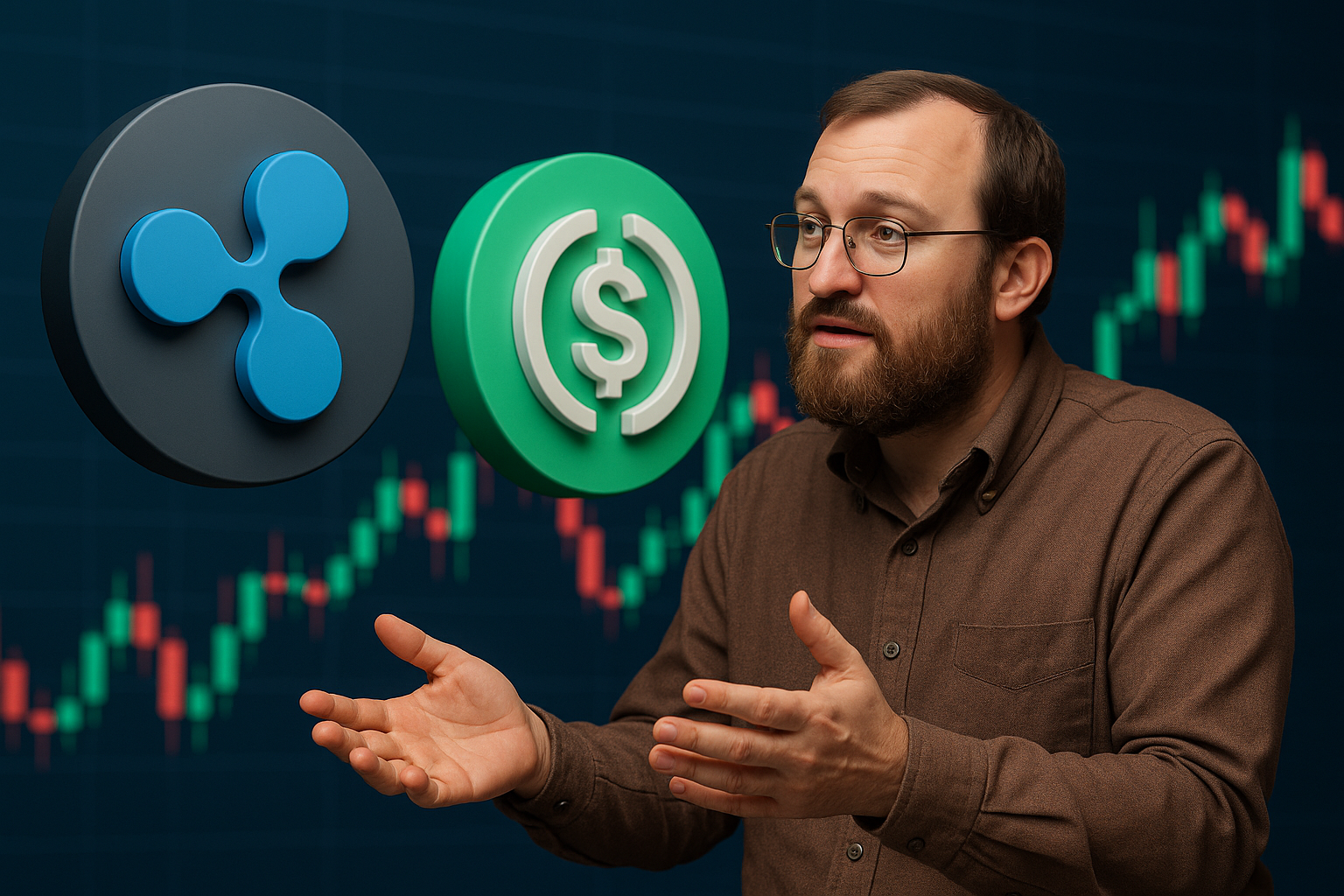
In a surprising take, Charles Hoskinson, the founder of Cardano (ADA), has suggested that Ripple acquiring Circle, the issuer of USD Coin (USDC), could benefit the entire cryptocurrency ecosystem. Hoskinson made the remarks on social platform X (formerly Twitter), where he emphasized the potential synergy between Ripple’s infrastructure and Circle’s stablecoin dominance.
Circle: A Stablecoin Giant with Strategic Value
Circle is the company behind USDC, the second-largest stablecoin in the world with a market capitalization of over $32 billion (as of May 2025). USDC is widely used in DeFi, cross-border payments, and crypto exchanges, and it’s known for its compliance-focused approach.
“If Ripple buys Circle, it would consolidate a powerful network effect between XRP Ledger and USDC,” Hoskinson stated.
“This could lead to better liquidity, more stablecoin adoption, and a stronger presence in regulated markets.”
Ripple’s Strategic Position and Institutional Reach
Ripple is best known for its XRP token and enterprise blockchain solutions aimed at banking and cross-border payments. The company has continued to expand globally, especially after its partial legal win against the SEC, which clarified that XRP is not a security in secondary markets.
“Ripple has always been focused on utility, especially in payments. Owning Circle would give them leverage over stablecoin infrastructure,” said blockchain strategist Maya Liu.
This would allow Ripple to integrate USDC into its payment corridors, offering faster, stable-value transfers and further legitimizing crypto use cases in traditional finance.
What Would This Mean for the Crypto Market?
A potential Ripple-Circle acquisition deal would likely shake up the current stablecoin landscape, which is still dominated by Tether (USDT). Many in the industry view Circle’s USDC as a more transparent and U.S.-regulated alternative to USDT.
“If USDC becomes more deeply tied to Ripple’s network, it could pull significant volume from competitors,” noted crypto analyst Jason Paredes.
It would also bring two of crypto’s most compliance-focused entities together, which could attract institutional investors wary of regulatory risk.
Community Reactions and Speculation
The crypto community responded to Hoskinson’s suggestion with a mix of intrigue and skepticism. While some applauded the idea as a bold move toward consolidation and mainstream legitimacy, others warned that centralizing too much power in one entity could backfire.
Still, the concept reflects a growing trend of mergers, acquisitions, and partnerships among top crypto firms.
“It’s not about one coin vs another anymore. It’s about building infrastructure that lasts,” Hoskinson added.
Conclusion
If Ripple were to acquire Circle, it could redefine the stablecoin narrative, accelerate crypto adoption in traditional finance, and reinforce regulatory trust in blockchain solutions.
While no official talks have been confirmed, Hoskinson’s statement sparks important conversations about the future of interoperability, utility, and consolidation in Web3.