
Traders Eye $20 Zone as Critical Support While Resistance Looms at $28
Chainlink (LINK) is currently trading around $21.01, showing signs of holding a crucial support level after a sharp pullback from recent highs. Technical analysis suggests that the $20–$21 zone is a decisive area for buyers, with broader market sentiment expected to determine the next trend direction.
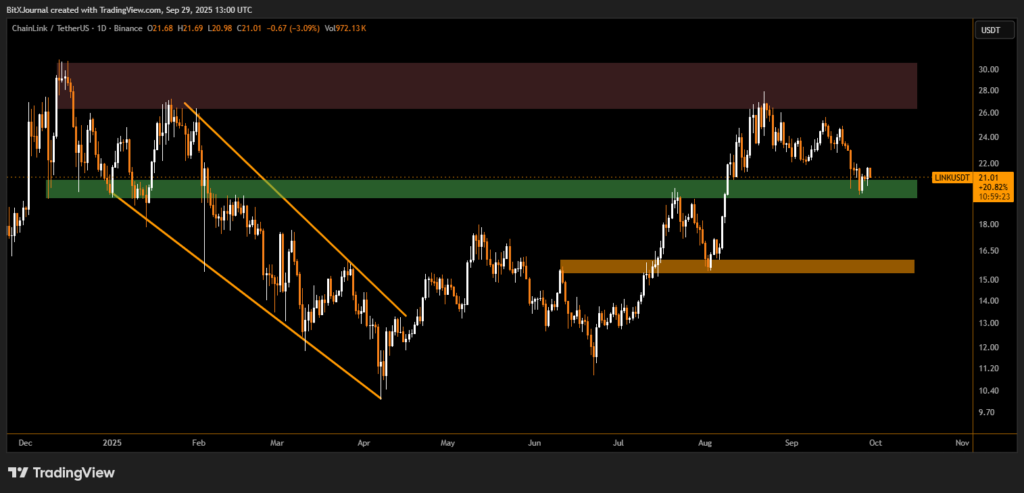
The chart highlights a green support zone between $20 and $21, where LINK has bounced in recent sessions. This region was a major breakout point in August, making it an important level to watch. A sustained hold here could fuel a new bullish leg.
On the upside, the next major resistance sits between $28 and $30, where sellers previously capped rallies. A breakout above this range would likely trigger momentum-driven buying. On the downside, failure to hold the $20 zone could send LINK back toward the orange support near $15, a level that acted as accumulation earlier in the year.
BITX Market analysts note that Chainlink has shown resilience despite broader volatility in altcoins. “The $20 area is crucial—if LINK maintains this level, we could see renewed strength toward the $25–$28 range,” one crypto strategist explained.
According to BITX analysts: “Breaking below $20 would invalidate the bullish setup in the short term and likely invite sellers back into the market. However, the long-term structure remains positive as long as $15 holds.”
The descending wedge breakout in April fueled the summer rally that pushed LINK above $22, marking a shift in momentum. With prices consolidating now, traders are watching whether the token can build a base above $20 before attempting another climb toward higher resistance.
For investors, the current zone offers both risk and opportunity. Holding above support signals potential upside, while a breakdown would open the door for deeper corrections.
Disclaimer
This content is for informational purposes only and does not constitute financial, investment, or legal advice. Cryptocurrency trading involves risk and may result in financial loss.