
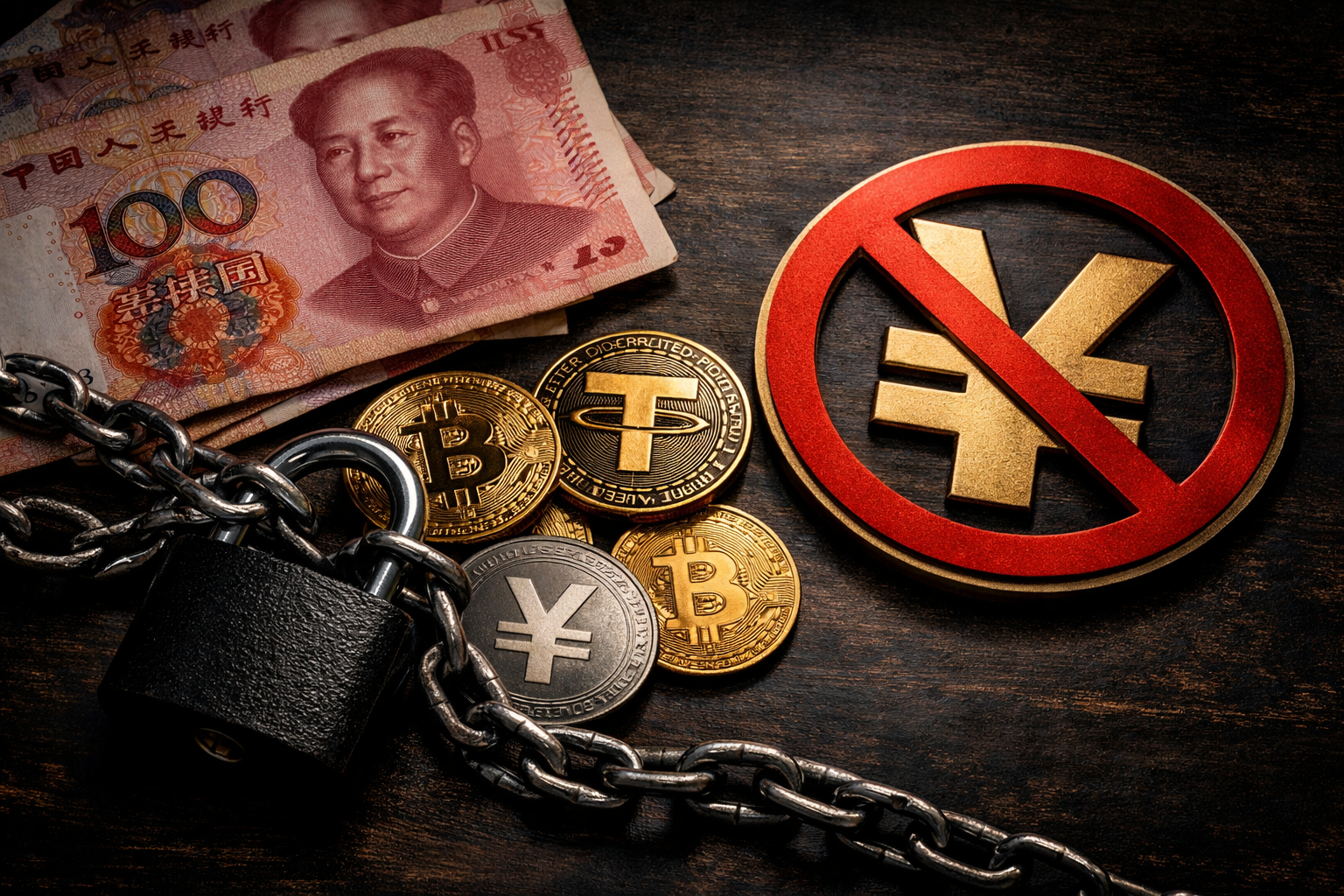
China has introduced a sweeping ban on the issuance of yuan-pegged stablecoins and tokenized real-world assets, reinforcing its strict control over digital finance and currency circulation. The decision was announced through a joint statement issued by the country’s central bank alongside multiple regulatory authorities.
Regulatory Ban Covers Domestic and Foreign Issuers
The new rules prohibit any organization or individual—inside or outside China—from issuing stablecoins linked to the renminbi without explicit regulatory approval. The restriction applies to both onshore and offshore versions of the currency, closing potential loopholes involving international yuan markets.
Regulators stated that fiat-backed stablecoins can function as substitutes for sovereign currency, raising concerns over monetary sovereignty and financial stability. As a result, privately issued digital assets tied to the yuan are now formally excluded from China’s financial system.
Real-World Asset Tokenization Also Restricted
In addition to stablecoins, the ban extends to tokenized real-world assets, signaling tighter oversight of blockchain-based financial products. Authorities emphasized that unapproved tokenization activity could disrupt regulated capital markets and payment systems.
While private digital currency initiatives face restrictions, China continues to promote its central bank digital currency. Recent policy moves allowing interest-bearing digital yuan wallets highlight the government’s focus on expanding official digital payment adoption while limiting private-sector alternatives.
Disclaimer
This content is for informational purposes only and does not constitute financial, investment, or legal advice. Cryptocurrency trading involves risk and may result in financial loss.