
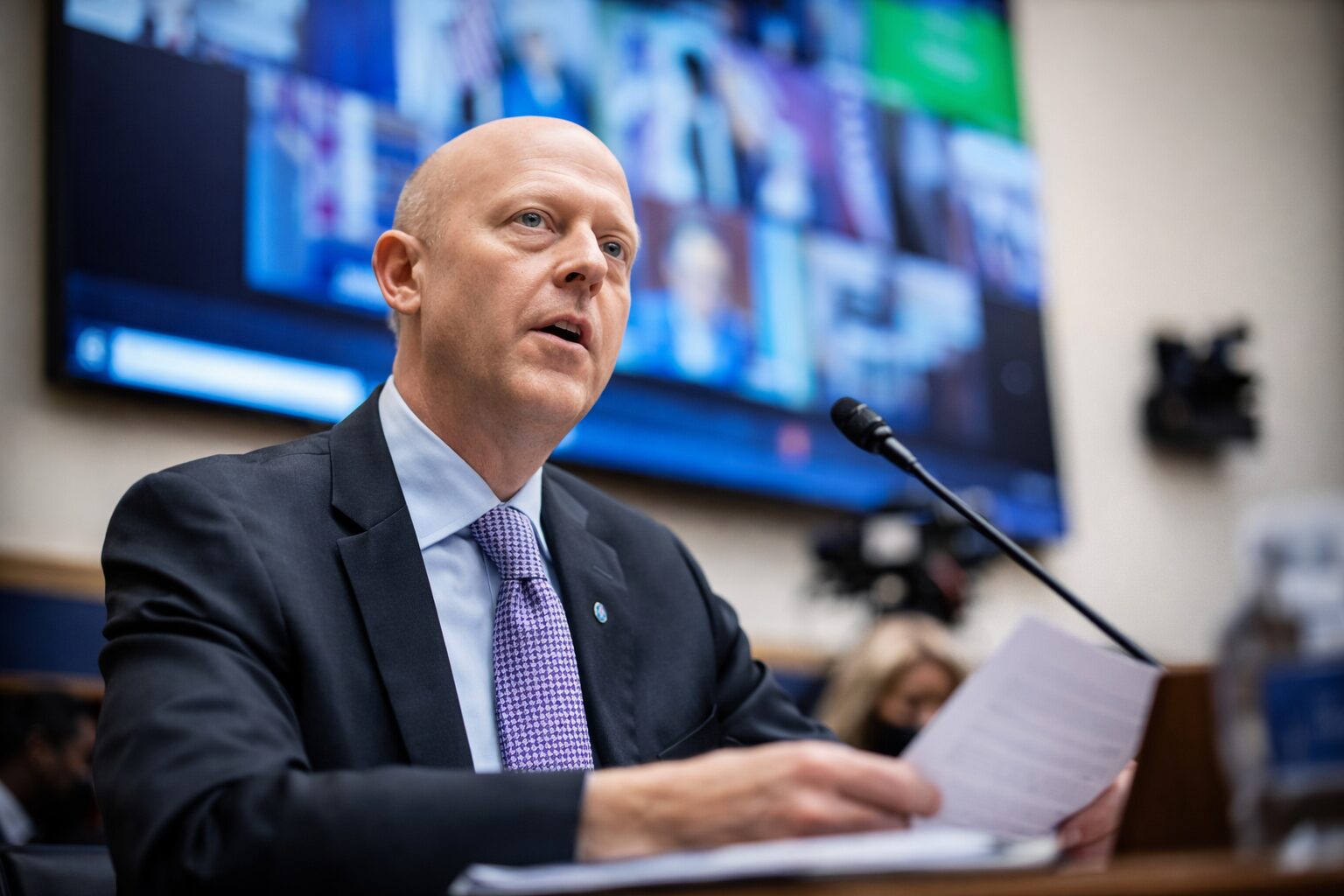
Jeremy Allaire, chief executive of Circle, said the company freezes USDC wallets only when directed by courts or law enforcement, rejecting calls for immediate intervention during hacking incidents. Speaking at a press conference in Seoul, Allaire emphasized that USDC operates as a regulated financial product and must follow legal procedures rather than discretionary decisions during active exploits.
Allaire stated that wallet blacklisting or freezing actions require a formal legal basis, positioning the policy as part of Circle’s strategy to align closely with regulatory frameworks. He argued that acting without official directives could undermine the rule-of-law foundation that governs regulated digital financial products.
Critics Point to Hundreds of Millions in Unfrozen Stolen Funds
Blockchain investigator ZachXBT has criticized Circle’s approach, claiming delays have allowed more than $420 million in illicit funds to escape since 2022. He highlighted incidents affecting platforms such as Drift Protocol, where a suspected North Korea-linked exploit earlier this month resulted in losses of up to $280 million, including roughly $230 million in USDC transferred across multiple chains.
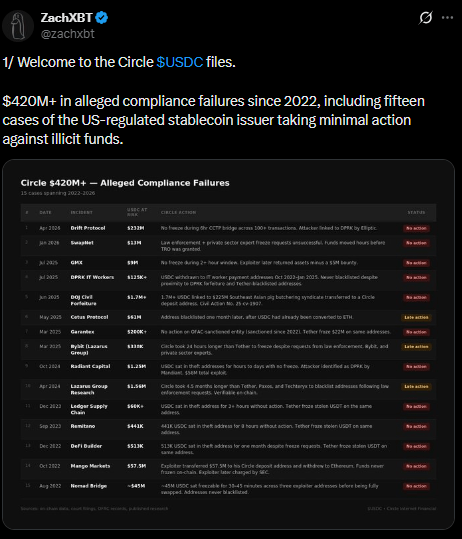
ZachXBT also referenced past exploits involving Ledger, Remitano, Nomad, Cetus, and SwapNet, where stolen USDC allegedly remained in traceable wallets for extended periods without intervention.
Debate Grows Over Centralization Risks in DeFi
While critics push for faster responses, others warn about the risks of excessive control. Omid Malekan argued that allowing stablecoin issuers to freeze funds without legal mandates could weaken trust in decentralized finance systems. He noted that discretionary freezes could shift authority from transparent legal frameworks to corporate decision-making, potentially undermining the foundational principles of decentralized finance.
Disclaimer
This content is for informational purposes only and does not constitute financial, investment, or legal advice. Cryptocurrency trading involves risk and may result in financial loss.