Balancing finality and fraud protection in stablecoin payments
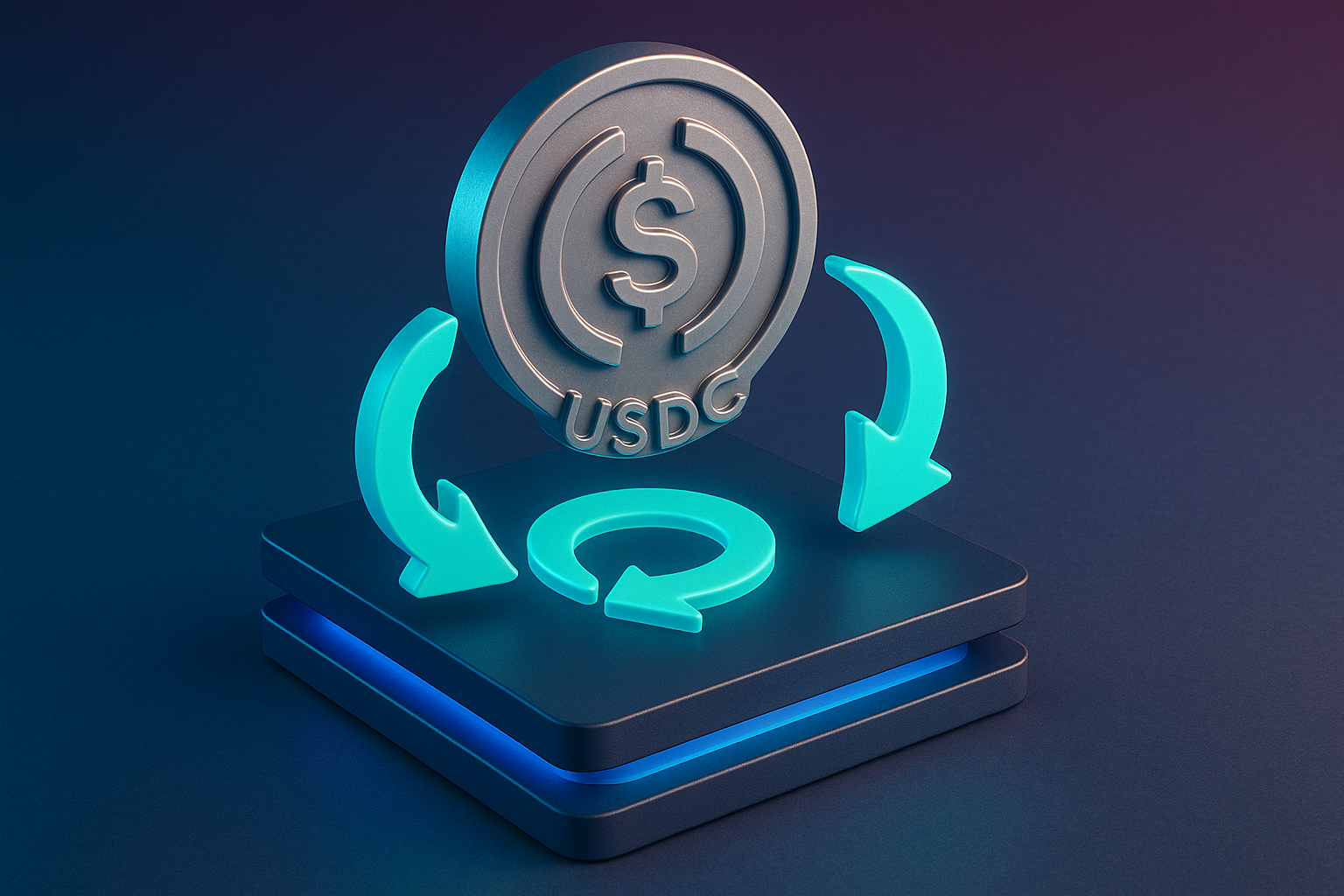
Circle, the issuer of the world’s second-largest stablecoin USDC, is exploring a controversial idea: enabling reversible transactions. The move could make stablecoins more attractive to banks and institutions but challenges one of crypto’s core principles of immutability.
A break from crypto’s traditional ethos
Speaking recently, Circle president Heath Tarbert said the company is studying whether fraud and hack-related reversals could be integrated into USDC while still preserving settlement finality.
“We are thinking through whether there’s the possibility of reversibility of transactions, but at the same time, we want settlement finality,” Tarbert explained. “There’s an inherent tension between instant transfers and irrevocability.”
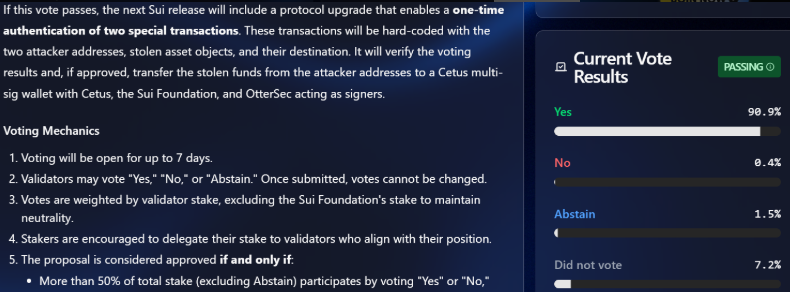
The Sui community passed a vote for frozen Cetus funds
This approach mirrors mechanisms in traditional finance, where chargebacks and dispute systems help protect consumers.
Industry debate: protection vs. decentralization
Supporters argue that reversibility could bolster trust in stablecoins and make them a reliable component of the global financial system. Fraud victims would have a better chance of recovery, making stablecoins more appealing to regulators and institutions.
However, critics highlight the risks of centralized control. The ability of an issuer to roll back transactions clashes with the decentralized ethos of blockchain, where records are supposed to be permanent and tamper-proof.
The debate is not theoretical. Earlier this year, validators on the Sui blockchain froze and later returned $162 million following a major exploit, sparking both praise for quick action and criticism over centralization.
Circle’s @Arc has landed on the Fireblocks Network 🔥
Where stablecoins and the global financial system move as one 🌎
Fireblocks expands its platform to support one of the most innovative chains for powering stablecoin finance — from secure custody and compliance to moving…
The discussion comes as Circle accelerates its expansion into enterprise-focused blockchain infrastructure. In August, the company announced Arc, a new layer-1 blockchain designed for stablecoin payments, foreign exchange, and capital markets. Arc will use USDC as its native gas token and is expected to launch fully by late 2025, with custody support from Fireblocks.
Tarbert acknowledged that while blockchain technology offers speed and transparency, some features of the current financial system — such as fraud reversibility mechanisms — may need to be integrated.
“Some developers see the need for a degree of reversibility for fraud, provided all parties agree,” he added.
Toward mainstream adoption
By blending blockchain innovation with traditional safeguards, Circle hopes to position USDC as a trusted settlement instrument not just for crypto markets, but for banks, asset managers, and global institutions.
If implemented, reversible transactions could mark a significant evolution in stablecoins — and spark one of the most important debates about how far crypto should adapt to the rules of traditional finance.
Disclaimer
This content is for informational purposes only and does not constitute financial, investment, or legal advice. Cryptocurrency trading involves risk and may result in financial loss.
We use cookies to personalize content and ads, provide social media features, and analyze our traffic. In accordance with GDPR/AVG and EU cookie regulations, data is processed only with your consent. We may share information about your use of our website with our social media, advertising, and analytics partners, and you can manage or withdraw your consent at any time. View more
Cookies settings
Accept
Privacy & Cookie policy
Privacy & Cookies policy
Cookies list
Cookie name
Active
Privacy Policy
At BitxJournal.com, we respect your privacy and are committed to protecting your personal data. This Privacy Policy explains how we collect, process, store, and protect personal information in accordance with the General Data Protection Regulation (GDPR) and AVG (EU privacy legislation).
1. Data Controller
BitxJournal.com acts as the data controller for all personal data processed through this website.
2. Personal Data We Collect
We may collect and process the following categories of data:
Personal Data
Name and email address (when you subscribe to newsletters or contact us)
Technical & Usage Data
IP address, browser type, operating system
Device information
Pages visited, referral sources, and interaction data
This data is collected via cookies, log files, and analytics technologies.
3. Legal Basis for Processing
We process personal data only when a lawful basis exists, including:
Consent – when you explicitly agree (e.g., cookies, newsletter sign-up)
Legitimate interest – to operate, secure, and improve our website
Legal obligation – when required by applicable laws
You may withdraw your consent at any time.
4. Purpose of Data Processing
Your data is processed for the following purposes:
Operating and maintaining the website
Improving content, usability, and performance
Sending newsletters or updates (only with consent)
Analyzing traffic and user behavior
Responding to inquiries or support requests
5. Cookies & Consent Management
We use cookies and similar technologies in compliance with EU Cookie Law.
Non-essential cookies are placed only after explicit user consent
Users may accept, reject, or manage cookie preferences at any time
Consent can be withdrawn without affecting prior lawful processing
Detailed cookie information is available in our Cookie Settings panel.
6. Third-Party Data Processing
We may share limited data with trusted third-party service providers, including:
Analytics providers (e.g., Google Analytics)
Advertising partners (for personalized or non-personalized ads)
These third parties act as data processors and process data only under contractual obligations compliant with GDPR/AVG.
7. International Data Transfers
Where data is transferred outside the European Economic Area (EEA), we ensure appropriate safeguards are in place, such as Standard Contractual Clauses (SCCs) or equivalent legal mechanisms.
8. Data Retention
We retain personal data only for as long as necessary to fulfill the purposes outlined in this policy or as required by law.
9. Data Security
We implement appropriate technical and organizational security measures to protect personal data against unauthorized access, alteration, disclosure, or destruction.
10. Your GDPR Rights
Under GDPR/AVG, you have the right to:
Access your personal data
Rectify inaccurate or incomplete data
Request data erasure (“right to be forgotten”)
Restrict or object to processing
Data portability
Withdraw consent at any time
Lodge a complaint with a supervisory authority
11. Changes to This Privacy Policy
We reserve the right to update this Privacy Policy at any time. Any changes will be posted on this page with a revised effective date.
12. Contact Information
For privacy-related inquiries or GDPR requests, contact: