

Circle plans to prioritize long-term, resilient infrastructure in 2026 as more institutions evaluate how stablecoins can be integrated into payments, treasury, and financial operations. The company aims to move Arc, its institution-focused layer-1 blockchain, from testnet toward production readiness, positioning it as core infrastructure for large-scale stablecoin activity.
Arc is designed to support regulated financial use cases, offering higher reliability, compliance features, and performance standards expected by banks, fintech firms, and global enterprises. Circle sees this foundation as essential for stablecoins to move beyond experimentation and into daily operational use.
Circle chief product and technology officer Nikhil Chandhok said on X;
Expanding Stablecoin Reach Across Blockchains
Alongside Arc, Circle intends to broaden native support for its stablecoins across multiple blockchain networks. This includes USDC, EURC, USYC, and partner-issued tokens. The goal is to simplify cross-chain usage, reduce operational friction, and allow institutions to hold, transfer, and program stablecoins without managing complex blockchain infrastructure.
Improved developer tools and streamlined user experiences are also a key focus, particularly for organizations deploying stablecoins at scale.
Scaling Payments for Institutional Adoption
Circle is also investing in scaling its stablecoin payments network so businesses can adopt digital currency payments without building systems from scratch. By abstracting infrastructure complexity, the company aims to make stablecoin-based settlement more accessible for enterprises.
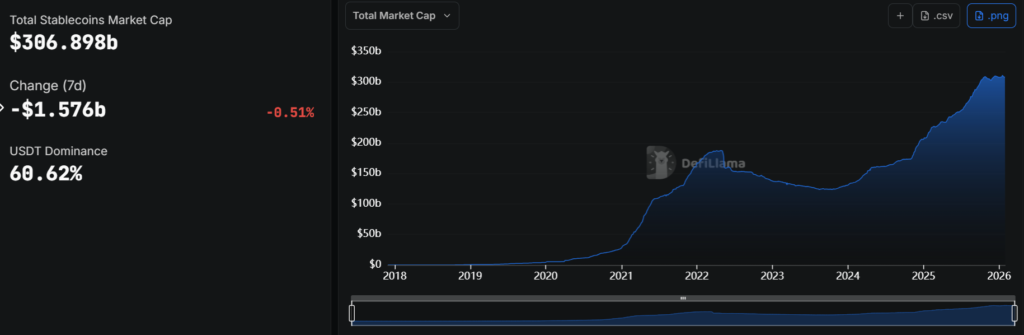
USDC remains the second-largest dollar-pegged stablecoin, with a market capitalization exceeding $70 billion. The overall stablecoin market surpassed $300 billion in late 2025, reflecting rising institutional interest amid clearer regulatory frameworks and expanding real-world use cases.
Disclaimer
This content is for informational purposes only and does not constitute financial, investment, or legal advice. Cryptocurrency trading involves risk and may result in financial loss.