Collaboration focuses on EURC and USDC under Europe’s MiCA framework
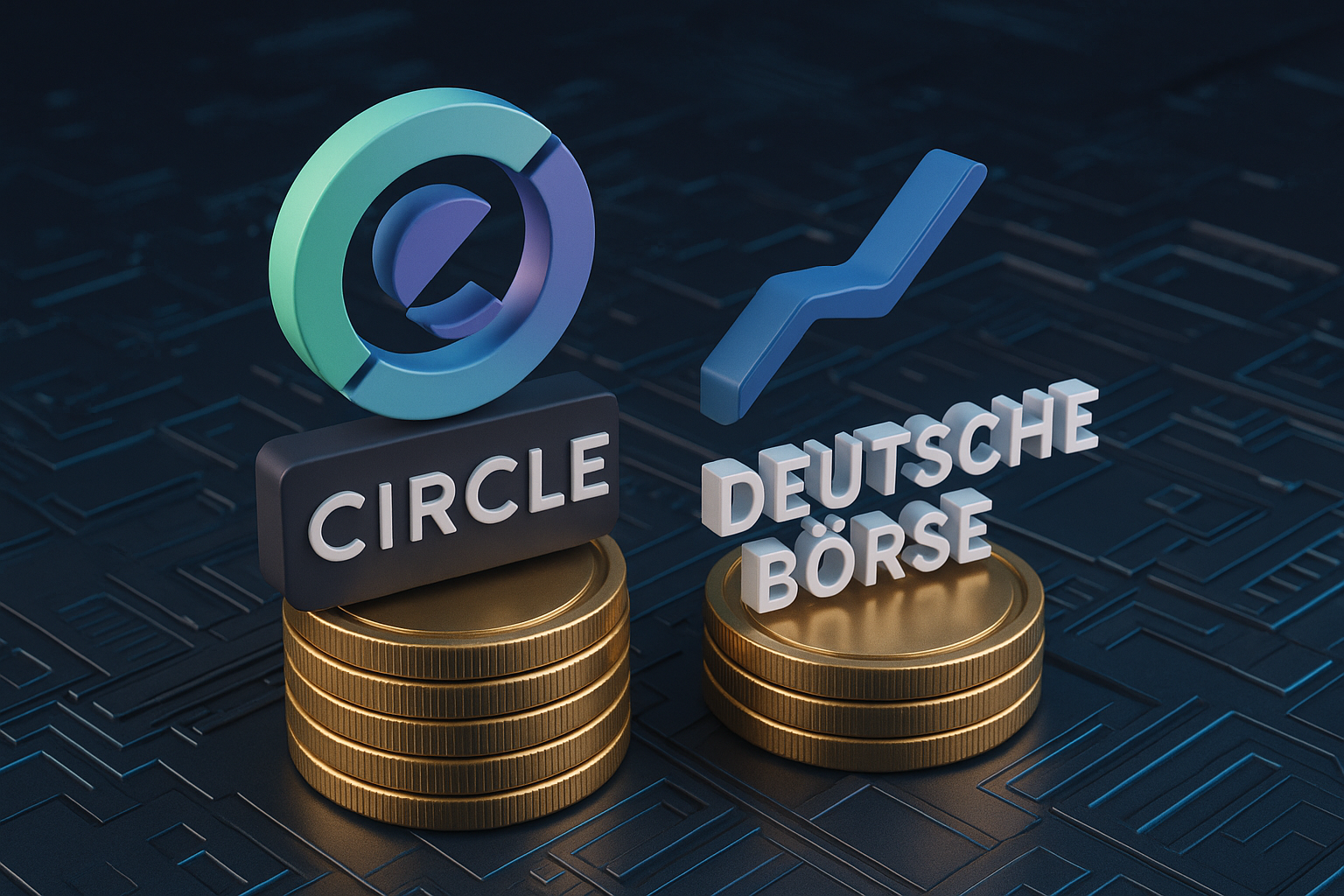
Circle, the issuer of USDC, has entered into a strategic partnership with Deutsche Börse Group to accelerate the adoption of regulated stablecoins in Europe. The move is aimed at bringing Circle’s euro-pegged EURC and dollar-backed USDC into mainstream financial infrastructure, beginning with trading on Deutsche Börse’s 3DX platform.
Circle’s MiCA compliance as a foundation
The collaboration is being enabled by the European Union’s Markets in Crypto-Assets Regulation (MiCA), which came into effect in late 2024. Circle became the first global stablecoin issuer to achieve full compliance with MiCA, a milestone CEO Jeremy Allaire described as critical for building trust with regulators and institutions.
“We’re planning to advance the use of regulated stablecoins across Europe’s market infrastructure — reducing settlement risk, lowering costs, and improving efficiency for banks, asset managers and the wider market,” Allaire stated, emphasizing that EURC and USDC could streamline trading, settlement, and custody.
Role of Deutsche Börse
Under the agreement, Deutsche Börse will integrate Circle’s stablecoins across its platforms, starting with 360T’s 3DX exchange and Crypto Finance. Custody solutions are also expected through Clearstream, Deutsche Börse’s post-trade business, with Crypto Finance acting as sub-custodian.
A spokesperson from Deutsche Börse noted that the initiative “aligns with our commitment to modernize Europe’s financial infrastructure by adopting digital assets in a regulated and secure framework.”
Regulatory backdrop: multi-issuance concerns
The partnership comes as European regulators debate stricter rules for stablecoins. Reports suggest the European Systemic Risk Board (ESRB) has recommended banning “multi-issuance stablecoins” — tokens issued both inside and outside the EU under a single brand. While not legally binding, the guidance adds pressure for regulators to act.
A senior official at the Bank of Italy recently warned that multi-issued stablecoins pose risks related to liquidity, legal frameworks, and operational stability.
The timing of Circle’s move is significant. While rival Tether has refused to comply with MiCA, Circle is positioning itself as the leading regulated stablecoin provider in Europe. Analysts believe this could strengthen EURC’s adoption, particularly as institutions explore tokenized settlement solutions.
By aligning with Deutsche Börse, Circle is signaling a long-term strategy to embed its stablecoins into Europe’s financial markets. If regulators allow space for compliant issuers, the partnership could mark a turning point for institutional-grade digital assets in the EU.
Disclaimer
This content is for informational purposes only and does not constitute financial, investment, or legal advice. Cryptocurrency trading involves risk and may result in financial loss.