
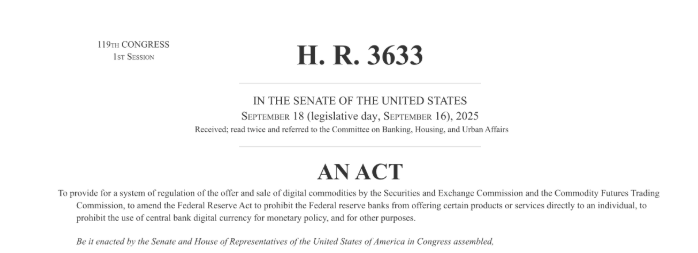
The proposed Digital Asset Market Structure Clarity Act is drawing criticism from parts of the blockchain industry, with some arguing it could unintentionally strengthen centralized control over digital asset markets.
Friederike Ernst warned that the bill’s regulatory framework appears to assume most crypto activity must pass through licensed financial intermediaries. According to Ernst, such an approach could concentrate influence among large institutions while weakening the open participation model that decentralized networks were designed to support.
Concerns Over Impact on Decentralized Finance
Ernst argued that blockchain technology allows users to directly participate in network governance and ownership rather than relying on traditional financial gatekeepers. If regulatory structures push activity toward institutional intermediaries, users could revert to a system where access to financial infrastructure is controlled by centralized providers.
Despite these concerns, the legislation does provide clearer regulatory boundaries between the U.S. Securities and Exchange Commission and the Commodity Futures Trading Commission while maintaining protections for peer to peer transactions and self-custody.
President Trump slams banks for holding up the CLARITY Act;

Legislative Uncertainty Continues in Congress
Debate around the bill has intensified as lawmakers and industry groups disagree on issues such as stablecoin yield and decentralized finance protections.
Some companies, including Coinbase, have expressed concerns about provisions they believe could limit innovation in decentralized financial systems. Meanwhile, lawmakers remain divided over the final structure of the legislation and its timeline for approval.
Disclaimer
This content is for informational purposes only and does not constitute financial, investment, or legal advice. Cryptocurrency trading involves risk and may result in financial loss.