
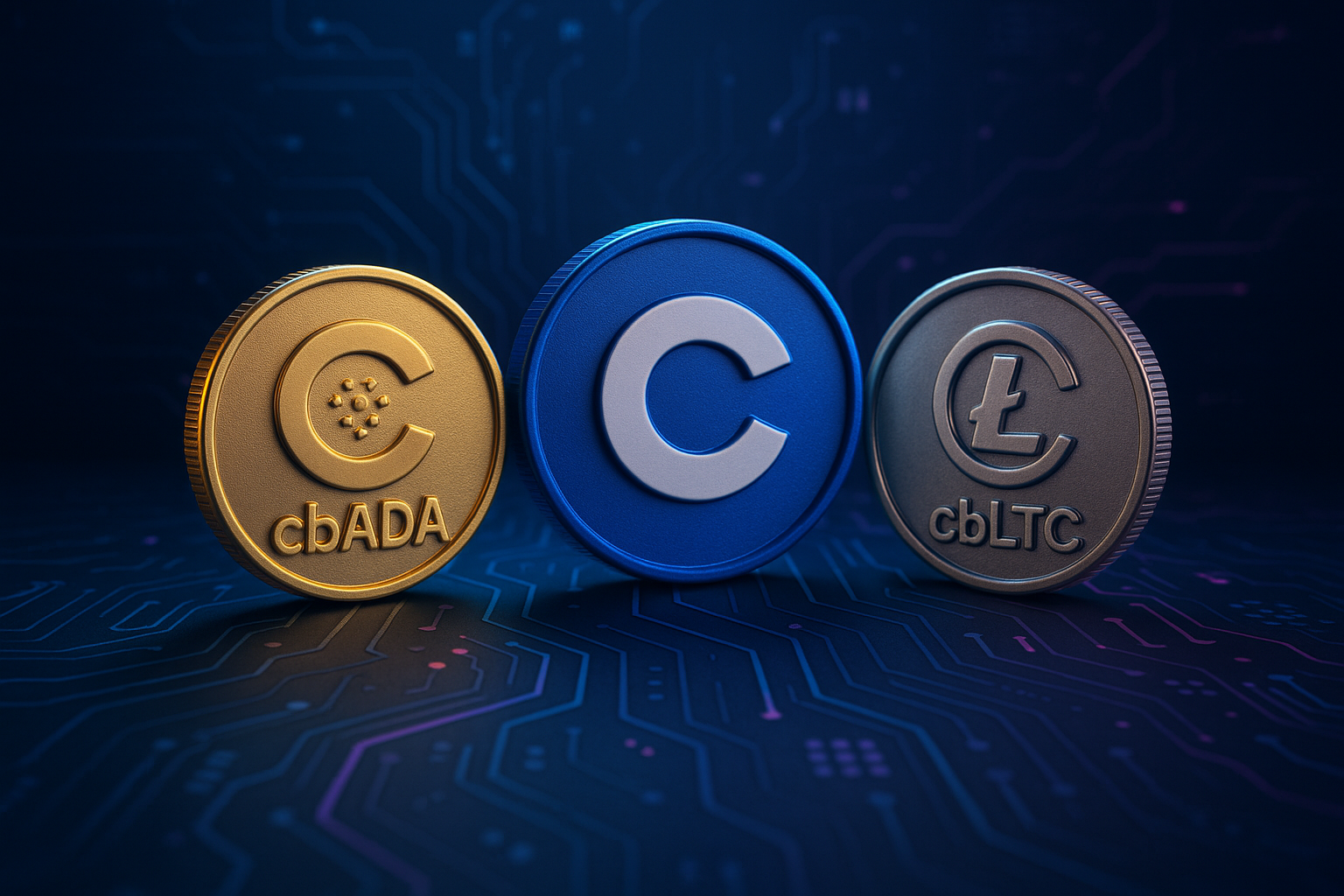
Coinbase has officially launched wrapped versions of Cardano (ADA) and Litecoin (LTC) on its Ethereum Layer-2 network Base, opening the door for users to access decentralized finance (DeFi) opportunities without leaving the ecosystem.
Wrapped Tokens Enable DeFi Access
The newly introduced cbADA and cbLTC are ERC-20 tokens backed 1:1 by ADA and LTC, respectively. These wrapped tokens allow users to participate in Ethereum-style DeFi services, such as staking, lending, liquidity pools, and trading, without selling or converting their native assets.
Over 11,300 cbLTC and 2.9 million cbADA have already been minted, according to on-chain data._
All wrapped assets are fully backed and held in Coinbase custody, with real-time proof-of-reserves available to ensure transparency and security.
Solving the Interoperability Challenge
ADA and LTC are native to separate blockchains — Cardano and Litecoin — and therefore not directly compatible with Ethereum or Layer-2 protocols like Base. Wrapped tokens act as a bridge, offering cross-chain functionality while preserving ownership of the original tokens.
This move underscores the growing demand for interoperable digital assets across DeFi platforms.
Base Grows as a DeFi Hub
Coinbase’s Base network continues to gain traction in the Layer-2 space, boasting over $3 billion in total value locked (TVL) as of June 26. The platform already supports wrapped versions of Bitcoin, Ether, XRP, and Dogecoin, making it one of the most versatile DeFi ecosystems currently operating on Ethereum L2.
The addition of ADA and LTC makes Base a more inclusive platform for diverse crypto communities.
Early users of cbADA and cbLTC can expect potential liquidity mining incentives and fee-generating opportunities, as DeFi protocols look to boost adoption of these new assets.
Why This Matters
This rollout is significant for ADA and LTC holders who previously had limited access to DeFi due to blockchain compatibility issues. With the launch of cbADA and cbLTC, users can now earn yields, trade, or lend their tokens across decentralized applications (dApps) on Base.
This integration marks another major step toward DeFi mass adoption, giving traditional crypto investors seamless access to next-gen financial tools.
Disclaimer
This content is for informational purposes only and does not constitute financial, investment, or legal advice. Cryptocurrency trading involves risk and may result in financial loss.