

Exchange says stablecoins strengthen the dollar globally, not weaken US banking
Coinbase has pushed back against growing concerns that stablecoins are draining deposits from US banks, calling the idea of “deposit erosion” a myth.
In a blog post published Tuesday, the exchange argued that there is no evidence linking stablecoin adoption to deposit outflows at community banks. Instead, Coinbase said stablecoins function primarily as payment tools, not as substitutes for savings accounts.
“Stablecoins don’t threaten lending — they offer a competitive alternative to banks’ $187 billion annual swipe-fee windfall,” the company wrote. It added that someone using stablecoins to pay an overseas supplier is not reallocating savings, but choosing a faster and cheaper method.
Disputing Treasury projections
Coinbase also challenged figures in a recent US Treasury Borrowing Advisory Committee report, which projected as much as $6 trillion in potential deposit flight. The exchange noted that the same report forecasted only a $2 trillion stablecoin market by 2028, arguing: “The math doesn’t add up.”
Stablecoin activity concentrated overseas
According to Coinbase, the majority of stablecoin transactions happen outside the US, particularly in Asia, Latin America, and Africa, where financial infrastructure is weaker. The company cited International Monetary Fund data showing that more than $1 trillion of the $2 trillion in stablecoin transactions in 2024 occurred internationally.
Because most stablecoins are pegged to the US dollar, their global usage reinforces dollar dominance rather than undermining domestic credit markets, Coinbase said.
Positive correlation with banks
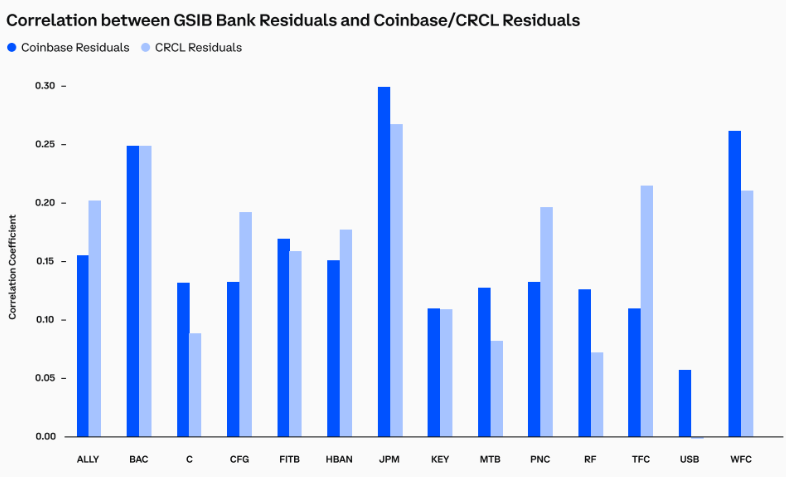
Coinbase also pointed to evidence that bank stocks and crypto firms moved positively together after the passage of the GENIUS Act, which established a framework for stablecoin regulation. This, the exchange argued, shows that stablecoins and banks can coexist and grow together.
Industry voices have echoed similar points. Bitwise CIO Matt Hougan recently criticized banks for complaining about stablecoin competition instead of improving deposit rates. He argued that US banks have long offered poor yields and are now panicking as stablecoins present better alternatives.
Coinbase’s position highlights stablecoins not as a threat to US deposits, but as a tool to strengthen the global role of the dollar while pushing banks to innovate.
Disclaimer
This content is for informational purposes only and does not constitute financial, investment, or legal advice. Cryptocurrency trading involves risk and may result in financial loss.