
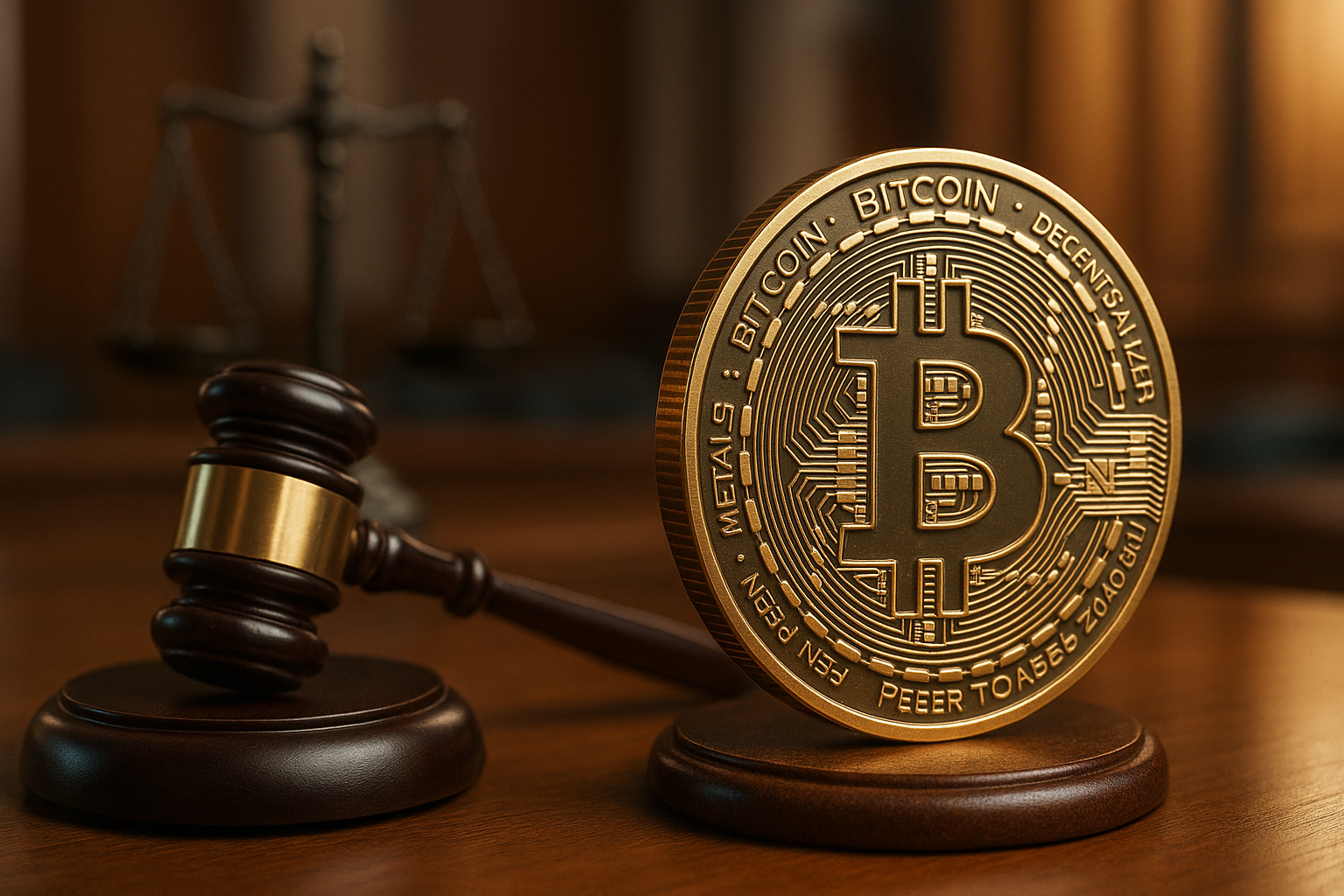
South Korean crypto exchange Coinone has successfully appealed a legal case involving the double withdrawal of Bitcoin, with the Seoul Western District Court ruling in its favor on July 3, 2025. The dispute stemmed from a 2018 incident during a period of intense Bitcoin network congestion, where five users were able to withdraw BTC twice due to a technical glitch.


Bitcoin Network Congestion Triggers Transaction Error

The issue began in late 2017 to early 2018, a time when Bitcoin’s transaction volume surged, overwhelming the network and causing confirmation delays. Coinone’s system mistakenly interpreted the slow network confirmations as failed withdrawals, prompting automatic account top-ups for users.

As a result, customers withdrew their Bitcoin a second time — even though the original transactions had been successfully processed on-chain.

At the time, Bitcoin transaction fees peaked at $55, and over 250,000 unconfirmed transactions clogged the mempool, contributing to the confusion and delayed confirmations.


Court Cites Unjust Enrichment, Clears Coinone of Liability

In the original ruling, a lower court partially blamed Coinone’s servers and awarded limited damages. However, the appeals court overturned this, asserting that the platform was not responsible for the error, as the delay stemmed from external network conditions.

The court ruled the traders received unjust enrichment — meaning they profited unfairly from a system error — and ordered them to return the excess Bitcoin.

This ruling sets a significant precedent for how exchanges may be protected from unforeseen blockchain-level disruptions that are not a result of their internal systems.


Implications for Crypto Exchanges and Traders

This decision reinforces the legal stance that users may be held accountable for knowingly withdrawing crypto funds more than once, even if made possible by system malfunctions.

Crypto traders are now on firmer legal notice that exploiting technical glitches can result in repayment obligations.

For exchanges, the outcome highlights the importance of clear transaction protocols, especially when interacting with decentralized networks susceptible to congestion or technical delays.


Coinone Clears Its Name

With the successful appeal, Coinone emerges with no liability for the double-withdrawn BTC, and the five users must repay the improperly received funds. The ruling serves as a strong reminder of the responsibility crypto users carry and the growing legal maturity of blockchain-related disputes in major jurisdictions like South Korea.

Disclaimer

This content is for informational purposes only and does not constitute financial, investment, or legal advice. Cryptocurrency trading involves risk and may result in financial loss.

logo

blockto.io

info@blockto.io

Blockto.io Copyright © 2025, All rights reserved

News
Rates
Buy
More
We use cookies to personalize content and ads, provide social media features, and analyze our traffic. In accordance with GDPR/AVG and EU cookie regulations, data is processed only with your consent. We may share information about your use of our website with our social media, advertising, and analytics partners, and you can manage or withdraw your consent at any time. View more
Cookies settings
Accept
Privacy & Cookie policy
Privacy & Cookies policy
Cookie name Active

Privacy Policy

At BitxJournal.com, we respect your privacy and are committed to protecting your personal data. This Privacy Policy explains how we collect, process, store, and protect personal information in accordance with the General Data Protection Regulation (GDPR) and AVG (EU privacy legislation).

1. Data Controller

BitxJournal.com acts as the data controller for all personal data processed through this website.

2. Personal Data We Collect

We may collect and process the following categories of data:

Personal Data

  • Name and email address (when you subscribe to newsletters or contact us)

Technical & Usage Data

  • IP address, browser type, operating system

  • Device information

  • Pages visited, referral sources, and interaction data

This data is collected via cookies, log files, and analytics technologies.

3. Legal Basis for Processing

We process personal data only when a lawful basis exists, including:

  • Consent – when you explicitly agree (e.g., cookies, newsletter sign-up)

  • Legitimate interest – to operate, secure, and improve our website

  • Legal obligation – when required by applicable laws

You may withdraw your consent at any time.

4. Purpose of Data Processing

Your data is processed for the following purposes:

  • Operating and maintaining the website

  • Improving content, usability, and performance

  • Sending newsletters or updates (only with consent)

  • Analyzing traffic and user behavior

  • Responding to inquiries or support requests

5. Cookies & Consent Management

We use cookies and similar technologies in compliance with EU Cookie Law.

  • Non-essential cookies are placed only after explicit user consent

  • Users may accept, reject, or manage cookie preferences at any time

  • Consent can be withdrawn without affecting prior lawful processing

Detailed cookie information is available in our Cookie Settings panel.

6. Third-Party Data Processing

We may share limited data with trusted third-party service providers, including:

  • Analytics providers (e.g., Google Analytics)

  • Advertising partners (for personalized or non-personalized ads)

These third parties act as data processors and process data only under contractual obligations compliant with GDPR/AVG.

7. International Data Transfers

Where data is transferred outside the European Economic Area (EEA), we ensure appropriate safeguards are in place, such as Standard Contractual Clauses (SCCs) or equivalent legal mechanisms.

8. Data Retention

We retain personal data only for as long as necessary to fulfill the purposes outlined in this policy or as required by law.

9. Data Security

We implement appropriate technical and organizational security measures to protect personal data against unauthorized access, alteration, disclosure, or destruction.

10. Your GDPR Rights

Under GDPR/AVG, you have the right to:

  • Access your personal data

  • Rectify inaccurate or incomplete data

  • Request data erasure (“right to be forgotten”)

  • Restrict or object to processing

  • Data portability

  • Withdraw consent at any time

  • Lodge a complaint with a supervisory authority

11. Changes to This Privacy Policy

We reserve the right to update this Privacy Policy at any time. Any changes will be posted on this page with a revised effective date.

12. Contact Information

For privacy-related inquiries or GDPR requests, contact:

📧 Email: support@blockto.io
🌐 Website: https://blockto.io

Save settings
Cookies settings