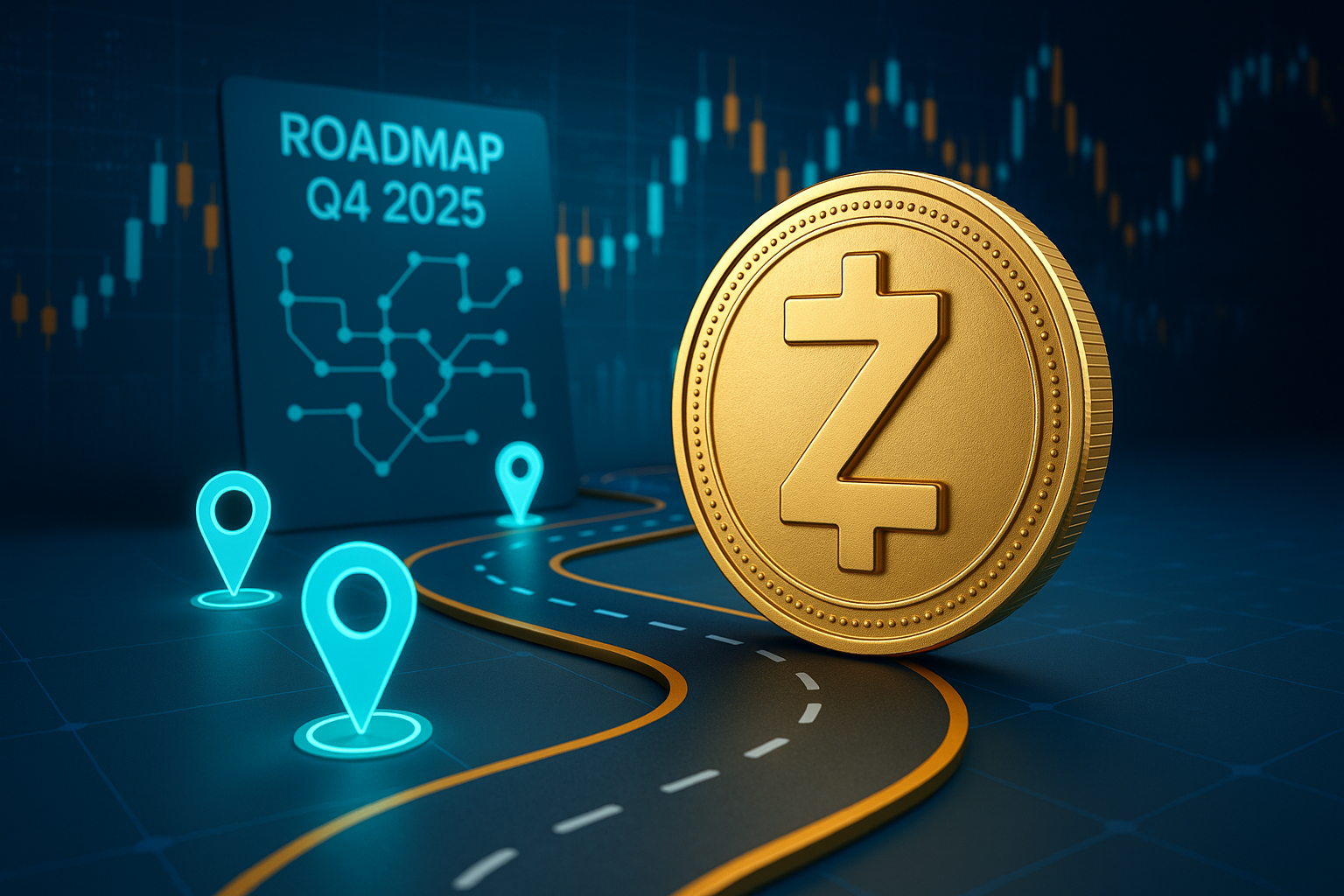
As privacy gains renewed traction, some developers argue that reviving OP_CAT could unlock Bitcoin-native privacy and scalability
A renewed wave of support for Zcash — driven by prominent voices including the Winklevoss twins, Naval Ravikant, and Balaji Srinivasan — has sparked deeper conversations about privacy in crypto. With regulators increasing their scrutiny, Zcash’s momentum in 2025 is prompting fresh questions about whether Bitcoin might revisit long-stalled discussions around restoring the OP_CAT opcode, a change that some argue could open the door to powerful privacy upgrades.
Zcash’s Momentum Puts Spotlight Back on Zero-Knowledge Proofs
Zcash’s rise has revived interest in technologies that mask transaction details without compromising integrity. StarkWare founder Eli Ben-Sasson, one of the earliest architects of zero-knowledge proofs (ZKPs), explained that Zcash itself was born from early Bitcoin discussions.
He recalled giving a ZK talk at a Bitcoin event in 2013: “Very influential Bitcoin OGs like Greg Maxwell and Mike Hearn came up and asked, ‘Where’s the tech? When can we use the code?’” That enthusiasm helped inspire the Zerocash protocol, which demonstrated how ZKPs could conceal transaction amounts and sender-receiver relationships.
Ben-Sasson emphasized that ZKPs solve two foundational challenges:
— privacy
— scalability
They can prove correctness without revealing sensitive data — a feature he says Bitcoin still lacks due to long-standing code restrictions.
Why OP_CAT Matters for Bitcoin’s Privacy Future
OP_CAT, an opcode introduced by Satoshi Nakamoto but disabled in 2010, is central to the discussion. Ben-Sasson argues that reactivating it could enable native privacy, post-quantum security, and advanced programmability on Bitcoin.
“The technology is ready,” he said. “All you need is a soft fork that adds nine lines of code. If there’s a will, there’s a way.”
Advocates say OP_CAT would allow developers to construct on-chain proofs and more expressive smart contracts, paving the way for Bitcoin-compatible ZK-based systems. Its revival, combined with OP_STARK, could bridge the gap between Bitcoin’s simplicity and modern cryptographic privacy tools.
Some analysts believe Zcash’s resurgence — including institutional backing and new treasury structures — may pressure Bitcoin developers to revisit the subject after years of reluctance.
Industry Voices Split on Privacy Direction
Despite the growing noise surrounding Zcash, major Bitcoin advocates have largely avoided engaging with the discussion. There has been little mainstream push within Bitcoin circles for enhanced privacy features, especially as regulators intensify their oversight of anonymous transactions.
However, interest is growing among innovators. As one developer noted, “If the market signals that users want privacy as a baseline, Bitcoin may need to adapt — or risk ceding ground to networks designed for it from day one.”
Zcash’s Role in the Broader Crypto Ecosystem
The Winklevoss twins recently deepened their commitment to the Zcash ecosystem by launching Cypherpunk Technologies, a ZEC-based treasury company created after acquiring and rebranding Leap Therapeutics. Their move underscores the belief that Zcash can complement, not compete with, Bitcoin — offering privacy tools that Bitcoin currently lacks.
As privacy becomes a flashpoint issue worldwide, Zcash’s accelerating momentum could bring long-ignored Bitcoin opcodes like OP_CAT back into serious conversation. Whether the community embraces that possibility remains an open question — but the technology, as Ben-Sasson insists, is already waiting.
Disclaimer
This content is for informational purposes only and does not constitute financial, investment, or legal advice. Cryptocurrency trading involves risk and may result in financial loss.