
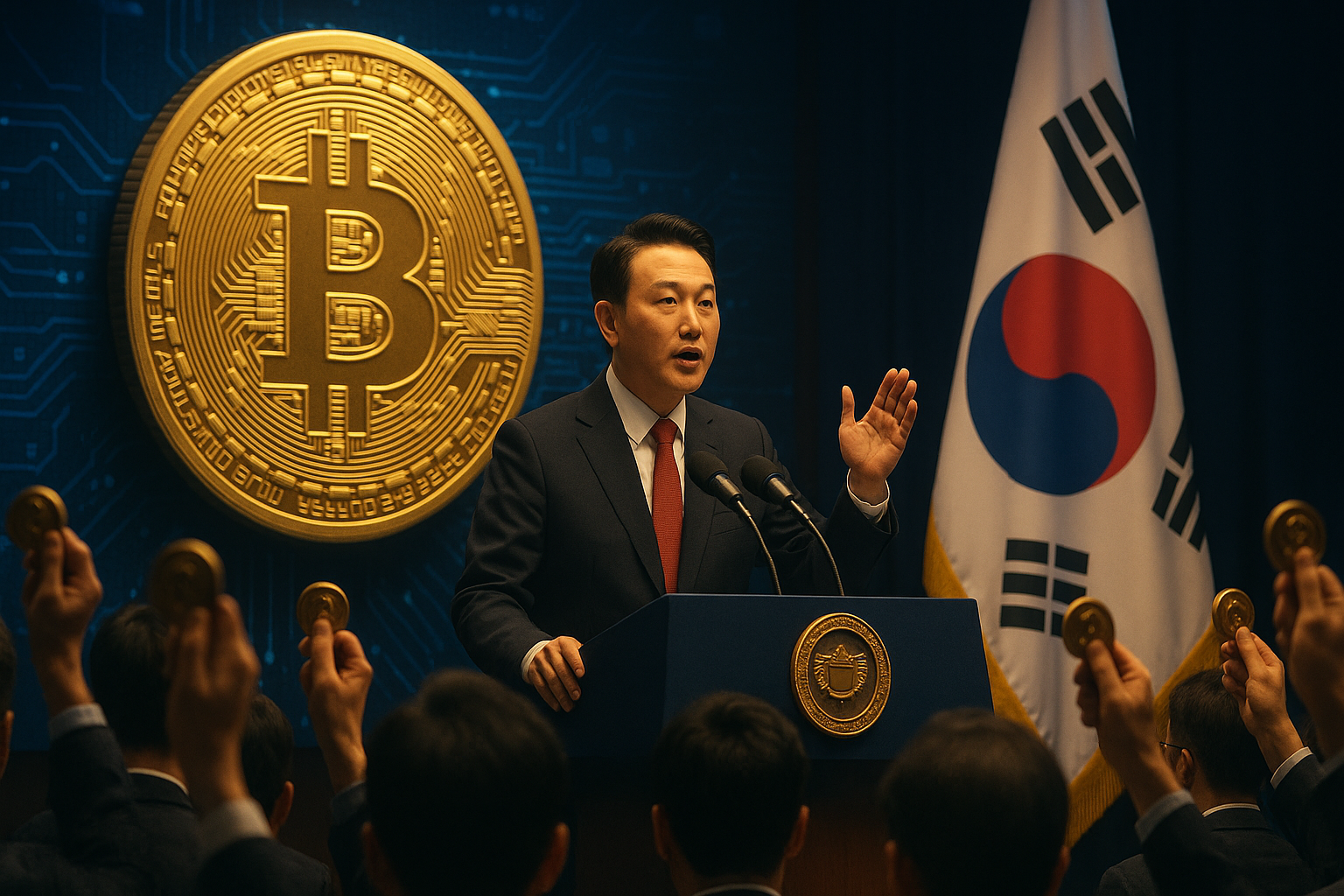
In an unexpected twist, cryptocurrency has taken center stage in South Korea’s snap presidential election, with veteran capital entering the crypto market and older generations joining younger voters in shaping the future of digital assets in the country.
Candidates Compete for Crypto-Friendly Voter Base
All three leading candidates — Lee Jae-myung, Kim Moon-soo, and Lee Jun-seok — have embraced pro-crypto platforms, seeking to capitalize on the country’s surging interest in digital assets.
“The political sphere has actively embraced cryptocurrencies as a key campaign agenda,” said Park Sung-jun, head of the Blockchain Research Center at Dongguk University.
Their proposals include:
- Legalizing spot Bitcoin ETFs
- Easing fiat-to-crypto banking restrictions
- Launching local stablecoins
- Encouraging wider crypto exchange access
Election Triggered by Controversial Martial Law Decree
The June 3 snap election was called nearly two years ahead of schedule after former President Yoon Suk-yeol was impeached following a failed attempt to declare martial law in late 2024. Though overturned swiftly, the event ignited a political crisis, creating a vacuum now filled with crypto-driven campaign strategies.
Crypto Platforms and Regulation at the Forefront
South Korea currently allows fiat-to-crypto trading on just five licensed platforms, creating a quasi-monopoly and limiting innovation. Both Lee Jae-myung (Democratic Party) and Kim Moon-soo (People Power Party) have pledged to relax these restrictions, which require users to register with real-name verified bank accounts through partnered banks.
This system excludes corporate participation and stifles competition, a concern echoed by startups and investors alike.
Stablecoin Debate Sparks Tensions
Lee Jae-myung has proposed a government-backed stablecoin pegged to the Korean won to reduce reliance on foreign-issued tokens. In contrast, Lee Jun-seok, leader of the newly formed Reform Party, criticized the idea, citing the collapse of TerraKRW (KRT), a previous won-pegged algorithmic stablecoin.
“There are no safeguards. It’s just a slogan,” Lee Jun-seok wrote on Facebook.
During a live presidential debate, Lee Jun-seok again challenged Jae-myung, demanding details on reserve assets, risk management, and regulatory oversight.
Veteran Capital, Younger Votes: A Crypto-Powered Election
What began as a youth-driven crypto movement has now evolved into a multi-generational political issue. Wealthier, older South Koreans are pouring capital into digital assets, further legitimizing crypto as a central economic and electoral concern.
Crypto has transitioned from fringe topic to national issue — with the future of South Korea’s digital economy hanging in the balance.