Investigators Warn of Growing Scam Culture Amid Regulatory Inaction
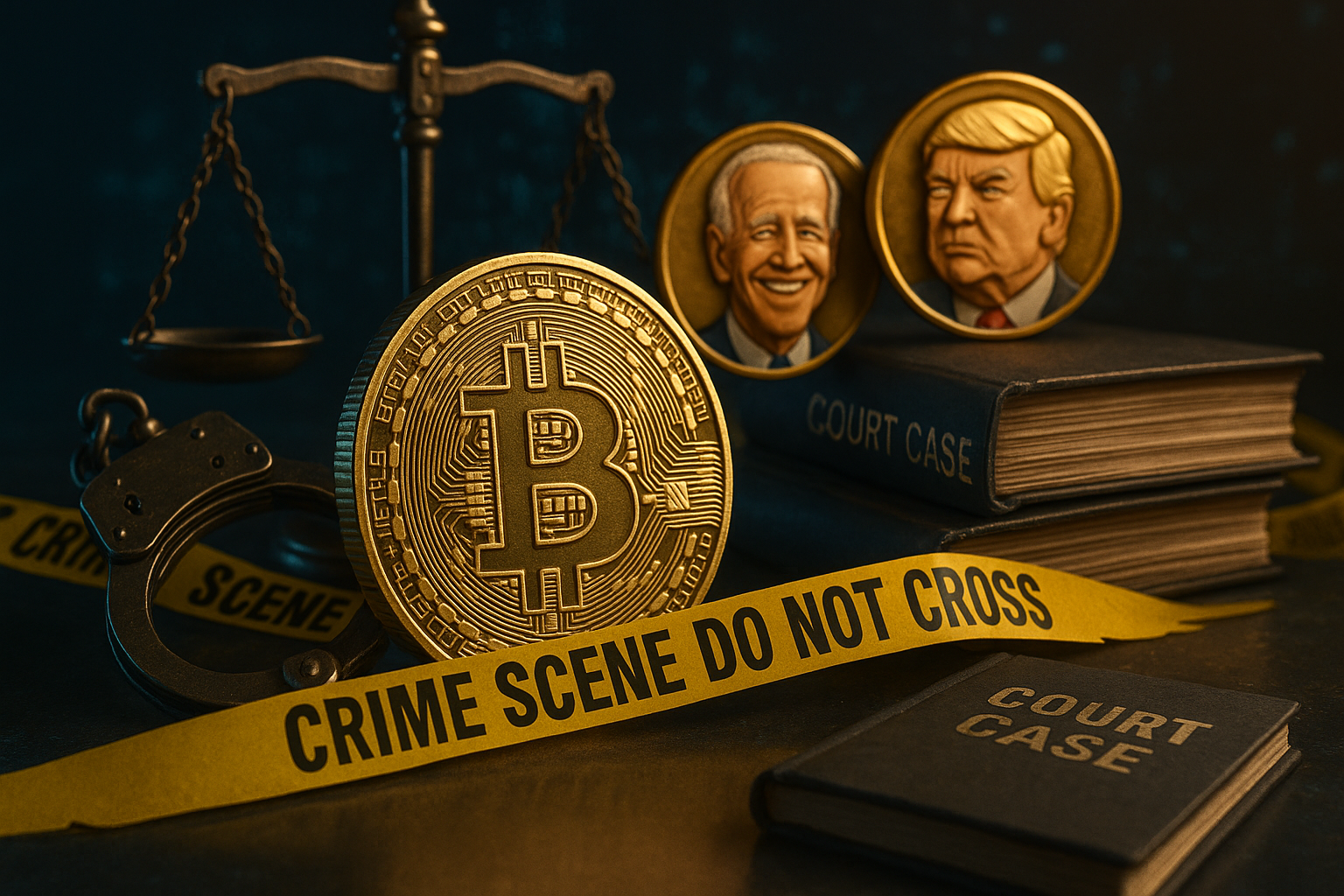
The crypto industry is entering a dangerous “crime supercycle,” say top blockchain sleuths ZachXBT and Taylor Monahan, as politicians embrace memecoins and U.S. regulators drop key crypto-related court cases.
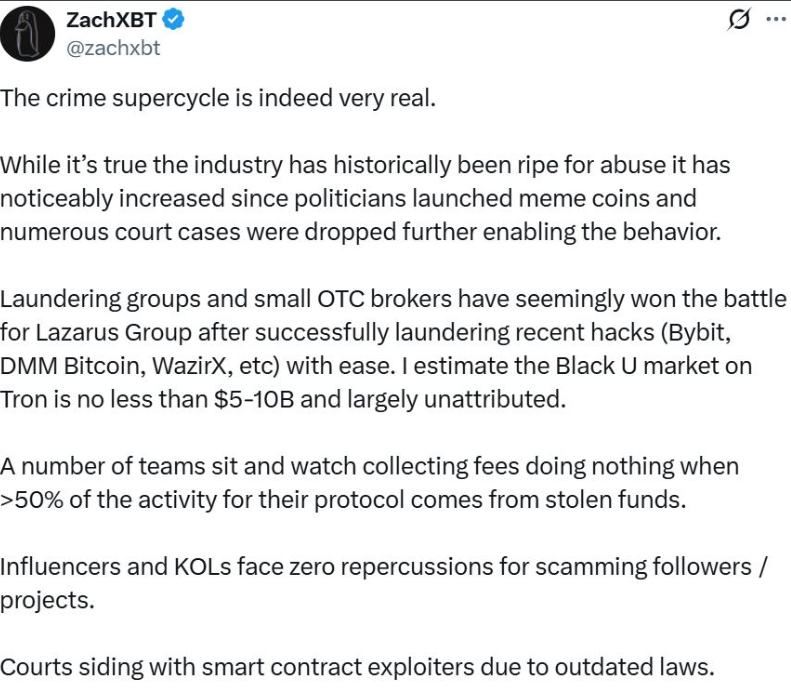
ZachXBT posted Thursday on X, highlighting that while crypto has always had its share of fraud, the rate of abuse has sharply increased since political figures began promoting memecoins and high-profile legal actions were dismissed.
“Numerous court cases were dropped, politicians launched memecoins, and influencers scam with zero consequences,” he said.
Politicians and Influencers Fuel the Fire
The warning follows a surge in memecoin endorsements by political figures, including former U.S. President Donald Trump, who recently promoted crypto assets tied to his image. Critics argue these actions normalize speculative behavior and give scammers a cultural green light.
ZachXBT added that many influencers continue to promote dubious projects without facing legal repercussions, contributing to a space where gray hat activities thrive while black hat crimes persist beneath the surface.
Lack of Regulation Encourages Abuse
The lack of regulatory enforcement on deceptive behavior—like failing to disclose paid promotions or misleading investors—has created a low-risk, high-reward environment for scammers.
“If regulators had focused on stopping fraud instead of targeting open-source developers, the landscape would look very different,” ZachXBT noted.
The scale of fraud is staggering. According to Hacken’s April 2025 report, the first quarter of 2025 saw over $2 billion lost to crypto hacks, including:
- $96 million to phishing scams
- Over $300 million to rug pulls
Criminals Thrive While Consequences Lag
Blockchain researcher Taylor Monahan echoed the concerns, stating that criminals have no incentive to stop as long as they keep earning large profits.
“There are no financial, social, or legal downsides for scammers. It’s easy, fast money,” Monahan warned.
She emphasized that the space has retained too many bad actors from previous cycles—including romance scammers, ransomware groups, and nation-state cyber units. She added, “If crypto disappeared tomorrow, ransomware gangs would be the biggest losers.”
Some Scammers Still Face Justice
Despite the broader trend, law enforcement is still active. The U.S. Department of Justice announced the seizure of $225 million in crypto-related scams this week. Separately, a New Zealand man was arrested in May for allegedly running a $265 million global crypto fraud scheme.
Disclaimer
This content is for informational purposes only and does not constitute financial, investment, or legal advice. Cryptocurrency trading involves risk and may result in financial loss.