

Czech Justice Minister Pavel Blazek has officially resigned following intense public backlash over his ministry’s handling of a $45 million Bitcoin donation from Tomas Jirikovsky, a convicted drug trafficker and former operator of the Sheep Marketplace dark web platform.
Bitcoin Auction Ignites Controversy
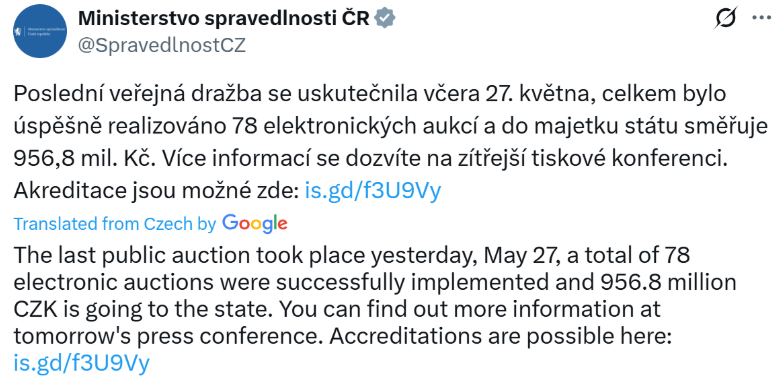
On May 28, the Czech Ministry of Justice revealed it had raised nearly 1 billion CZK (~$45M) by auctioning 500 Bitcoin donated by Jirikovsky. The ministry planned to allocate the proceeds to initiatives like digitizing the justice system, combatting drug use in prisons, and improving staff housing.
However, investigative reporting by Denik N exposed the donor’s criminal past, setting off a political firestorm. Jirikovsky, convicted in 2017 for drug trafficking, weapons violations, and embezzlement, allegedly offered the BTC as a gesture of repentance through his lawyer in March 2025.
Blazek Under Fire for Lack of Due Diligence
Blazek admitted that he did not investigate the origin of the funds, stating,
“I have no way to investigate the matter, and I wasn’t interested so many years after the case.”
This admission, coupled with the convict’s ties to dark web operations and allegations involving Nucleus Marketplace, prompted an official police investigation into the cryptocurrency’s origins.
Critics blasted the minister’s failure to conduct due diligence, calling it a misuse of government channels for laundering criminal assets.
Political Fallout and Resignation
With legislative elections approaching in just four months, Prime Minister Petr Fiala distanced himself from Blazek, despite their longstanding political alliance. On May 30, Blazek announced his resignation:
“I am not aware of any illegal action. However, I do not wish to damage the reputation of the government or the governing association.”
Czechia’s Crypto Policy Moves Forward
The resignation comes just months after President Petr Pavel signed a landmark crypto regulation bill into law on February 6. The law aligns Czechia with the EU’s MiCA framework, aiming to simplify taxation and boost blockchain innovation.
Ironically, even as the country positions itself as a crypto-friendly jurisdiction, this scandal has cast a shadow over government oversight and ethical practices regarding digital asset donations.