

In a major development, the U.S. Department of Justice (DOJ) has indicted several leaders of the notorious Sinaloa drug cartel, marking a significant step in the government’s ongoing efforts to dismantle powerful criminal organizations. These charges are part of a broader initiative to tackle the increasing threats posed by transnational criminal enterprises, particularly those involved in the illicit drug trade.
The Sinaloa cartel, which has long been associated with the trafficking of fentanyl and other dangerous drugs into the United States, has gained prominence due to its use of advanced technologies, including cryptocurrencies. The indictment has sparked a wave of scrutiny over the cartel’s ability to launder profits, especially through the use of blockchain technologies.
The Indictment and Its Impact
The DOJ’s indictment targets key figures within the Sinaloa cartel, accusing them of leading operations that were responsible for producing and distributing large quantities of fentanyl, a synthetic opioid responsible for thousands of deaths each year in the U.S. These criminal leaders are alleged to have utilized the vast global drug network of the cartel to funnel illicit substances into American markets, often exploiting vulnerabilities in the supply chain to maximize profits.
The indictment is part of the U.S. government’s continuing crackdown on organized crime, which has expanded to encompass not just physical drug trafficking but also the financial operations that fuel these organizations. Law enforcement officials emphasized the role of advanced financial systems, particularly cryptocurrencies, in facilitating the cartel’s operations.
Blockchain and Cryptocurrency’s Role in the Fentanyl Trade
Blockchain technology and cryptocurrencies have become increasingly prominent in illicit financial transactions due to their decentralized nature. Blockchain, known for its transparency, also allows criminals to obfuscate their identities and make transactions across borders without relying on traditional financial institutions. For the Sinaloa cartel, this means less oversight and a reduced risk of detection by law enforcement agencies.
Crypto firms, such as blockchain analytics companies, have been working tirelessly to trace illicit transactions that could be linked to fentanyl trade and other criminal activities. By analyzing blockchain transactions and following the trail of cryptocurrencies like Bitcoin and Ethereum, these firms have uncovered numerous links between digital currency exchanges and the drug trade. As law enforcement and private companies work together, it’s becoming increasingly clear that cryptocurrencies are playing an instrumental role in modern-day money laundering schemes and illegal drug distribution.
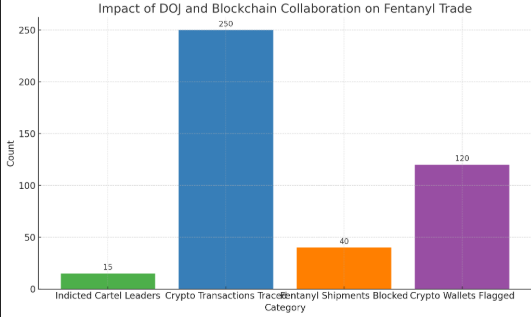
Growing Collaboration Between Law Enforcement and Blockchain Firms
The indictment underscores the growing collaboration between law enforcement agencies and blockchain analytics firms. Blockchain firms are using cutting-edge technology to track and trace cryptocurrency transactions tied to criminal activities, including the distribution of fentanyl. These companies often work with government agencies to uncover digital evidence and link transactions to criminal groups such as the Sinaloa cartel.
For example, tools that analyze transaction patterns and identify wallet addresses associated with illegal activity have allowed authorities to pinpoint major players in the fentanyl trade. As blockchain technology continues to evolve, its potential to assist law enforcement in uncovering hidden criminal operations remains a critical tool in the fight against transnational crime.
Conclusion: A Step Towards Dismantling the Fentanyl Trade
The DOJ’s indictment of Sinaloa cartel leaders signals a pivotal moment in the global battle against the fentanyl crisis. The increasing role of cryptocurrencies in facilitating the illicit drug trade has raised concerns about the need for stricter regulations on digital currencies. However, it also highlights the potential of blockchain analysis in disrupting criminal operations and enhancing transparency in financial transactions.
As blockchain technology continues to grow, so too will its importance in criminal investigations. The collaboration between law enforcement and blockchain firms represents a forward-thinking approach to addressing the multifaceted challenges posed by transnational drug cartels.