
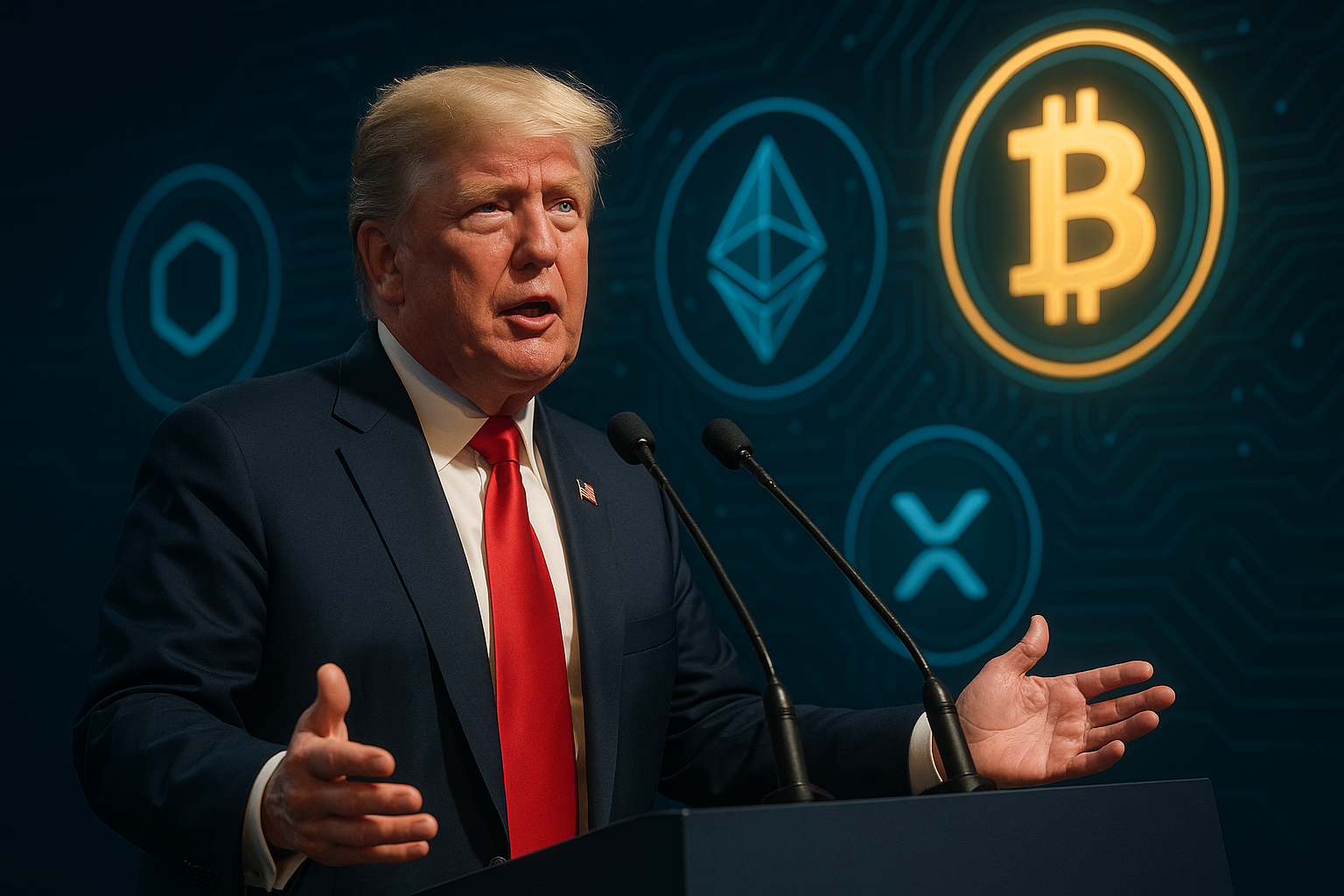
President Donald Trump reaffirmed his administration’s pro-crypto stance in a short video address at the State of Crypto Summit, committing to supportive legislation and regulatory clarity for the digital asset industry.
“Crypto President” Embraces Innovation
Speaking to a packed room of industry professionals, Trump said it was an “honor” to be considered a crypto president, and emphasized his administration’s efforts to reverse previous regulatory hostility toward digital assets.
“We’re going to create clear and simple market frameworks that will allow America to dominate the future of crypto and Bitcoin,” Trump stated in his 90-second message.
GENIUS Act: Stablecoins in Focus
A major highlight was Trump’s endorsement of the GENIUS Act, which supports the development of dollar-backed stablecoins. He noted that his administration is actively working with state governors to help pass the bill through Congress.
The GENIUS Act represents a significant step toward establishing a federally backed stablecoin ecosystem, positioning the U.S. to lead the race in digital dollar innovation.
The Act faces a key Senate procedural vote this week, following strong momentum from recent committee approvals in the House.
Proposed National Bitcoin Reserve
Trump also referenced an executive order aimed at creating a “U.S. Strategic Bitcoin Reserve” along with a Digital Asset Stockpile. While no such reserve has been formally established, the announcement reflects his administration’s intention to treat Bitcoin as a strategic financial asset.
This move could signal the beginning of formal crypto integration into U.S. monetary policy, pending further legislative and regulatory support.
Industry Leaders React
Following the president’s remarks, major industry voices including Coinbase CEO Brian Armstrong and Circle CEO Jeremy Allaire reflected on the event. They stressed that crypto’s growing importance in global finance demands strong partnerships with governments to unlock its full potential.
“Crypto is on the cusp of mainstream financial integration,” Allaire said, noting how much has changed since Circle’s early days.