

Ethereum is experiencing a rare combination of record-breaking network activity and historically low transaction costs, signaling a major shift in how the blockchain is being used. Recent data shows that the seven-day moving average of daily Ethereum transactions is approaching 2.5 million, nearly double the level seen one year ago, marking a new all-time high.
At the same time, average gas fees have fallen to around $0.15 per transaction, with some common operations costing even less. This represents the lowest fee environment in Ethereum’s modern history, easing long-standing concerns over high and unpredictable transaction costs.
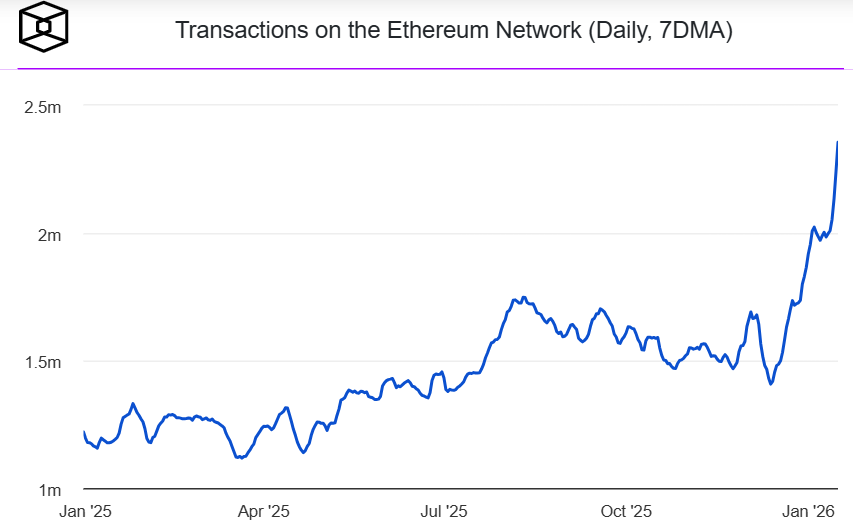
A key driver behind this trend is the December 2025 Fusaka upgrade, which introduced Peer Data Availability Sampling (PeerDAS) and expanded blob capacity. These changes significantly reduced data costs for Layer 2 networks, allowing more activity to shift off the main chain while keeping overall fees low. In parallel, Ethereum’s gas limit increase to 60 million has expanded mainnet capacity, further easing congestion.
Another major factor is the rise of stablecoin transfers, which now account for approximately 35% to 40% of all Ethereum transactions. This surge highlights Ethereum’s growing role as core financial infrastructure rather than just a speculative platform.
According to ValidatorQueue data;
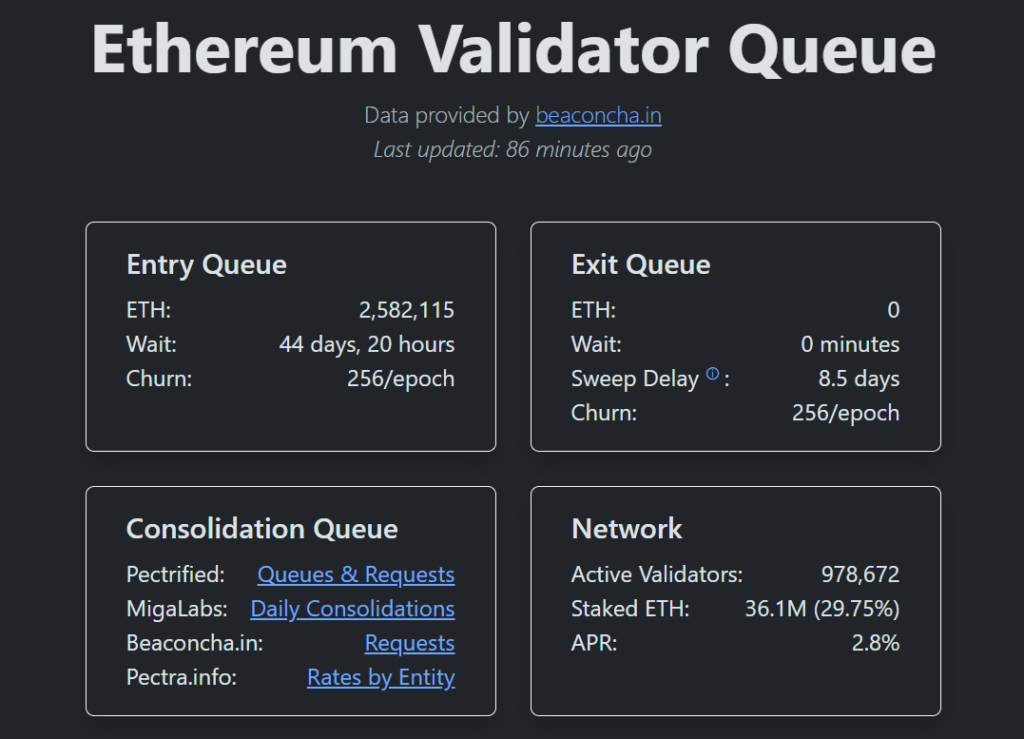
With staking participation exceeding 30% of the circulating supply and transaction demand accelerating, Ethereum is entering a phase defined by scalability, affordability, and sustained real-world usage—a combination that could reshape its position in the broader crypto economy.
Disclaimer
This content is for informational purposes only and does not constitute financial, investment, or legal advice. Cryptocurrency trading involves risk and may result in financial loss.